
Transgender Day of Remembrance

On November 20th it was Transgender Day of Remembrance (TDOR) an annual observance that honours the memory of the transgender people whose lives were lost in acts of anti-transgender violence.

Transgender Day of Remembrance (TDOR) was started in 1999 by transgender advocate Gwendolyn Ann Smith as a vigil to honour the memory of Rita Hester, a transgender woman who was killed in 1998. The vigil commemorated all the transgender people lost to violence since Rita Hester’s death, and began an important tradition that has become the annual Transgender Day of Remembrance.

This year, there have been 331 known killings of trans people worldwide that Stonewall and other LGBTQ+ communities and organisations around the world will remember. Sadly, these numbers include the murder of Amy Griffiths, a 51 year old trans woman, in Droitwitch, Worcestershire, in January of this year
Every life taken has its own devastating circumstances but it is possible to observe that the vast majority of those killed are trans women and transfeminine people of colour. The Trans Murder Monitoring Project noted that, of those whose professions were known, 61% of murdered trans people this year worked as sex workers.

In Europe, the majority of murdered trans women were migrant trans women. Many murders of trans people occur in circumstances including poverty, racism, anti-immigrant and anti-sex worker sentiment and misogyny, which deprive some trans communities of resources and protection and make certain kinds of trans person especially vulnerable to male violence.

Sadly, some trans people – particularly women – are most at risk of fatal violence from cis male intimate partners, such as boyfriends. The stigma, family rejection, limited employment opportunities and social isolation experienced by many trans people can leave them particularly vulnerable to abuse in relationships.

In many cases, violence against trans people is also driven by toxic ideals of masculinity founded on homophobia and biphobia. On Trans Day of Remembrance, many of us, whether cis or trans, can reflect on how we can work together to end gender-based violence, harassment and discrimination in all their forms.

JD
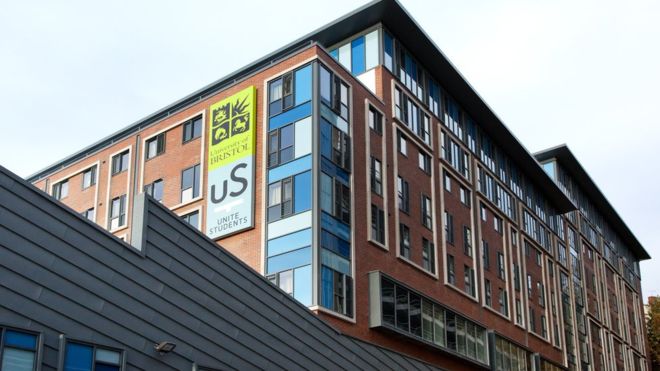
University friends: By chance or by design?

It’s well known that students often end up making lifelong friendships with the fellow “freshers” they find themselves placed next to in their accommodation. But as Martin Rosenbaum, BBC Freedom of information specialist, asks ‘what determines who lives along side each other?’

According to the article below, a BBC research initiative has uncovered how some universities have surprising policies on how student rooms are allocated.

One of the significant benefits of going to university is the opportunity to interact with a more diverse range of people than students may be familiar with. That said, starting university, much like any large undertaking, can be a stressful event which is made easier if new students are mixed with people they are familiar with, or more likely to get on with. As such, higher education institutions have to help resolve the dilemma of student integration and happiness as part of their accommodation policies.

Some institutions, such as Bristol University, have an unashamedly explicit policy when it comes to housing their students – one that aspires “to create diverse, balanced communities within the residences with particular reference to nationality, gender, faculty, school type”.

Take a look at the article by Martin Rosenbaum below and let me know what you think… do you think social engineering in student accommodation will aid diversity or would a lack of intervention lead to social norms being further perpetuated?

https://www.bbc.co.uk/news/education-46430204

JD

School exclusions ‘fuelling gang violence’ – Barnardo’s

Councils across England are obliged to make every effort to reduce their NEET (Not in Education  Employment or Training) numbers which identify how many young people in the region are not actively involved in education, employment or training. In the main, Councils will work closely with schools to identify pupils who are at risk of not being involved in education, employment or training when they leave school whilst supporting the schools intervention strategies. Worryingly, where schoolchildren are excluded from education there is a significant rise in their likely hood to become NEET.

However, a recent report by Barnardo’s highlights a worrying trend that excluded schoolchildren are at serious risk of becoming involved in knife crime, the children’s charity has warned. Barnardo’s says excluded children are also at risk of “being groomed and exploited by criminal gangs”.

The charity said 47 councils, about one in three in England, had no spaces in pupil referral units (PRU), which look after excluded children. The government said a review of school exclusions and their impact on children was ongoing.

The research, which was carried out in collaboration with the All Party Parliamentary Group on Knife Crime, shows a 56% rise in exclusions in England since 2014. The group’s chairwoman, Sarah Jones, said knife crime was at its highest level on record and “our schools are on the front line”. She added: “Exclusions are rising and in many cases there is literally nowhere for those children to go. This is heartbreaking.” She said excluded children were “marked as failures”, and added professionals often talk about the “PRU to prison pipeline”.

Barnardo’s chief executive, Javed Khan, said: “We know children excluded from mainstream schools are at serious risk of being groomed and exploited by criminal gangs.” He urged the government to reduce the number of pupils excluded from schools and to improve alternative provisions so “vulnerable young people get the help they need to achieve of positive future”.

A government spokesperson said: “Permanently excluding a child from mainstream school should only ever be a last resort, and we support teachers in making these difficult decisions where they are justified.” They added the government was undergoing a review of exclusions led by the former education minister Edward Timpson.

The spokesperson said: “We are transforming alternative provision to improve outcomes for these children which helps them to flourish, backed by our £4m innovation fund that has created nine new projects around the country.”

https://www.bbc.co.uk/news/uk-46027265

JD

Ethnically mixed schools lessen hostility

Interesting article here

Now, as an experienced teacher and manager in education I can confidently say that this is no surprise to those of use who work in state funded education. However, if learners benefit from an ethnically diverse schooling, as the research here indicates, what does that say for selective education? It’s well known that private, Grammar and faith schools select on the basis of a range of specific criteria and that these schools are not as diverse environments as those found in state funded education. As such, through selection, are we not hindering the ability of students from selective backgrounds to effectively engage with a diverse work force when they leave education.

http://www.bbc.co.uk/news/education-44196646

JD

Do faith schools harm integration?

Writer and broadcaster Afua Hirsch argues faith schools lead to segregation.

Writer and broadcaster Afua Hirsch argues faith schools lead to segregation. Her compelling, if potentially polarizing, video can be viewed here.  Her commentary on the subject is below but I am interested in what readers think about this. Certainly, on face value it feels like state sponsored segregation which leads to further to inequality in our communities. 

“Britain has a problem with integration, all political parties agree. But, instead of serious long term policies the response has been confined to contrived and often patronising measures.  Ethnic minority and immigrant communities are lectured about British values and we might all have to start swearing an oath of allegiance.

The glaring hypocrisy of our integration agenda is that our most important public institutions actively encourage segregation.  Faith schools make up one third of all schools in Britain. Our government is proposing that they have even more power to discriminate by selecting more of their places based on religious belief.  Public funds are being used to separate children by faith.

What could be more damaging to integration?

Faith schools are also segregating children by class. A quarter of faith primary schools have fewer disadvantaged students than those of no faith. Faith schools are the antithesis of a secular society but have never been so popular. Some parents are strategically using religious identities as a proxy for ethnicity, deliberately educating their children with others from a similar background. But the main reason for the popularity of faith schools is that many outperform other state schools in academic results.

We would never accept this kind of segregation in any other public service. Why is it acceptable in schools? We need to be honest about the role of faith and education in an integrated society and keep the two separate.” 

Afua Hirsh