

Managing neurodiversity in the workplace

According to Harvard HealthNeurodiversity refers to diversity in the human brain and cognition, for instance in sociability, learning, attention, mood, and other mental functions. It provides an inclusive view of cognitive diversity, highlighting the differences at a neuro-biological level while considering the socio-cultural contexts of a human’s lived experience.  

Employers need to be mindful as to how the business set up helps support those with different neurological conditions to create a diverse workforce. This includes:

  • · Understanding the importance of managing neurodiversity at work.
  • · Understanding how to manage neurodiversity at work, and 
  • · Being better able to support those with different neurological conditions. 

In 2021, a Harvard Health report described the idea that people experience and interact with the world around them in many different ways; there is no one “right” way of thinking, learning, and behaving, and differences are not viewed as deficits

The report explains how neurodiversity advocates encourage inclusive, non-judgmental language. While many disability advocacy organizations prefer person-first language (“a person with autism,” “a person with Down syndrome”), some research has found that the majority of the autistic community prefers identity-first language (“an autistic person”).  

Therefore, rather than making assumptions, it is best to ask directly about a person’s preferred language, and how they want to be addressed. Knowledge about neurodiversity and respectful language is also important for clinicians, so they can address the mental and physical health of people with neurodevelopmental differences. 

According to Professor Amanda Kirby, CEO of Do-it Solutions Limited and Campaigner for Neurodiversity, Neurodiversity is the way we think, move, act, communicate and process information. 

She explains, “we are all different. Some people have challenges and strengths associated with conditions such as Attention Deficit Hyperactivity Disorder (ADHD), Dyslexia, Autism, Dyscalculia, Developmental Coordination Disorder/Dyspraxia, Developmental Language Disorder. 

There is not one person or one condition that defines our differences ( or our similarities). We are too often defined by what we can’t do and not by what we can. 

The reality is that some people will gain a diagnosis of Dyslexia, for example, and others diagnosed as having Autism or ADHD. However, who gains a diagnosis often can be a bit of a lottery. It can depend on whether difficulties are identified as a child by a teacher who spots some signs of Dyslexia or Dyspraxia (also known as Developmental Coordination Disorder) or by a parent who knows something about one of these conditions.

It often requires tenacity on the part of the parent or individual and also depends on local waiting lists and service availability. For many people it can be a lengthy and at times costly process in terms of stress. Some people are paying for assessments as an alternative at a high cost. 

For most people the starting position is to understand their challenges and gain some practical strategies to help as soon as possible. By understanding their unique spiky profile, you have a starting point to help to support them to be their best. 

A person-centred approach means that strategies are tailored to EACH PERSON. It also importantly means harnessing strengths, to build confidence, self-esteem and become resilient.” 

Professor Kirby’s research produced an effective guide for employers to making different adjustments for neurodivergent people, where three elements can be easily changed. Take a look at the graphic below and consider what your organisation can do to better understand how to manage neurodiversity at work, and how to support those with different neurological conditions.

I’d love to hear where you are on your journey to becoming an neurodiverse workplace. Let me know in the comments…
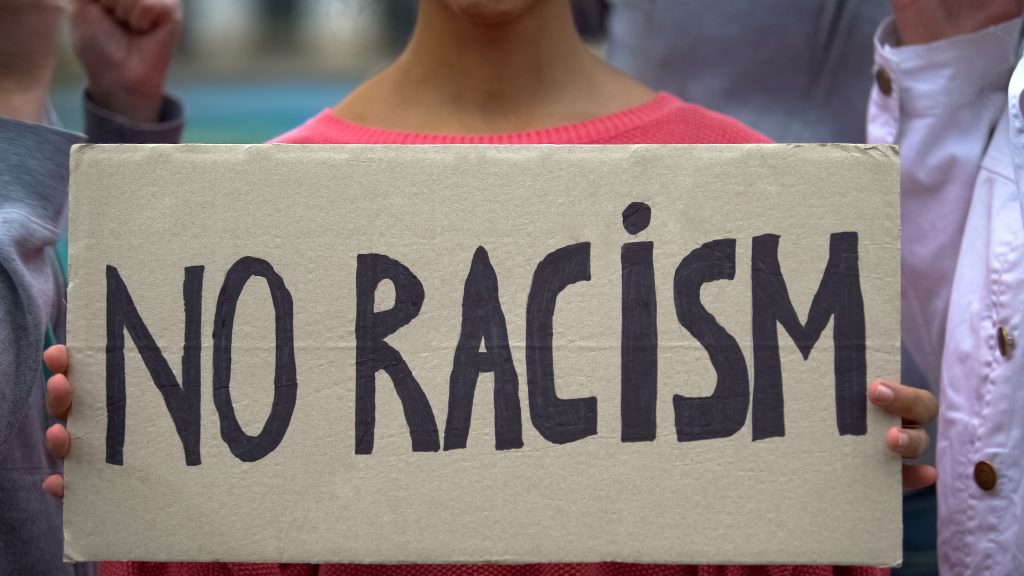
Race Equality Week

February 6th marks the start of Race Equality Week. The theme for Race Equality Week 2023 is #ItsEveryonesBusiness. This theme was chosen as 79% of respondents believe it would have a meaningful impact on tackling race inequality.

Race Equality Week is an annual UK-wide movement uniting thousands of organisations and individuals to address the barriers to race equality in the workplace. The events of 2020, including the Black Lives Matter movement and the disproportionate impact of COVID-19 on ethnic minority communities, has heightened public consciousness of race inequality

Since the flurry of pledges many organisations were making back in 2020 to become more inclusive, which for many included black squares, signing charters and race action plans, progress in addressing racial inequality is proving to be a challenge.

Race Equality Matters’ survey highlighted that the majority of respondents felt very little had changed in the last 12 months. Whilst some organisations are now taking a nudge approach, which is starting to impact change. Many have struggled to know where to start.

Thanks to Sy Joshua at Race Equality First for these actions to ensure you are on top of your game when it comes to Race Equality in the Workplace: 

1. Book your team onto Anti-racism training

It’s not enough to be ‘not racist’, what is your team doing to be Anti-racist? Are you taking active steps to remove racial barriers and obstacles from the workplace.

2. Review your diversity & inclusion policy

Too many Diversity and Inclusion policies are a ‘copy & paste’ job. Does your policy contain your organisation’s DNA around EDI? If not, a full review may be overdue!

3. Encourage employee-led initiatives promoting racial equality

Empowering employees towards coproduction and including ‘lived experience,’ is a must in ‘moving the dial’ towards more inclusive spaces.

4. Ensure inclusive initiatives are outcome focused

Don’t forget to measure the impact your initiatives are having on attitudes, behaviour and workplace culture.

I’d love to hear where you are on your journey to becoming an anti-racist workplace. Let me know in the comments…

Culture First, Diversity and Inclusion Second

Diversity and Inclusion is not just about compliance with legislation, it’s about leading change, implementing improvement initiatives and engaging, motivating and improving the potential of staff.

Sundar Pichai, chief executive officer of Google LLC, said of inclusion “A diverse mix of voices leads to better discussions, decisions, and outcomes for everyone.”

This is equally true of the boardroom as it is the operational side of an organisation and the distinction that equality is not just about compliance with legislation must be supported at board and executive level within an organisation in order for diversity and inclusion initiatives to have any real impact.

As such, the first job to improve diversity and inclusion in an organisation is to get board and executive backing. Furthermore, unless the culture of the organisation is right then no diversity programme will help. Consequently, before any diversity and inclusion initiatives are rolled out it is essential that the culture of the organisation is one which is receptive to change, to new ideas and inclusion.

Where an organisations culture does not yet lend itself to inclusive practices then wholesale organisational development is essential and any diversity initiatives will fail until that culture is fixed.  Organisational design and re-structuring is the subject of a number of books for human resources leaders and beyond the scope of this post.

But, where you have a workplace culture which supports change and new ways of practising as well as the public support of the board or executive leadership then you can examine the current picture of diversity and inclusion in the organisation with a view to implementing an improvement strategy.

Good diversity and inclusion practice recognises that historically certain groups of people with protected characteristics such as race, disability, sex and sexual orientation have experienced discrimination. To that end, an organisations equality strategy must be about ensuring that every individual has an equal opportunity to make the most of their lives and talents.

Furthermore, really, a good equality, diversity and inclusion programme or strategy attempts to ensure that no one should have poorer life chances because of their gender, their race, the way they were born, where they come from, what they believe, who they love, or whether they have a disability.

As a final point, in order to improve diversity and inclusion in the workplace, it is absolutely vital that we don’t just think about the data; we need to collaborate with people because the organisations people – whether that be staff, customers or service users – are at the heart of all successful diversity and inclusion improvements. Only through working with their people can an organisation reduce bias in hiring, foster inclusivity and create feelings of belonging for employees of all backgrounds.

JD

The Business Case for Diversity

Increasingly, the term ‘Equality’ (and what used to be referred to as Equal Opportunities) is making way for discussions on ‘diversity’ as this term is much broader in its scope and gets to the heart of the integration challenges facing the UK workforce.

Over the past five decades our society has become increasingly complex and multicultural as population growth continues, subsequently becoming more diverse and with an aging population. Furthermore, changes to employment law coupled with an increase of the age at which an employee can retire and draw a pension means we now have increased competition in the workplace for fewer and fewer jobs.

As Vijay Eswaran, Executive Chairman, QI Group of Companies, explains: ‘In this era of globalization, diversity in the business environment is about more than gender, race and ethnicity. It now includes employees with diverse religious and political beliefs, education, socioeconomic backgrounds, sexual orientation, cultures and even disabilities. Companies are discovering that, by supporting and promoting a diverse and inclusive workplace, they are gaining benefits that go beyond the optics.’

In the UK, it’s common for staff, when surveyed in the workplace, to perceive diversity as being a focus on ethnicity and race whereas issues of religion, education or culture are often overlooked or misunderstood. Subsequently, diversity is actually a much broader term than a few labels and includes those other – difficult to define – human qualities that are dissimilar to our own perceptions or those of our communities but are widely prevalent in other communities. It is this fundamental difference that diversity looks to both celebrate and include alongside our own perceptions.

Vijay Eswaran argues that workplace diversity leads to greater innovation. ‘The coming together of people of different ethnicities with different experiences in cities and societies is a key driver of innovation. The food that we eat every day is a result of this blending of cultures. The most successful musical genres, such as jazz, rock’n’roll or hip-hop, are the products of cultural amalgamation.’

Whilst recent equality laws have helped to challenge discrimination and prejudice we still face equality gaps in the workplace, some larger than others. In response to the increasingly diverse needs of our communities the government have delegated a duty of responsibility – known as the Public Sector Equality Duty – on councils and their partners, including publicly funded bodes, such as the education and health care sectors, to be more accountable for ensuring everyone has an equal chance in life regardless of background or start in life.

To this end, in order to meet both government legislation as well as the diverse needs of our workforce, organisations must ensure they build an inclusive culture where diversity and equality of opportunity work hand in hand. This is referred to as the business case for diversity, an organisational wide understanding of how diversity can benefit both the business aims of the organisation and the needs of the community.

JD