

Managing neurodiversity in the workplace

According to Harvard HealthNeurodiversity refers to diversity in the human brain and cognition, for instance in sociability, learning, attention, mood, and other mental functions. It provides an inclusive view of cognitive diversity, highlighting the differences at a neuro-biological level while considering the socio-cultural contexts of a human’s lived experience.  

Employers need to be mindful as to how the business set up helps support those with different neurological conditions to create a diverse workforce. This includes:

  • · Understanding the importance of managing neurodiversity at work.
  • · Understanding how to manage neurodiversity at work, and 
  • · Being better able to support those with different neurological conditions. 

In 2021, a Harvard Health report described the idea that people experience and interact with the world around them in many different ways; there is no one “right” way of thinking, learning, and behaving, and differences are not viewed as deficits

The report explains how neurodiversity advocates encourage inclusive, non-judgmental language. While many disability advocacy organizations prefer person-first language (“a person with autism,” “a person with Down syndrome”), some research has found that the majority of the autistic community prefers identity-first language (“an autistic person”).  

Therefore, rather than making assumptions, it is best to ask directly about a person’s preferred language, and how they want to be addressed. Knowledge about neurodiversity and respectful language is also important for clinicians, so they can address the mental and physical health of people with neurodevelopmental differences. 

According to Professor Amanda Kirby, CEO of Do-it Solutions Limited and Campaigner for Neurodiversity, Neurodiversity is the way we think, move, act, communicate and process information. 

She explains, “we are all different. Some people have challenges and strengths associated with conditions such as Attention Deficit Hyperactivity Disorder (ADHD), Dyslexia, Autism, Dyscalculia, Developmental Coordination Disorder/Dyspraxia, Developmental Language Disorder. 

There is not one person or one condition that defines our differences ( or our similarities). We are too often defined by what we can’t do and not by what we can. 

The reality is that some people will gain a diagnosis of Dyslexia, for example, and others diagnosed as having Autism or ADHD. However, who gains a diagnosis often can be a bit of a lottery. It can depend on whether difficulties are identified as a child by a teacher who spots some signs of Dyslexia or Dyspraxia (also known as Developmental Coordination Disorder) or by a parent who knows something about one of these conditions.

It often requires tenacity on the part of the parent or individual and also depends on local waiting lists and service availability. For many people it can be a lengthy and at times costly process in terms of stress. Some people are paying for assessments as an alternative at a high cost. 

For most people the starting position is to understand their challenges and gain some practical strategies to help as soon as possible. By understanding their unique spiky profile, you have a starting point to help to support them to be their best. 

A person-centred approach means that strategies are tailored to EACH PERSON. It also importantly means harnessing strengths, to build confidence, self-esteem and become resilient.” 

Professor Kirby’s research produced an effective guide for employers to making different adjustments for neurodivergent people, where three elements can be easily changed. Take a look at the graphic below and consider what your organisation can do to better understand how to manage neurodiversity at work, and how to support those with different neurological conditions.

I’d love to hear where you are on your journey to becoming an neurodiverse workplace. Let me know in the comments…

Employers should work harder to engage LGBT+ allies, say experts

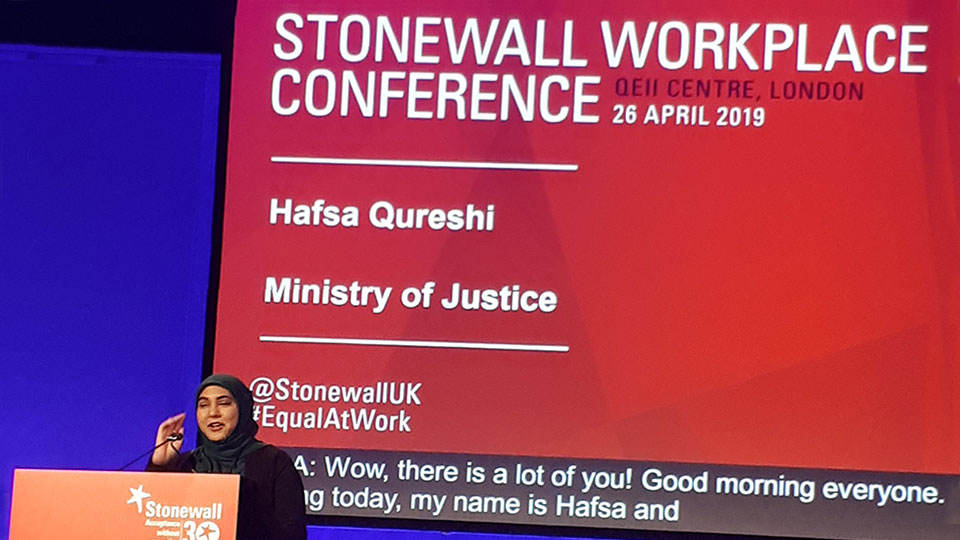
I wanted to share a recent article by Emily Burt, from People Management, who attended the Stonewall Workplace Conference, 26 April 2019, in which she discusses the need to engage LGBT+ allies in the workplace. The article is both thought-provoking and relevant during Pride Month, particularity if you work in HR or are engaged in improving workplace equality and diversity. What is made abundantly clear by the conference speakers is the need for further support to improve LGBT+ inclusion in the work place and often people are not looking in the right place.

Stonewall conference urges better communication, with 35 per cent of LGBT staff having hidden their sexuality at work

Organisations must work to encourage, support and empower their LGBT+ members of staff and recognise the business case for inclusive cultures in order to drive genuinely diverse workplaces, experts have told delegates at the 2019 Stonewall Workplace Conference.

stonewall2_tcm27-57012_w1228_n

Hafsa Qureshi (pictured), recruitment specialist at the Ministry of Justice and Stonewall’s bisexual role model of the year, said engaging people who do not identify as LGBT with the challenges faced by the community was an important part of creating inclusivity at work.

Speaking to People Management, Qureshi said: “One of the biggest hurdles is reaching people who don’t identify as LGBT to be allies. Too often, people assume that because someone is not from a visible protected characteristic, they don’t have any issues at work.”

Qureshi added that it was imperative for LGBT allies to promote inclusive cultures at every level of a business.

“Having worked with smaller and larger organisations, the ones that struggle with diversity and inclusion often do so because they fail to communicate it beyond management level,” she warned.

“The culture stops before reaching the employees who have face-to-face interactions with customers or clients.”

More than 1,000 people attended the opening session of the conference, with the theme ‘Equal At Work’, where CEO Ruth Hunt delivered her final keynote ahead of departing from her role at the charity later this year.

“We sometimes forget that it wasn’t that long ago that being LGBT meant you could be fired from work or denied service because of who you are,” she said, adding: “While it’s important to celebrate how far we’ve come, we cannot be complacent.”

A 2018 survey from the charity found almost one in five LGBT staff (18 per cent) were the target of negative comments or conduct from work colleagues because of their sexuality. More than a third (35 per cent) had hidden or disguised the fact they were LGBT at work for fear of discrimination.

The community has also faced a series of rows on an international scale over the last 12 months, including President Trump’s policy to prohibit some transgender people from serving in the US military, and schools in Birmingham dropping classes that include discussion of LGBT relationships following protests from parents.

In a speech to conference delegates, Penny Mordaunt, Minister for Women and Equalities, reaffirmed the government’s commitment to LGBT-inclusive workplaces, stating: “Organisations cannot afford to exclude talented people, or to limit their potential.”

She said the Government and Equalities office (GEO) would continue to provide targeted interventions seeking to improve the experiences of LGBT people at work and announced that the GEO would coordinate a series of events to gather employer views, and share expertise and experiences this coming autumn.

Mordaunt acknowledged the GEO was asking HR departments to commit to a number of significant initiatives – including gender pay reporting and the Race at Work charter – which were “not remotely joined up or coordinated”.

But she added: “In order to build the businesses of tomorrow, we need workforces that are able to authentically be themselves.”

Speaking to delegates, Qureshi concluded: “Sometimes, all it takes is one person to step forward in order to make a workplace culture feel more accepting.

“I encourage you all to use your voices and platforms to raise awareness for your LGBTQ community. Your voice is more important than you know – and you may say something that a person like me has waited their whole life to hear.”

JD

Improving Mental Health at Work

We know that work can have a positive impact on our health and well-being. In fact, it’s not a leap of faith to recognise that healthy and well-motivated employees can have an equally positive impact on the productivity and effectiveness of a business.

As part of Mental Health Awareness Week 2019, I wanted to examine health and well being in the workplace. As an equality and diversity advisor I often get requests for information or training regarding mental health and it’s often a subject managers are unsure of or avoid. It’s worth noting that the Mental Health at Work Report (Business in the Community, 2017) found that only 24% of managers had received any form of mental health training. Appallingly, the report also highlighted that 15% of employees who disclosed a mental health condition faced disciplinary procedures, demotion or dismissal.

In the public sector, adverts for jobs often highlight how an organisation has employee health and well-being at the heart of its organisational culture when, in truth, like most organisations they are actually on a journey to improving the health and well-being of staff, rather than being the finished article.

First and foremost it is important to understand that managing health, work and well-being is the responsibility of both the employer and the employee. To better understand the interaction between health, well-being and work it is important for organisations to recognise:

  • the relationships between line managers and employees
  • the importance of getting employees involved
  • job design, flexible working and the use of occupational health

The connection between health and work

Health and safety in the workplace has been with us for many years, most public sector organisations have a health and safety manager, or at least someone who is responsible for health and safety in the organisation. However, the growing awareness of work-life balance has also made us aware of the relationship between our mental and physical well-being and the job we do. As such, for many people, the connection between health and work is often restricted to concerns with physical hazards in the workplace. Employers are legally obligated to protect staff in their organisation by looking after their physical health and safety and whilst traditional health issues – such as noise, dust and chemical hazards – are vitally important… staffs mental well-being is an emerging priority.

Is work good for your health?

Absolutely, studies show that work is generally good for your health and most of us enjoy having a meaningful job of work. Additionally, as a financial reward, it gives many of us a feeling of self-esteem, companionship and status. The Macleod Review, published in July 2009, regarding employee engagement, highlighted how this ‘feel good’ factor is strongly influenced by:

  • leaders who help employees see where they fit into the bigger organisational picture
  • effective line managers who respect, develop and reward their staff
  • consultation that values the voice of employees and listens to their views and concerns
  • relationships based on trust and shared values.

However, although we know that the benefits of work can greatly outweigh some of the disadvantages; it is also clear that work can be bad for your health. According to Government figures, two million people suffer an illness they believe has been caused or made worse by their work (‘Choosing Health’ White Paper). This can take the form of stress, anxiety, back pain, depression and increased risk of coronary heart disease.

However, there are a number of misunderstandings with work related illness that continue to persist. For example, it’s often said that people in high status jobs are more at risk of heart disease due to stress. However, research by the Cabinet Office dispels this myth. The Whitehall II study, published in 2004, examined public sector workers and found that men in the lowest employment grades were more likely to die prematurely than men in the highest grades. In contrast, higher rates of absence, as well as illness, were associated with low levels of work demands.

Furthermore, according to research by the Confederation of British Industry, non-work related mental ill health is the most significant cause of long-term absence in the UK – and musculoskeletal problems are the second most significant cause.

How to recognise an unhealthy workplace

Often, an unhealthy workplace is quite easy to recognise and will likely share a number of the following traits:

  • poor management
  • a bullying culture
  • poor customer service
  • high levels of absence
  • reduced productivity
  • unreasonably high work demands

You may have experienced these kinds of workplaces – either as an employee or a customer. Sickness absence is often rife and habitually out of control and there is usually very little commitment to the organisation. Where there is an over reliance on expensive agency staff due to high levels of staff sickness or absence can be an indicator that a workplace is unhealthy. That said, in such situations, leaders will often point to a significant period of change, such as a major organisational restructure, as the reason and claiming things will get better in due course. In such situations you need a strong leader to rebuild a culture of health and well-being across the organisation.

What makes a healthy workplace?

Simply put, a healthy workplace is based upon good relationships. On the other hand, promoting a healthy and productive workplace is not just about being nice to each other, although this obviously helps. Positive employment relations are built upon:

  • effective policies for managing people issues such as communication, absence, grievances and occupational health
  • high levels of trust between employees and managers. Trust is often nurtured by involving employees in decision-making and developing an open style of communication.

Ultimately, where staff feel healthy and motivated they will certainly:

  • go that extra mile
  • give good customer service
  • take fewer ‘sickies’
  • provide commitment and creativity.

How can you tell how healthy your workplace is?

There are many stories out there where employers share the great practices that go on in their workplace to enhance employee’s health and well-being. However, in truth, if you want to see how an organisation values staff health and well-being you need to see what practices happen when the organisation is under pressure, whether that be financial pressure or as in the case with the public sector when it is under external inspection. Only then, during such challenging times, can the true value of supporting staffs health and well-being be seen.

Acas, the Advisory, Conciliation and Arbitration Service, believe that there are six indicators of a healthy workplace, these are:

  1. line managers are confident and trained in people skills
  2. employees feel valued and involved in the organisation
  3. managers use appropriate health services (eg occupational health where practicable) to tackle absence and help people to get back to work
  4. managers promote an attendance culture by conducting return to work discussions
  5. jobs are flexible and well-designed
  6. managers know how to manage common health problems such as mental health and musculoskeletal disorders.

JD

Equality, Diversity & Human Rights Week 2019, 13-17 May

From 13-17 May 2019 the NHS will be celebrating the eighth Equality, Diversity and Human Rights Week #EQW2019. Co-ordinated by NHS Employers, #EQW2019 is a national platform for organisations to highlight their work to create a fairer, more inclusive NHS for patients and staff.

EQW2019

This week of activity aims to raise awareness of equality, diversity and human rights issues in the NHS and celebrate best practice. As the largest employer in Europe, with over 1.3 million staff, the NHS has a responsibility to remain at the forefront of the inclusion and fairness agenda for patients and staff.

Diverse, inclusive, together

The theme is diverse, inclusive, together and has been chosen to reflect the move across the health and social care sector towards even greater collaboration and integration – as reflected in the publication of the recent NHS Long term Plan. At the heart of the plan is changing culture, with a commitment towards ensuring respect, equality and diversity within the NHS.

Working together makes the NHS stronger, we meet standards, enable change and collectively invest in the creation of a diverse and inclusive NHS workforce to deliver a more inclusive service and improved patient care.

To celebrate the event, my organisation has a range of interactive and informative events across the week.  Throughout #EQW2019, we will have a daily equality and diversity bulletin, each examining a different aspect of equality and diversity; furthermore we have a video webinar on the importance of diversity in the workplace as well as an interactive Q&A session with the Trusts own Equality, Diversity and Inclusion Lead. 

Take a look at the informative video series from John Deffenbaugh (NHS Leadership Academy) who leads a discussion panel on the equality challenges faced by the NHS and the steps that can be undertake to overcome them, discussion 1 is shown below.

JD


Political Correctness? A Tick-Box Exercise? What is Equality and Diversity?

When leading Equality, Diversity and Inclusion (EDI) in an organisation it is not unusual to face challenges and barriers to achieving your targets from a common misconception as to what equality and diversity is all about. First and foremost, equality, diversity and inclusion is about people and not a ‘tick box’ exercise to satisfy government/employer statistics or legislation.

Perhaps the most common misconception reported by equality and diversity trainers is that EDI is often said – behind closed doors of course – to be ‘just political correctness’ or sometimes ‘political correctness gone mad’. Political correctness can be defined as ‘the avoidance of forms of expression or action that are perceived to exclude, marginalize, or insult groups of people who are socially disadvantaged or discriminated against’. It is often the term ‘forms of expression’ from definitions such as this which some interpret to mean jokes or work place banter. However, where someone is offended by your words it is not open to your interpretation it is open to theirs, as such if your opinion, jokes or workplace banter offends people then it is time keep such options, jokes or work place banter out of the workplace. To those who question whether equality and diversity is merely ‘political correctness gone mad’ I would ask the question whether it is acceptable for woman to be paid less than men for the same job, for part time staff or shift workers to have less opportunities in training, for the LGBTQ+ community to face harassment at work or for those from a minority to be excluded from jobs because of a different place of birth?  Sometimes, EDI needs to focus the minds of those not affected to understand how a lack of EDI impacts those who are affected and demonstrate how they can help bring fairness to their workplace.

However, even when supported, EDI can still be viewed by some in the workplace as ‘box to tick’ exercise or just another thing on a long list of other things that they are required to do by government. This fundamental lack of understanding as to the need for EDI practices often leads to a misunderstanding of intended actions and their outcomes which in its self often leads to a compartmentalised, tick-box approach. Nevertheless, what we are talking about here is implementing good EDI practice across an organisation rather enforcing a legal obligation on the workforce. It is this perception of enforced legislation that increases the risk of compartmentalisation and a tick-box approach. As such, it is this false perception of equality, diversity and inclusion that needs removing and this is where effective communication, workforce training and raising the profile of EDI can have a positive impact on its acceptance.

Hence, improving the understanding of EDI becomes about the message and vision set out by senior leaders. Essentially, EDI is about people and it focuses on treating all people fairly and ensuring there is equality of opportunity across the workforce. Naturally, isn’t this something we should all get on-board with? Unquestionably, fairness and equality of opportunity should be a priority for every organisation. As a result, the message needs to be very clear that EDI impacts on us all whether we be employees, employers, customers or other stakeholders including the communities we serve. For these reasons, we can see why good EDI practices must be embedded in all that we do.

JD

Equality and Diversity in the Workforce

Increasingly, the term ‘Equal Opportunities’ is making way for discussions on ‘Diversity’ as this term is much broader in its scope and gets to the heart of the integration challenges the country faces.

Over the past five decades our society has become increasingly complex and diverse. The UK population is growing rapidly and subsequently becoming more diverse and with an aging population. Changes to immigration laws and better health care are contributing factors to the changing makeup of Great Britain and our subsequent workforce.

When asked, staff often perceive diversity as being a focus on ethnicity and race whereas issues of gender equality are often overlooked or misunderstood. Subsequently, diversity is actually a much broader term than a few labels and includes those other – difficult to define – human qualities that are dissimilar to our own perceptions or those of our communities but are widely prevalent in other communities. It is this fundamental difference that Diversity looks to both celebrate and accept alongside our own perceptions.

Whilst recent equality laws have helped to challenge discrimination and prejudice we still face equality gaps in the workplace, some larger than others. In response to the increasingly diverse needs of our communities the government have delegated a duty of responsibility on councils and their partners, including publicly funded bodes, such as the education and health care sectors, to be more accountable for ensuring everyone has an equal chance in life regardless of background.

To this end, in order to meet both government legislation and the diverse needs of our workforce, organisations need to ensure they build an inclusive culture where diversity is celebrated and everyone has equal opportunity. That said, this is clearly easier said than done, so here are six values that can help an organisations better promote a culture of equality and diversity.

  1. Value Feedback – Seek regular opportunities for staff feedback to impact on organisational practices and change behaviours.
  2. Value Experience – Create an inclusive culture by including staff in both strategic and operational planning ensuring they have equal access to opportunities to enable staff to fully participate.
  3. Value Fairness – equality comes when staff are confident their employer’s policies, procedures and practices are fair to all and don’t discriminate.
  4. Value Development – enable all staff to develop to their full potential though equal opportunities for training, empowerment and progression.
  5. Value Planning – make certain that staff resources do not discriminate against any individuals, groups or reinforce negative stereotypes.
  6. Value Collaboration – through effective training equip all staff with the skills to challenge inequality and discrimination in their workplace.

JD