University friends: By chance or by design?

It’s well known that students often end up making lifelong friendships with the fellow “freshers” they find themselves placed next to in their accommodation. But as Martin Rosenbaum, BBC Freedom of information specialist, asks ‘what determines who lives along side each other?’

According to the article below, a BBC research initiative has uncovered how some universities have surprising policies on how student rooms are allocated.

One of the significant benefits of going to university is the opportunity to interact with a more diverse range of people than students may be familiar with. That said, starting university, much like any large undertaking, can be a stressful event which is made easier if new students are mixed with people they are familiar with, or more likely to get on with. As such, higher education institutions have to help resolve the dilemma of student integration and happiness as part of their accommodation policies.

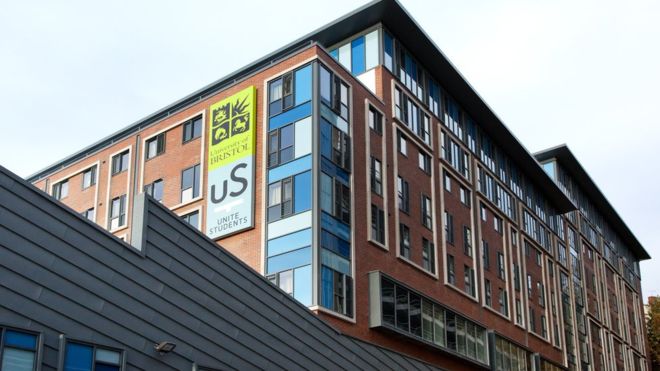
Some institutions, such as Bristol University, have an unashamedly explicit policy when it comes to housing their students – one that aspires “to create diverse, balanced communities within the residences with particular reference to nationality, gender, faculty, school type”.

Take a look at the article by Martin Rosenbaum below and let me know what you think… do you think social engineering in student accommodation will aid diversity or would a lack of intervention lead to social norms being further perpetuated?

https://www.bbc.co.uk/news/education-46430204

JD

Part-time students ‘down by more than half’

The government is scheduled to publish its review of higher education tuition fees and post-18 funding in the new year. Coupled with the recent introduction of the Office for Students to hold the sector to account, Universities in England are facing significant change.

As a result of these changes, widening participation has become one of the primary focuses of the newly established Office for Students. Subsequently, Higher Education providers who want to charge the maximum course fee of £9,250 per year will be expected to have an access and participation strategy designed to support the recruitment of students from under represented groups.

Part-time study has traditionally supported under represented groups by allowing, those whose outside commitments restrict their ability to undertake Higher Education full-time, an avenue to study at this level. However, significantly, part-time study also offers an opportunity for higher education to those returning to education after a period out of full time education. In my experience, part-time study is often taken up by those returning to learning after an absence from full time education and it’s this return to study where adults can retrain or gain new industry skills to further employment opportunities.

The Confederation of British Industry (CBI) says university should not only be for young people, and adults need to be able to re-train for new skills. However, as since 2010.

The CBI and Universities UK have requested more support for students to take short, flexible part-time courses and they warn of a generation of “lost learners” who might previously have gone back to study for part-time degrees or other qualifications. Subsequently, in light of the governments drive to improve the employability of graduates – where Destination of Learners in Higher Education (DLHE) data will be measured by the Office for Students – it is a worrying trend and Universities must adapt in order to be responsive to the needs of part-time students.

That said, the report highlights the significant “rise in tuition fees” which has been a particular deterrent for part-time students, who might have jobs and family responsibilities and were reluctant to take on such levels of debt. So, the question has to be, what can Universities in England do to provide a higher education service to part-time students that is short, flexible and provides either academic or industrial updating. Ultimately, before any decisions are made its important to establish what part-time learners actually want from studying in higher education. Are they studying for personal interest reasons or are they trying to upskill themselves for employability purposes? That said, having seen a 50% decline of part-time learners in eight years it begs the question… what have Universities done differently in the past eight years that has contributed to this decline? If the rise in tuition fees is a contributing factor then what support can be put in place to make part-time fees more affordable with flexible payment options to spread the cost in a similar way to full-time learners.

In the BBC article, Matthew Fell, the CBI’s policy director, said: “Too often we think of universities as being just for young people, but as this work shows, adult education and lifelong learning matter just as much.”

“Universities need to play a critical role in responding to the changing world of work by offering education and training for learners for whom a three-year bachelor’s degree doesn’t quite fit their circumstances,” he said.

https://www.bbc.co.uk/news/education-45979230

JD

Too many firsts risk universities’ credibility, says think tank

Interesting article here from the BBC regarding grade inflation at UK Universities and Reform’s recommendations on how to tackle it.

The report is fascinating for several reasons, firstly, Universities are under increasing pressure with the Teaching Excellence Framework (TEF) to award ‘good’ degrees and have high levels of students satisfaction. Well, fundamentally, the concern with that is students will be very satisfied if they get a ‘good degree’ and those who get a third or a 2:2 might well be unsatisfied, especially as many higher education students have a perception that they are buying a degree for £30, 000. Furthermore, anyone who has studied marketing or customer service will tell you that an unsatisfied customer is more like to be vocal bout that than a satisfied customer, satisfaction becomes the expectation not the extraordinary. Hence, unsatisfied students will vocalise their unhappiness in students surveys.

Secondly, the report states that ‘since 1995 the proportion of 2:1 degrees rose from 40% to 49%’, which in its self is not a shocking rise, but has anyone pointed out that number of students accessing higher education since the mid nineties has more than doubled. However, for me, the really stand out statistic is that ‘in more than 50 universities the proportion of first class degrees has doubled since 2010’.

Universities have always been the guardians of their own standards. However, with increased importance being put on student outcomes has the pressure of students satisfaction been a factor in grade inflation? Previously, if  University staff wanted to move up the pay scales then they focused on research which brought in money and prestige to the university. Now, that focus is rapidly shifting towards the learner or as University staff are now learning – the customer. Higher education staff across the country are currently being asked about their non-continuation rates, retention, attendance and the number of ‘good’ degrees they get. This is more like the further education sector, at this rate universities will be adopting performance management processes in line with schools and colleges.

If, as the report recommends, the government step into ensure only the top 10% get a first class degree this will throw a spot light on the actual quality of teaching and learning that goes on in our higher education classrooms. That in itself can’t be a bad thing as Universities have been the custodians of this for a very long time, whereas in  schools and the further education sector OFSTED have had the final say on matters of teaching, learning and assessment.

The Office for Students may have some impact on this, however, their preferred quality inspection partner, the QAA, don’t observe teaching and learning during inspection… instead they look at data and if student satisfaction is high and the number of ‘good degrees’ are high then the quality of teaching and learning is ‘assumed’ to be good or better.

So, when your inspection regime exclusively fits around students satisfaction and the number of ‘good degrees’ awarded by an institution is anyone really surprised that Universities will do what ever it takes to make sure they have satisfied learners with good degrees? Interestingly, the report does not comment of ‘satisfaction inflation’. I wonder what the percentage increase since 2010 is on student satisfaction, I suspect that has likely increased in line with grade inflation as well.

However, that said, if the Government intervene and follows Reform’s suggestions whereby ‘the top 10% of students would receive a first, the next 40% a 2:1, and the 40% after that a 2:2. The bottom 10% would get a third.’ Then it will mean one year 70% is enough to be awarded a first class degree and another year it will not, which leads us to a point where gaining a first class degree is more about what year you join a programme, or more importantly an accident of birth. When you were born will determine if you can gain a first class degree, regardless of ability. Where is the equality in that system? It’s called a bell curve, where the top 10% get awarded the highest grades but that boundary changes with each cohort that takes the exam and has been criticised in GCSE’s for many years.

Don’t get me wrong. I want to see a degree as a highly valued qualification and a first even more so. A degree awarded at one institution should be comparable to a degree awarded another institution, regardless of the designer label that comes with some of our more prestigious higher education institutions. However, is artificially restricting the grade a students can achieve the right idea?

Take a look through the article below, I would be very interested in peoples thoughts on how the government should progress with this.

https://www.bbc.co.uk/news/education-4454832

JD

 

BTEC snobbery and class prejudice is alive in our moribund HE sector

Alice Barnard, Chief Executive of Edge, wrote an interesting article for fenews.co.uk which references Nick Hillman, HEPI Director who is quoted as saying: “It is a good thing that these people [BTEC students] are going into higher education. But they do have clearly a slightly different background to people who have done A-levels.”

There has been a historic snobbery in this country,  one where the A-Level is perceived as the course for the ‘bright kids’, one could argue that is euphemism for ‘privileged kids’. However, the establishment, another euphemism for universities, has often viewed the BTEC with suspicion, its something ‘poor people’ undertake. That said, in light of Government aims to further embed employability into higher education a vocational education at college may be the ideal start for the modern learner. Certainly, A-levels are hard and so they should be as they are the elite L3, post compulsory qualification in this country. On the other hand, we have employability based BTECs and it is true that entry criteria is not as high, candidates still need 4 good GCSEs to be enrolled but the qualification is highly embedded with employability skills relevant to the sector. These two different qualifications are aimed at two very different audiences.

For example, the fundamental difference between an A Level in Media, for example, and BTEC in Media is actually very simple… the A Level student can write you an excellent essay comparing the opening sequence from Baz Lurhman’s Romeo + Juliet (1996) and Franco Zeffirelli‘s Romeo and Juliet (1968) where as the BTEC Media student can put you together a multi-camera live broadcast using industry standard professional equipment. At best, the A-Level Media student might be able to put together something via a handheld camera and Microsoft movie maker but work in TV they won’t.

Now, as Alice points out, HEPI consistently make the case for widening access to Higher Education – and yet comments such as those by Nick Hillman simply perpetuate the unhelpfully simplistic stereotype that the clever kids take A levels while ‘these people’ from a ‘slightly different background’, study BTECs or other vocational qualifications.

Interestingly, according to UCAS, the number of university applicants with BTECs has been increasing in recent years, by 6,300 (18 per cent proportionally) from 2014, and by 13,970 (50 per cent proportionally) since 2011. That is significant numbers and it indicates that opportunities for widening participation are working in UK Universities and those who might not normally aspire to higher education, such as BTEC learners, are getting the opportunity.

However, Nick Hillman goes on to suggest that Further Education colleges should be providing better support for BTEC students, such as extra essay writing classes to bring them up to speed with their A-Level counterparts

“I haven’t met an employer yet who has said that the ability to write an essay is top of their recruitment criteria.”  Well said Alice.

If learners need more support then why are Universities not putting on additional study workshops? If learners need more support why are Universities allowing them onto these courses that they may fail without further support? Is it because of the money? Are ‘bums on seats’ more important to them?

The Further Education sector is very good at supporting learners something that the higher education sector could learn from, as indicated recently by the Universities Minister.

For balance, Nick Hillman has subsequently clarified his position on BTECs “I think BTECs can provide a good preparation for higher education and I think universities should do all they can to support BTEC students once they are in.”

Take a look at Alice’s article via the link below?

https://www.fenews.co.uk/featured-article/17516-btec-snobbery-and-class-prejudice-is-alive-in-our-moribund-he-sector

JD

Universities and independent schools to run poorly performing state schools? The Conservatives have got it wrong on education again.

What on earth do universities and independent schools know about running state funded education?

One of the Conservatives key manifesto polices on education is to “ask universities and independent schools to help run state schools”. As a former state school teacher myself, and as someone who currently works in the further and higher education sector, I have to ask one question… what on earth do universities and independent schools know about running state funded education?

For a start, I can tell you they have never experienced an inspection regime like Ofsted and this will not change with university or independent school leadership, this is how state funded schools are judged. It’s a cut throat business, school and academy Principals come and go based upon the Ofsted rating they get their school, sometimes they don’t get very much time to prove themselves. Then there is the suggestion that Universities can help, however they are inspected by the Quality Assurance Agency for Higher Education (QAA) which is a desk based inspection where they look at policies and paperwork. Independent schools are inspected by the Independent Schools Inspectorate (ISI) which is again a soft touch process when compared to the rigger of Ofsted. Neither QAA nor ISI reflect the hard process that is a full Ofsted inspection that can make or break a senior management team. Remember, leaders lose their jobs over poor Ofsted outcomes.

The differences in these inspection methodologies can be explained in the following analogy. Ofsted would physically check to see if a fire door works, to check if your learners are safe in the event of a fire, if that door does not open (it happens!) then the school would get an inadequate grade for safeguarding and fail the inspection. Whereas the QAA or ISI would simply ask, from an office, if you had a policy on fire door usage but not actually test the fire door itself.

Furthermore, independent schools, by their very nature, have students who come from supportive homes, if someone pays £8000 a year for schooling then they care about what it’s being spent on. In fact, in order to pay £8000 per year tuition fees parents need to have a good job for such a high disposable income. However, contrast that with a state funded school in a deprived postcode where parents don’t work, parent’s evenings have a turnout of 35% or less. Where children turn up having not had breakfast, every day. Where children look after brothers and sisters because parents are incapable through drink and drugs. Where children are victims and at risk, every day. Where they come to school just for the free hot meal as they don’t get one at home. This is modern Britain and this happens in deprived postcodes across the country, don’t kid yourself that it doesn’t.

So my question to the government is… how many independent schools (and universities) do they think have ever faced children with these challenges? Private schools throw money at problems and this Conservative government have reduced school budgets relentlessly, so where will the money come from. Independent schools make a profit, state funded schools do not. Yet, the government are asking for their help in running states funded schools… good luck. How can a private school in an affluent part of the country run a school in a deprived part of the inner city where gang culture rules, or deprivation is so high families have not worked in generations? What do they bring to the party?

The vast majority of this current Conservative government are amongst the 7% of the country who attended private school. As such, what do they know about the problems facing schools in deprived areas?  The people making policy have never experienced poverty, never lived in a deprived area and have never seen the challenges faced by some of our poorest children. In fact, most of the Conservative government come from privilege and that’s who they want to trust our schools to. People who don’t understand the challenges faced by the very learners they will be working for.

On a final point, in my experience as an educator, when I have spoken to independent school teachers and leaders I don’t  think they would survive in the cut throat business of state funded schooling and its inspection regime. I am not suggesting that they are not very capable educators and professionals but independent school heads last for years, decades in many cases, whereas in state schools they are like football managers and don’t last more than a few years before moving on, or being moved on.

University and independent schooling clearly has its place but what they know about the challenges faced by some of the poorest children in this country could be written on the pack of a postage stamp and I say that with every respect. The children they will have to work with do not attend university and do not attend independent schools because of massive economic or social inequalities. It’s is the polar opposite of what universities and independent schools are used to.

It’s about time the government listened to the teaching profession rather than their friends in high places.

JD

Young black men don’t grow up thinking they’ll make it {at Cambridge}. They should.

Interesting article from BBC highlighting the work of the Cambridge University African-Caribbean Society who are trying to change how Cambridge is perceived by young black men.

According to Cambridge’s own statistics, of 3,449 students accepted into Cambridge during the 2015/2016 academic year, 38 defined themselves as black, fractionally over 1%. For a highly traditional, elitist institution such as Cambridge this is a real shift in the right direction, certainly there is still much work to be done as 1% is hardly representative of the wider community. That said, many of our most famous academic institutions have always been dogged by questions of inclusion, diversity and ultimately inequality.

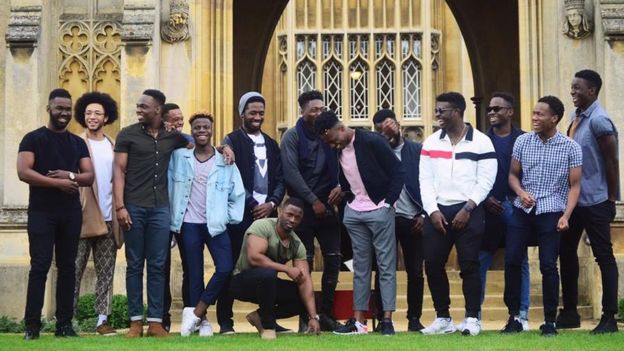
Here, the Cambridge University African-Caribbean are trying to change that.  A recent article, bhis was the intended message behind a photo of 14 black male students from the University that has been liked more than 2,000 times on Facebook. The group posed for several images that were shared in a bid to encourage more black students to apply to the university.

Accusations of inequality have dogged Cambridge University for many years, as they have Russell Group Universities. The high standard for entry to such prestigious institutions practically bars entry to those who’s formative years were economically or socially deprived. Statistically, those from economically or socially deprived areas are less like to do well at school and subsequently less likely to meet the high standards of a University like Cambridge. So, when such institutions brag about scholarships and bursaries for the under privileged the recipients still need to meet the university’s high entrance criteria. As such, these underprivileged students still need the support at home in order to attain the grades needed to enter Cambridge. It is statistically supported, though controversial, for me to say learners who have a stable and supportive home life achieve better than their disadvantaged peers. So, the really underprivileged learners who have challenging economic or social difficulties have, statistically, very little chance of meeting the entrance criteria for our elite institutions, let alone play polo or compete in dressage. What then are the Russell group and Oxbridge doing about this? How can they better support learners from really disadvantaged backgrounds over come that disadvantage and get in to Cambridge on talent alone, not grades and not on extra curricula pursuits.

However, there is some light at the end of the tunnel when groups such as the Cambridge University African-Caribbean can show case the positive steps taken. On the other hand, our prestigious institutions need to demonstrate that inequality is important to them by working with education providers in economically deprived parts of the country.

JD