

We need Grown-up Conversations About Race in the Workplace

Across the country, our workplaces are well overdue grown-up conversations about race.

You will find those who refuse to engage because they don’t want to be uncomfortable. Some refuse to have their preconceived perceptions challenged. Whilst there are others who celebrate diversity but don’t challenge racism. Then there are those who hide behind a veneer of inclusive leadership.

If you want to make a real difference in the workplace then go beyond celebrating diversity. Don’t only invest in Black History Month instead invest in Black futures. Check your Black representation at senior levels and make improvements to that.

Then, don’t put all responsibility for solving racism on the shoulders of your Black staff. Here’s the uncomfortable truth, it is for white people to challenge racism in the workplace. Whats more, it is for us to pay attention to our own lens for seeing the world, that lens is often shaped by decades of external influence.

Terms are being misused, sometimes deliberately. Recently, I read an interesting article on LinkedIn by David McQueen, where he spoke passionately about social justice and how it addresses ensuring there is fairness for all. Then, he speaks about what it means ‘being woke’, where we need to wake up and recognise that our boundaries need to be checked and not stepped over. Similarly, he explains privilege as being about recognising systems that work in your favour and how you can leverage those to help others.

Even so, as David explains, in far too many discussions these terms have been weaponised with the purpose to stifle, deflect or deter meaningful conversations on seeing how we can all be aware of and build systems to reduce racial bias.

We must make the changes necessary to create inclusive workplaces. We need to be in this together or nothing will change.

Here the CIPD offer helpful guidance on how to talk about race at work.

If you want to read further on the topic, it is hard to find a better book than White Fragility: Why It’s So Hard for White People to Talk About Race, by Robin Diangelo (Beacon Press, 2018).

Alternatively you can click here to watch the excellent video explainer by Robin DiAngelo where she explains why white people should stop avoiding conversations about race because of their own discomfort, and how ‘white fragility’ plays a key role in upholding systemic racism

Take a look at the short video below: John Amaechi: Let’s Talk about Race

JD
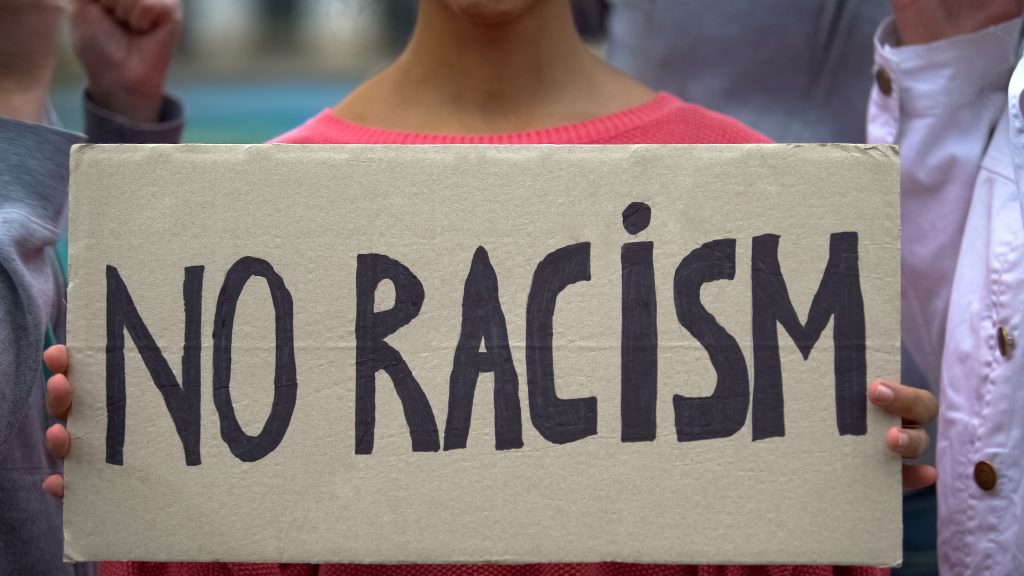
Challenging Workplace Racism

It’s sad that in 2020 racism in the workplace is still a very real thing. Whether it is appointing managers or promotion panels subconsciously overlooking black, Asian and minority ethnic (BAME) candidates, or the occurrence of overt instances of discrimination and harassment on the office/shop floor, it’s undeniable that there is still a lot of work to be done on this front.

While nearly all companies have legally binding anti-discrimination policies set up, and governments have issued directives and legislation to try and eradicate this issue, it’s still worth taking the time to highlight the cases where things have gone – or are going – terribly wrong. With that in mind, here are four signs that racism may be an issue in your workplace:

1. STEREOTYPING

Managers must look out for examples of stereotyping in the workplace, which can provide the basis for racial discrimination to occur. Often based on misconceptions and incomplete information, stereotyping is particularly harmful as it portrays false generalisations, and attributes the same characteristics to all members of a group, ignoring the receivers of racism as individuals in their own right.

Be wary of the language used, and topics discussed, by colleagues. Are terms like “they” and “us” “your lot” used often to create a divide? Also, are workers making derogatory comments about elements of a person’s culture or customs?

2. HOSTILITY

Whether it is a black woman who is informed that she is too aggressive, a Muslim man criticised for not drinking during social events or an Indian immigrant/Eastern European mocked for their accent, managers should be able to spot unfair criticism and hostility towards BAME persons.

Victims of racism in the workplace can be subject to accusations of being out-of-place, and not fitting in the office/workplace culture. Moreover, BAME people tend to find that normal differences of opinion or failing to get along with a co-worker may be treated as more serious due to the hostility held towards them in a racially charged work environment.

3. OVERCRITICAL

With the increasing pressures of the modern time-poor, stress-rich business world, criticisms of employee performance from team leaders and peers is common.

Managers must be mindful, however, of how fair the criticism is to all staff, particularly minority groups, reacting quickly to criticisms that go a step too far. Victims of racial discrimination at work have reported being vilified for doing their work.

4. CONSISTENTLY OVERLOOKED

The “glass ceiling” is a prolonged issue that ties together all the previous points, and results in many talented, ambitious and well-educated BAME men and women failing to gain jobs, promotions or salary boosts, compared to their white counterparts.

But when the opportunities do finally arise, victims of racism note that their authority is constantly challenged and undermined by those both above and below them on the career ladder.

Thanks to Equality and Diversity UK for these signs on how to identify if racism may be an issue in your workplace.

JD