The Stonewall debate – trans rights versus gender-critical beliefs

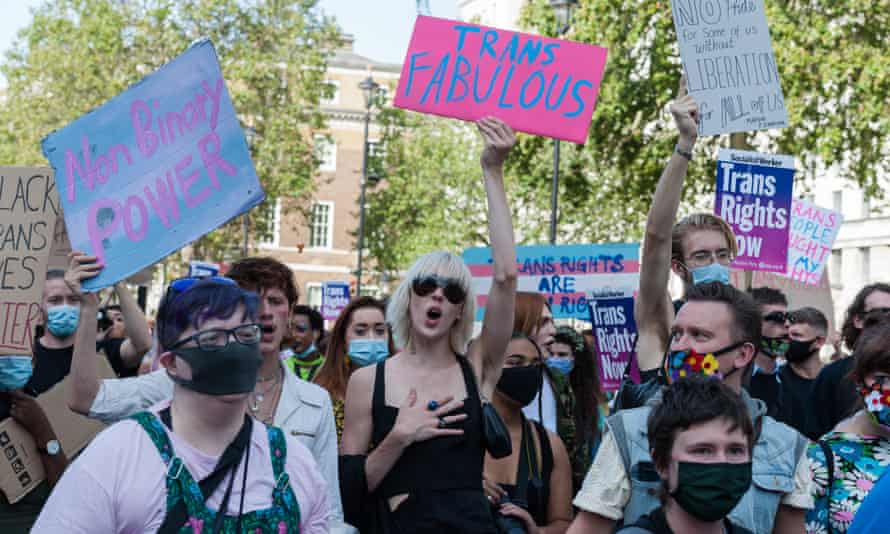
In recent months, Stonewall – Europe’s leading LGBTQ Rights organsaition – have found themselves at the centre of some very public controversy regarding trans rights. It doesn’t look like it is going away anytime soon either.

In brief, Stonewall have been accused of shutting down gender-critical beliefs (and subsequent debate over trans rights) as transphobia, subsequently the Government equalities minister (Liz Truss) has urged government departments to withdraw from Stonewall’s flagship Diversity Champions programme.

According to the Guardian the debate centres on trans rights campaigners on one side and gender-critical feminists – who disagree with the view that gender identity should be prioritised over biological sex – on the other.

The debate is a complex one but in recent months critics believe Stonewalls stance on trans rights is over-aggressive and seeks to shut down debate but which the charity and its defenders believe is putting it on the right side of history.

In law, ‘Gender identity or trans status’ are not protected, only ‘gender reassignment’ is protected under the Equality Act 2010. However, Matthew Parris, one of Stonewall’s 14 founders, wrote in the Times that the charity had been “cornered into an extremist stance” on the subject of trans rights. He argued that Stonewall should stay out of the issue, sticking to LGB rights without the T. Whilst the right to change one’s legal gender was established in the UK in the 2004 Gender Recognition Act, it was only six years ago that Stonewall announced that it would work for trans equality and apologised for its past failure to do so.

In recent months, Liz Truss, the equalities minister, urged all government departments to quit the Diversity Champions programme. This was followed by a report that accused Stonewall of giving incorrect advice on equality law. This was further complicated when the Equality and Human Rights Commission (EHRC) quit the Diversity Champions programme in May 2021.

Yet, suggestions emerged that employers were leaving the Diversity Champions programme because of disquiet over its transgender inclusion training. The Telegraph reported that six public-sector organisations had left out of about 850 members listed on Stonewall’s website, although those exits were since 2019 and none had publicly cited the issue of trans rights as motivation for leaving.

Stonewall accused the Equality and Human Rights Commission (EHRC) of defending gender-critical beliefs and suggesting that they are “protected beliefs” under the Equality Act, a position the signatories said was a “kick in the teeth to trans people”.

Prof Kathleen Stock, a professor of philosophy at the University of Sussex who has written a book criticising theories of gender identity, said Stonewall had encouraged a definition of transphobia that was far too wide. “Through its Diversity Champions scheme it’s disseminated this very widespread idea that an attack on the theory – or an attack on the particular interpretation – of identity is an attack on trans people. And that has really made the whole discourse incredibly toxic, given its enormous reach within national institutions,” she said.

In a recent interview with the BBC, Nancy Kelley, head of Stonewall, attracted more criticism by comparing gender-critical beliefs to antisemitism. She said, “With all beliefs, including controversial beliefs, there is a right to express those beliefs publicly and where they’re harmful or damaging – whether it’s antisemitic beliefs, gender-critical beliefs, beliefs about disability – we have legal systems that are put in place for people who are harmed by that.”

Kelley, who said Stonewall believed in freedom of speech but “not without limit”, said the comparison was apt as people were protected on the basis of their gender identity in the same way as people are on the basis of their race.

On the antisemitism comparison made by Kelley, veteran gay rights campaigner Peter Tatchell said. “Those who deny trans people’s existence, misgender them and advocate anti-trans discrimination echo the prejudice of racists and homophobes.”

The question for UK based organisations is do they continue with their association with Stonewall and the Diversity Champions Programme? If your organsaition has a strong stance on supporting trans people will staying with stonewall support that, or does the organsaition risk being dragged into a debate regarding gender-critical beliefs?

JD
Celebrate Bi Visibility Day this 23 September

It’s almost time for Bi Visibility Day, and we hope you’ll be celebrating it with us! It’s a great opportunity to tell all your bi employees, customers and service users that they are valued and celebrated, and that your organisation won’t tolerate any forms of biphobia.

Click here to read Amy, Pierrette and Stella’s stories of being bi in the workplace. These are the stories of LGBT people from across the world of work. Some speak of the change they’ve made at their workplace, some discuss the opportunities they’ve had as visible role models, and others explore the challenges they’ve faced along the way. All share the message that bringing your whole self to work is both liberating and powerful.

Bi people are often the forgotten part of the LGBT community. Their experiences are commonly assumed to be the same as lesbian and gay experiences, and their identities are frequently made invisible or dismissed as something that doesn’t exist, by people both inside and outside of this community.

They face a number of negative stereotypes, the primary ones being that they’re greedy, manipulative, incapable of monogamy and unable to make their minds up – the last of which is the same as saying who they are isn’t real.

The assumptions about bi people are also gendered. Bi women are more likely to be viewed as ‘actually straight’, their sexual orientation merely a performance to attract straight men, whereas bi men are frequently seen as going through a ‘phase’ on the way to coming out as gay.

This is why we need Bi Visibility Day. It’s an opportunity to celebrate diverse bi identities, raise the voices of bi people, and call for positive change.

Everyone has a role to play in achieving this: we need to learn about bi experiences and the unique challenges they face; we need to call out biphobia and harmful stereotypes, if safe to do so; we need to not assume sexual orientation on the basis of someone’s current partner; and we need to increase the representation of bi people whenever we can.

But first and foremost, if you want to step up as an ally to bi people, remember they exist, remember the stereotypes and assumptions they face every day, and think of one thing you can do in your daily life to help.

Thanks to Stonewall for this information.

JD

Employers should work harder to engage LGBT+ allies, say experts

I wanted to share a recent article by Emily Burt, from People Management, who attended the Stonewall Workplace Conference, 26 April 2019, in which she discusses the need to engage LGBT+ allies in the workplace. The article is both thought-provoking and relevant during Pride Month, particularity if you work in HR or are engaged in improving workplace equality and diversity. What is made abundantly clear by the conference speakers is the need for further support to improve LGBT+ inclusion in the work place and often people are not looking in the right place.

Stonewall conference urges better communication, with 35 per cent of LGBT staff having hidden their sexuality at work

Organisations must work to encourage, support and empower their LGBT+ members of staff and recognise the business case for inclusive cultures in order to drive genuinely diverse workplaces, experts have told delegates at the 2019 Stonewall Workplace Conference.

stonewall2_tcm27-57012_w1228_n

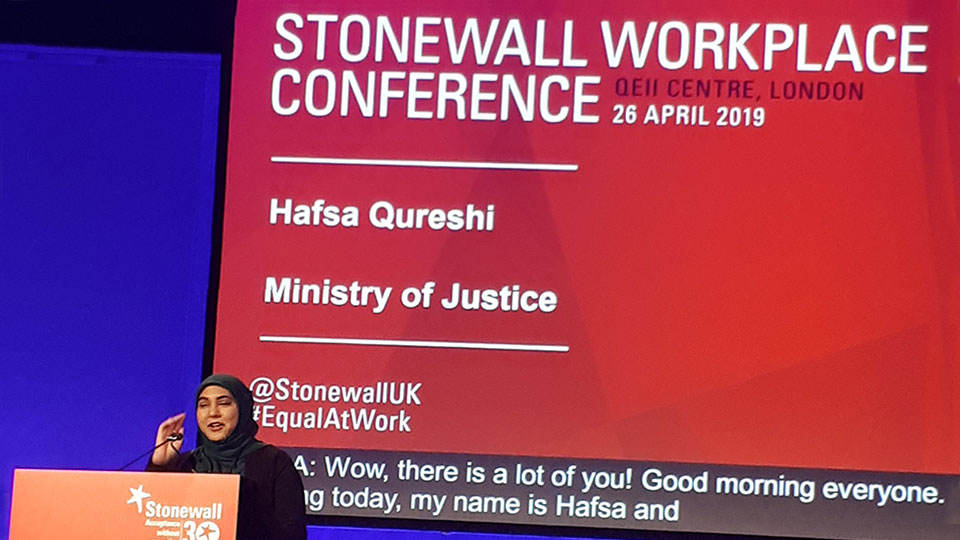
Hafsa Qureshi (pictured), recruitment specialist at the Ministry of Justice and Stonewall’s bisexual role model of the year, said engaging people who do not identify as LGBT with the challenges faced by the community was an important part of creating inclusivity at work.

Speaking to People Management, Qureshi said: “One of the biggest hurdles is reaching people who don’t identify as LGBT to be allies. Too often, people assume that because someone is not from a visible protected characteristic, they don’t have any issues at work.”

Qureshi added that it was imperative for LGBT allies to promote inclusive cultures at every level of a business.

“Having worked with smaller and larger organisations, the ones that struggle with diversity and inclusion often do so because they fail to communicate it beyond management level,” she warned.

“The culture stops before reaching the employees who have face-to-face interactions with customers or clients.”

More than 1,000 people attended the opening session of the conference, with the theme ‘Equal At Work’, where CEO Ruth Hunt delivered her final keynote ahead of departing from her role at the charity later this year.

“We sometimes forget that it wasn’t that long ago that being LGBT meant you could be fired from work or denied service because of who you are,” she said, adding: “While it’s important to celebrate how far we’ve come, we cannot be complacent.”

A 2018 survey from the charity found almost one in five LGBT staff (18 per cent) were the target of negative comments or conduct from work colleagues because of their sexuality. More than a third (35 per cent) had hidden or disguised the fact they were LGBT at work for fear of discrimination.

The community has also faced a series of rows on an international scale over the last 12 months, including President Trump’s policy to prohibit some transgender people from serving in the US military, and schools in Birmingham dropping classes that include discussion of LGBT relationships following protests from parents.

In a speech to conference delegates, Penny Mordaunt, Minister for Women and Equalities, reaffirmed the government’s commitment to LGBT-inclusive workplaces, stating: “Organisations cannot afford to exclude talented people, or to limit their potential.”

She said the Government and Equalities office (GEO) would continue to provide targeted interventions seeking to improve the experiences of LGBT people at work and announced that the GEO would coordinate a series of events to gather employer views, and share expertise and experiences this coming autumn.

Mordaunt acknowledged the GEO was asking HR departments to commit to a number of significant initiatives – including gender pay reporting and the Race at Work charter – which were “not remotely joined up or coordinated”.

But she added: “In order to build the businesses of tomorrow, we need workforces that are able to authentically be themselves.”

Speaking to delegates, Qureshi concluded: “Sometimes, all it takes is one person to step forward in order to make a workplace culture feel more accepting.

“I encourage you all to use your voices and platforms to raise awareness for your LGBTQ community. Your voice is more important than you know – and you may say something that a person like me has waited their whole life to hear.”

JD

LGBT Inclusion Tips for the Workplace – Stonewall

I have recently been working with Stonewall, the leading lesbian, gay, bisexual and transgender rights charity in the United Kingdom, in order for my organisation to partner with their Diversity Champions Programme.

stonewall-diversitychampion-logo-black-250As I looked further into setting up my own staff networks for protected characteristics I came across the following ten tips to help build an LGBT inclusive culture in an organisation via Stonewalls website and wanted to share it.

People perform better when they can be themselves, and if you’re looking to make sure that lesbian, gay, bi and trans (LGBT) people are fully included in your workplace, Stonewall have got some tips to help.

  1. Ensure that your policies are fully inclusive of LGBT people

This includes pensions, family and leave policies, health insurance and relocation allowances. You should make sure your policies explicitly mention LGBT people.

  1. Get people involved across your organisation

This could include setting up a network group specifically for LGBT employees; they’ll help you know where you’re doing well and which areas may need a new approach.

  1. Reward those involved in your LGBT network group

Embed their involvement in their appraisals; make being part of the network a desirable thing to be.

  1. Decide upon a clear strategy and tactics

Whether you want to increase the number of staff who are open about being LGBT, or revise your policies to make them fully inclusive, it’s crucial to know where you want to be and how you’re going to get there.

  1. Engage staff members who don’t identify as LGBT

Allies, as we call them, are a crucial element of ensuring inclusion for all. They can help spread the message that diversity is celebrated by your organisation.

  1. Ensure senior support

Making certain your senior leaders actively communicate their support for LGBT inclusion sends a positive message of acceptance for all across your organisation.

  1. Speak to your staff

Consulting employees – both LGBT and non-LGBT – about what inclusion looks like in your organisation will help ensure your strategy is appropriate and that all staff share your vision.

  1. Understand your staff

Getting to know the make-up of your staff through techniques such as monitoring will help ensure you effectively cater to any needs they may have.

  1. Celebrate your successes

Making sure your organisation is LGBT-inclusive is an ongoing journey, so it’s important to celebrate your successes, whatever size they may be, along the way. Every step is a step towards acceptance without exception for LGBT people.

  1. Become a Stonewall Diversity Champion

Diversity Champions is Britain’s leading programme for ensuring that your workplace is truly inclusive.

JD