Race Equality Week

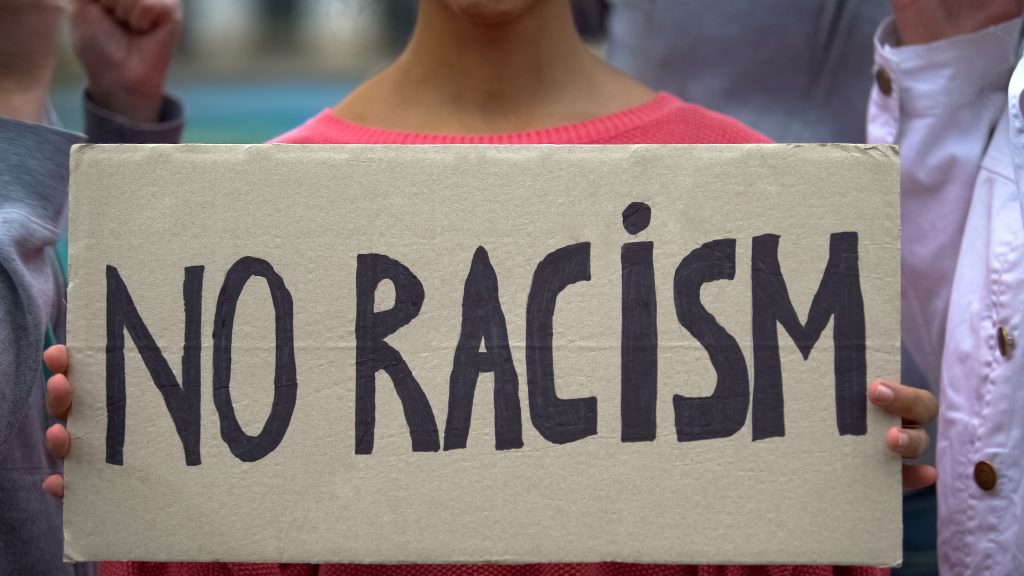
February 6th marks the start of Race Equality Week. The theme for Race Equality Week 2023 is #ItsEveryonesBusiness. This theme was chosen as 79% of respondents believe it would have a meaningful impact on tackling race inequality.

Race Equality Week is an annual UK-wide movement uniting thousands of organisations and individuals to address the barriers to race equality in the workplace. The events of 2020, including the Black Lives Matter movement and the disproportionate impact of COVID-19 on ethnic minority communities, has heightened public consciousness of race inequality

Since the flurry of pledges many organisations were making back in 2020 to become more inclusive, which for many included black squares, signing charters and race action plans, progress in addressing racial inequality is proving to be a challenge.

Race Equality Matters’ survey highlighted that the majority of respondents felt very little had changed in the last 12 months. Whilst some organisations are now taking a nudge approach, which is starting to impact change. Many have struggled to know where to start.

Thanks to Sy Joshua at Race Equality First for these actions to ensure you are on top of your game when it comes to Race Equality in the Workplace: 

1. Book your team onto Anti-racism training

It’s not enough to be ‘not racist’, what is your team doing to be Anti-racist? Are you taking active steps to remove racial barriers and obstacles from the workplace.

2. Review your diversity & inclusion policy

Too many Diversity and Inclusion policies are a ‘copy & paste’ job. Does your policy contain your organisation’s DNA around EDI? If not, a full review may be overdue!

3. Encourage employee-led initiatives promoting racial equality

Empowering employees towards coproduction and including ‘lived experience,’ is a must in ‘moving the dial’ towards more inclusive spaces.

4. Ensure inclusive initiatives are outcome focused

Don’t forget to measure the impact your initiatives are having on attitudes, behaviour and workplace culture.

I’d love to hear where you are on your journey to becoming an anti-racist workplace. Let me know in the comments…

#BlackLivesMatter

In relation to the tragic events of May 25th in Minnesota, I support the black community at this difficult time and remain committed to using my voice to effect real change. It should not take a video of a man being killed and thousands of people in the street for us to pay attention.

I am inspired by the strength and character of the black community in the face of these senseless tragedies and am committed to standing up for what is right and not just standing by.  Shallow, tokenistic commitment is worse than silence. If you are interested in racism only when it is trending, keep your solidarity to yourself.

I encourage all the community, where you see racism and racist behaviour then call it out, challenge it and if it’s in the workplace tell someone. Silence is no longer an option and we will step up for our black colleagues, now more than ever.

If you are not Black, please remember your voice is needed right now—being anti-racist means speaking up, being an ally and challenging the injustices that may not directly affect you. Stand up, make noise about the events happening right now, educate family and friends and continue to push for change. Recognising white privilege has become a major focus in building a fairer society, but we also need to recognise the privilege of living in the west.

Now is not the time to be silent, neither is it the time to jump on a bandwagon. It’s a time for real reflection and care with regards  standing by the black community at this time and move forward with real steps to end racism and injustice. Racism can only be addressed together, we can not afford to stand on the sidelines making excuses.

Let’s unite to confront and stop the spread of race-related hatred, violence and systemic injustice.

As, Kehinde Andrews, writing for the Guardian, says “It is time to radically rethink society to make it value black life. History tells us that the oppressed won’t wait for ever. It is time to get on the bus or get out of the way. ”

Black lives matter.

No individual can solve the deeply embedded issue of racism but if you want to see real change then you must be that change, don’t wait another second for others to lead you. Be the change you want to see, challenge your community, challenge your workplace to be better. With racism so deeply rooted in our social order, there can be no quick fixes – but here are some steps you can take in the workplace.

  1. Be clear and concise-we’re talking about Black issues

Make it clear we are talking about Black issues, not “people of colour.” This is not the time for digressing or diluting the issue for non-Black comfort. There is no place for this—ever. Step up in a direct and empathetic way.

  1. Talk about this, openly

Make it clear why this is a crucial conversation to have. Do not post in Black/race-focused groups only. This is relevant for everyone. Talk about systemic racism, sharing links to Black-driven research, making it clear this is a structural issue we all must address.

  1. Create a safe space for colleagues to vent, and be open, if they want to be

Violence on Black colleagues is not an anomaly—people are emotionally scared and physically exhausted. As we’re all mostly working remotely, this may mean having open-diary slots with managers or creating an open space on your communication platform for folks to talk if they want to.

  1. Signpost mental health support

Talking to colleagues isn’t enough. People need to know what professional mental health support is available to them and how to access it as soon as possible.

  1. Managers must step up

Ensure managers are giving space to Black colleagues in particular, right now. Managers play a huge role in supporting people with everything happening in society—empathy is key. What affects or doesn’t affect you does not necessarily map to everyone else.

  1. Do not centre yourself

Do not focus on yourself in these conversations. If you are not Black, your pain and hurt is not the priority right now. This may be an anomaly for you—it is not an anomaly for Black colleagues who live this life, every day.

  1. Senior leaders must step up, especially if they are white or non-Black

Senior leadership must actively speak about this, whether they are uncomfortable or not. Their privilege must be used to make a difference. They should also signpost resources / donation links. They have a responsibility to show up for everyone. Keep in mind, most in leadership are white or non-Black, therefore their role as allies are important. They have the privilege of being listened to. They must amplify, learn and talk to their fellow white and non-Black colleagues to invoke real change.

  1. Analyse your data

Remember that one post doesn’t fix systemic racism. Highlight your compulsory anti-racism training (not opt-in, which is not useful). Gather our data across different protected characteristics to allow for analysis of bias in hiring, probation and promotion processes. Use this data to challenge our processes. If Black colleagues aren’t being treated in the same way as others, share this transparently and spend time creating an action plan to challenge.

  1. Do not add emotional/educational labour to Black colleagues

Every single person is different. That means people are processing this in many ways right now. Please make sure you’re not forcing Black colleagues to engage. This is emotionally/physically exhausting. If they want to, that is fine. If not, that is also fine. There is no onus on them to educate us.

JD

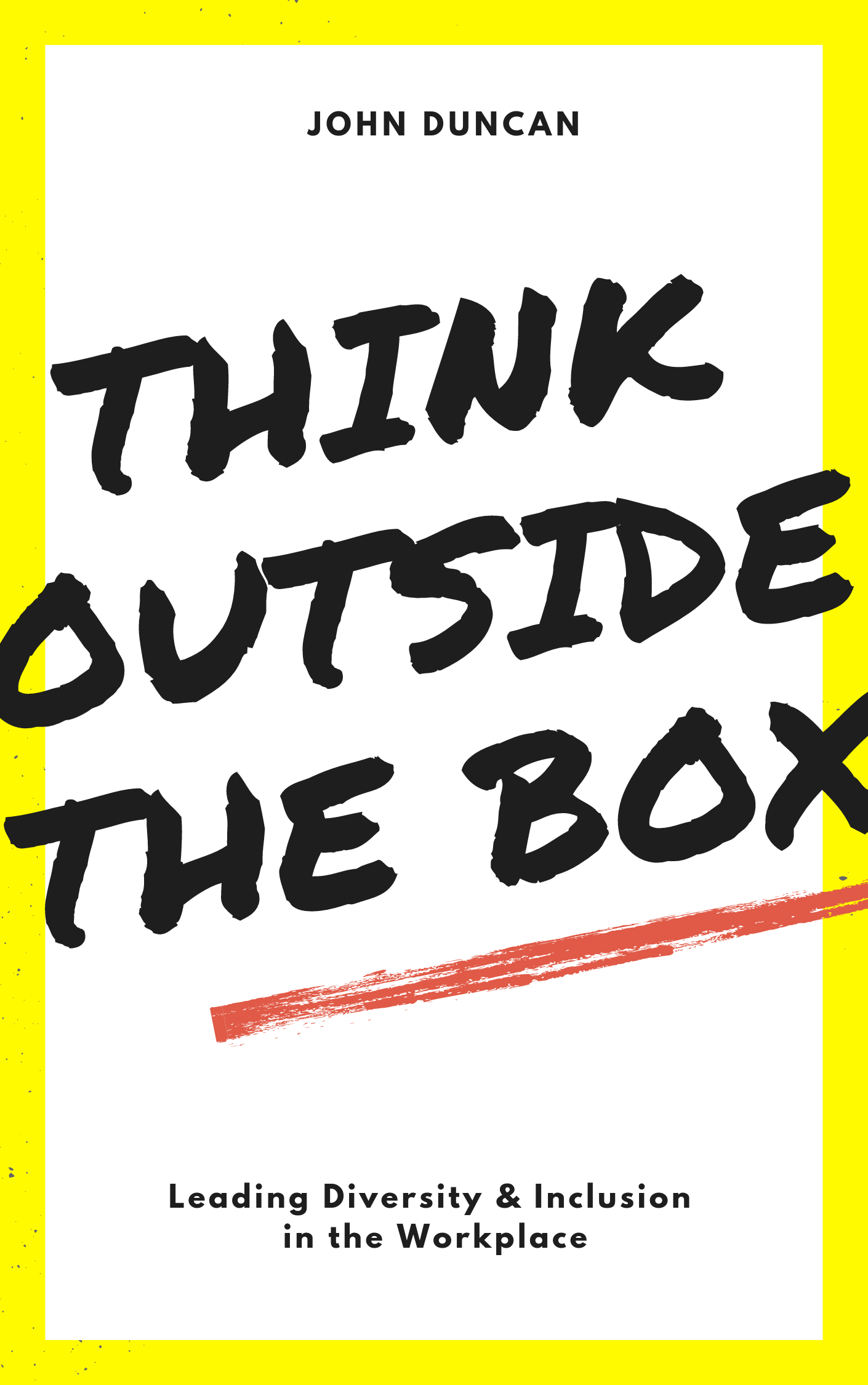
Think Outside the Box – Leading Diversity & Inclusion in the Workplace

Diversity & Inclusion Book Cover

I am delighted to announce that following on from my previous book ‘Leading Equality, Diversity & Inclusion – A Practical Guide for Managers’,  my new book ‘Think Outside The Box – Leading Diversity & Inclusion in the Workplace’ is now available as a hard copy,  paperback book on amazon.co.uk.

The origins of this book come directly from this very blog and I will be sharing aspects of the book over the coming weeks. However, in the meantime, if you are involved with workplace diversity and inclusion then please take a look at the book; it has a range of proven strategies that will help build an inclusive culture in your workplace.

The books blurb goes something like this. ‘In practise, equality, diversity and inclusion can sometimes be perceived – quite inaccurately – as political correctness or an exercise in government ‘box ticking’. Yet, in recent years, organisations have become increasingly aware of the business case for being a fully inclusive workplace, where employees feel valued, opportunities are available for all and diversity is celebrated.

In this case, diversity and inclusion initiatives become less about compliance with legislation and more about leading change, improvement initiatives, engaging, motivating and improving the potential of staff.

‘Think Outside The Box – Leading Diversity & Inclusion in the Workplace’ provides an up-to-date source of diversity and inclusion best practice for workplace leaders and gets to the heart of the diversity issues facing the UK workforce with clear strategies and practical guidance to creating a fully inclusive workplace.

Author – John Duncan – is a Diversity and Inclusion specialist leading on strategy and policy development with over 15 years substantial experience of providing advice, support and training within the public sector. ‘

JD


Invisible banana skins thrown at black people every day, says John Barnes

Is racism in sport something that the education sector can tackle?

The football charity Kick it Out, football’s equality and inclusion organisation, work extensively with clubs and fan community groups to reduce racism, homophobia and other forms of discrimination through its education programmes.

However, by targeting a captive audience, so to speak, can schools, colleges and universities help organisations, like Kick it Out, challenge racism in sport? As an experienced educator, I am confident that racism is comprehensively challenged in classrooms up and down the country. However, if our educational institutions challenge racism when they hear it… it asks further questions as to why sports professionals are still subjected to racism from people who have been through our educational system. That said, as an experienced equality, diversity and inclusion professional, I am not confident that all workplaces in England would effectively challenge racist attitudes if they heard it in the workplace. As such, if racism is not challenged in the workplace as much as it should be then it is left solely to our educational institutions to drive an zero tolerance policy on racial abuse and racism in general.

More importantly, education is what is needed to help dispel racist attitudes and negative stereotypes amongst those learning skills for the workplace. In that way, we slowly influence the workplace where old fashioned racist attitudes can be challenged and hopefully diminished. A further knock on effect of this would be the impact it has on those who attend sporting events. That said, will sports fans themselves ever be in a position to feel suitably empowered to challenge racist abuse when they hear it in the stands?

Racism in sport recently hit the headlines again with extensive national press coverage when Raheem Sterling was allegedly on the receiving end of racial abuse during his side’s 2-0 defeat at Chelsea. It’s worth noting that in this situation Raheem Sterling is at work and as such is entitled to protection from harassment under the Equality Act 2010. Subsequently, if the allegations are found to be true, the player was racially abused at work and Chelsea football club are duty bound to investigate the incident and report there findings, taking appropriate action where appropriate.

Below is an thought-provoking article from Mandeep Sanghera, BBC Sport, highlighting the similarities between Raheem Sterling’s recent experience at Stamford Bridge and that of fellow Jamaican-born England international John Barns. Barnes famously back heeled a banana skin off the pitch in a game at Everton in 1988 and tells BBC Sport that the problem has not gone away since his playing days.

https://www.bbc.co.uk/sport/football/46504433

JD