
Managing neurodiversity in the workplace

According to Harvard HealthNeurodiversity refers to diversity in the human brain and cognition, for instance in sociability, learning, attention, mood, and other mental functions. It provides an inclusive view of cognitive diversity, highlighting the differences at a neuro-biological level while considering the socio-cultural contexts of a human’s lived experience.  

Employers need to be mindful as to how the business set up helps support those with different neurological conditions to create a diverse workforce. This includes:

  • · Understanding the importance of managing neurodiversity at work.
  • · Understanding how to manage neurodiversity at work, and 
  • · Being better able to support those with different neurological conditions. 

In 2021, a Harvard Health report described the idea that people experience and interact with the world around them in many different ways; there is no one “right” way of thinking, learning, and behaving, and differences are not viewed as deficits

The report explains how neurodiversity advocates encourage inclusive, non-judgmental language. While many disability advocacy organizations prefer person-first language (“a person with autism,” “a person with Down syndrome”), some research has found that the majority of the autistic community prefers identity-first language (“an autistic person”).  

Therefore, rather than making assumptions, it is best to ask directly about a person’s preferred language, and how they want to be addressed. Knowledge about neurodiversity and respectful language is also important for clinicians, so they can address the mental and physical health of people with neurodevelopmental differences. 

According to Professor Amanda Kirby, CEO of Do-it Solutions Limited and Campaigner for Neurodiversity, Neurodiversity is the way we think, move, act, communicate and process information. 

She explains, “we are all different. Some people have challenges and strengths associated with conditions such as Attention Deficit Hyperactivity Disorder (ADHD), Dyslexia, Autism, Dyscalculia, Developmental Coordination Disorder/Dyspraxia, Developmental Language Disorder. 

There is not one person or one condition that defines our differences ( or our similarities). We are too often defined by what we can’t do and not by what we can. 

The reality is that some people will gain a diagnosis of Dyslexia, for example, and others diagnosed as having Autism or ADHD. However, who gains a diagnosis often can be a bit of a lottery. It can depend on whether difficulties are identified as a child by a teacher who spots some signs of Dyslexia or Dyspraxia (also known as Developmental Coordination Disorder) or by a parent who knows something about one of these conditions.

It often requires tenacity on the part of the parent or individual and also depends on local waiting lists and service availability. For many people it can be a lengthy and at times costly process in terms of stress. Some people are paying for assessments as an alternative at a high cost. 

For most people the starting position is to understand their challenges and gain some practical strategies to help as soon as possible. By understanding their unique spiky profile, you have a starting point to help to support them to be their best. 

A person-centred approach means that strategies are tailored to EACH PERSON. It also importantly means harnessing strengths, to build confidence, self-esteem and become resilient.” 

Professor Kirby’s research produced an effective guide for employers to making different adjustments for neurodivergent people, where three elements can be easily changed. Take a look at the graphic below and consider what your organisation can do to better understand how to manage neurodiversity at work, and how to support those with different neurological conditions.

I’d love to hear where you are on your journey to becoming an neurodiverse workplace. Let me know in the comments…
The Stonewall debate – trans rights versus gender-critical beliefs

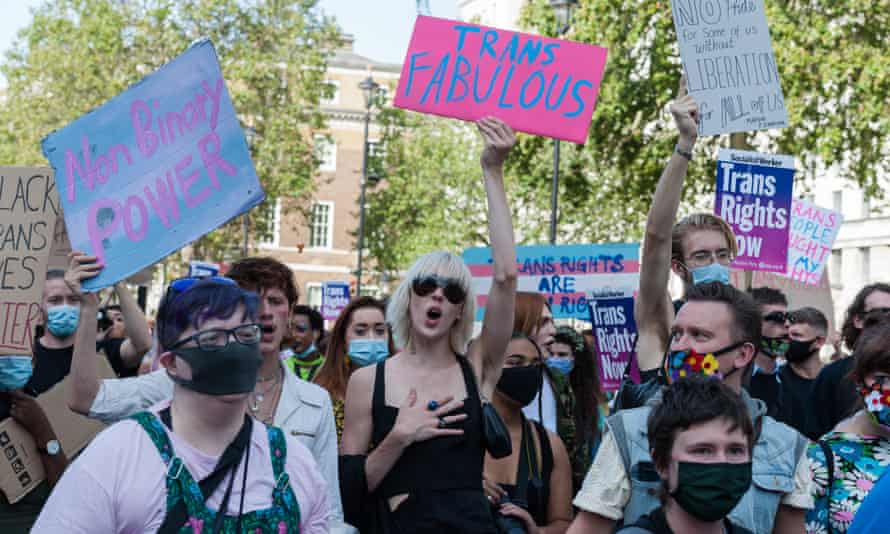
In recent months, Stonewall – Europe’s leading LGBTQ Rights organsaition – have found themselves at the centre of some very public controversy regarding trans rights. It doesn’t look like it is going away anytime soon either.

In brief, Stonewall have been accused of shutting down gender-critical beliefs (and subsequent debate over trans rights) as transphobia, subsequently the Government equalities minister (Liz Truss) has urged government departments to withdraw from Stonewall’s flagship Diversity Champions programme.

According to the Guardian the debate centres on trans rights campaigners on one side and gender-critical feminists – who disagree with the view that gender identity should be prioritised over biological sex – on the other.

The debate is a complex one but in recent months critics believe Stonewalls stance on trans rights is over-aggressive and seeks to shut down debate but which the charity and its defenders believe is putting it on the right side of history.

In law, ‘Gender identity or trans status’ are not protected, only ‘gender reassignment’ is protected under the Equality Act 2010. However, Matthew Parris, one of Stonewall’s 14 founders, wrote in the Times that the charity had been “cornered into an extremist stance” on the subject of trans rights. He argued that Stonewall should stay out of the issue, sticking to LGB rights without the T. Whilst the right to change one’s legal gender was established in the UK in the 2004 Gender Recognition Act, it was only six years ago that Stonewall announced that it would work for trans equality and apologised for its past failure to do so.

In recent months, Liz Truss, the equalities minister, urged all government departments to quit the Diversity Champions programme. This was followed by a report that accused Stonewall of giving incorrect advice on equality law. This was further complicated when the Equality and Human Rights Commission (EHRC) quit the Diversity Champions programme in May 2021.

Yet, suggestions emerged that employers were leaving the Diversity Champions programme because of disquiet over its transgender inclusion training. The Telegraph reported that six public-sector organisations had left out of about 850 members listed on Stonewall’s website, although those exits were since 2019 and none had publicly cited the issue of trans rights as motivation for leaving.

Stonewall accused the Equality and Human Rights Commission (EHRC) of defending gender-critical beliefs and suggesting that they are “protected beliefs” under the Equality Act, a position the signatories said was a “kick in the teeth to trans people”.

Prof Kathleen Stock, a professor of philosophy at the University of Sussex who has written a book criticising theories of gender identity, said Stonewall had encouraged a definition of transphobia that was far too wide. “Through its Diversity Champions scheme it’s disseminated this very widespread idea that an attack on the theory – or an attack on the particular interpretation – of identity is an attack on trans people. And that has really made the whole discourse incredibly toxic, given its enormous reach within national institutions,” she said.

In a recent interview with the BBC, Nancy Kelley, head of Stonewall, attracted more criticism by comparing gender-critical beliefs to antisemitism. She said, “With all beliefs, including controversial beliefs, there is a right to express those beliefs publicly and where they’re harmful or damaging – whether it’s antisemitic beliefs, gender-critical beliefs, beliefs about disability – we have legal systems that are put in place for people who are harmed by that.”

Kelley, who said Stonewall believed in freedom of speech but “not without limit”, said the comparison was apt as people were protected on the basis of their gender identity in the same way as people are on the basis of their race.

On the antisemitism comparison made by Kelley, veteran gay rights campaigner Peter Tatchell said. “Those who deny trans people’s existence, misgender them and advocate anti-trans discrimination echo the prejudice of racists and homophobes.”

The question for UK based organisations is do they continue with their association with Stonewall and the Diversity Champions Programme? If your organsaition has a strong stance on supporting trans people will staying with stonewall support that, or does the organsaition risk being dragged into a debate regarding gender-critical beliefs?

JD

The Gender Pay Gap

Equality & Diversity initiatives are designed to redress the balance where decades of inequality have led to high levels of disparity in the workplace. Gender Pay Gap reporting is no different and the Equality Act 2010 makes it a statutory duty for organisations with more than 250 employees to report on their gender pay gap, which looks to redress the long standing percentage difference between average hourly earnings for men and women. Currently, the national average mean gender pay gap is 17.9%, which indicates – on average – woman in the UK earn 17.9% less than men. In fact, the Guardian (April 2019) reported that a quarter of companies and public sector bodies have a pay gap of more than 20% in favour of men. However, according to the Financial Times (23 April 2019), Government policymakers hoped the transparency would shame large employers into taking swift action to narrow the difference between what they pay men and women.

What is the Gender Pay Gap?

The gender pay gap shows the difference between the average (mean or median) earnings of men and women. This is expressed as a percentage of men’s earnings e.g. women earn 15% less than men. Used to its full potential, gender pay gap reporting is a valuable tool for assessing levels of equality in the workplace, female and male participation, and how effectively talent is being maximised.

What is the difference between the gender pay gap and equal pay?

It’s worth noting that a gender pay gap isn’t the same as unequal pay. Equal pay – where men and women doing the same job should be paid the same – has been a legal requirement for nearly fifty years. Under the Equal Pay Act 1970, and more recently, the Equality Act 2010, it is unlawful to pay people unequally because they are a man or a woman. This applies to all employers, no matter how small.  As such, a company might have a gender pay gap if a majority of men are in top jobs, despite paying male and female employees the same amount for similar roles.

The gender pay gap shows the differences in the average pay between men and women. If a workplace has a particularly high gender pay gap, this can indicate there may be a number of issues to deal with, and the individual calculations may help to identify what those issues are. In some cases, the gender pay gap may include unlawful inequality in pay but this is not necessarily the case.

What is the Median pay gap?

The median pay gap is the difference in pay between the middle-ranking woman and the middle-ranking man.

If you place all the men and women working at a company into two lines in order of salary, the median pay gap will be the difference in salary between the woman in the middle of her line and the man in the middle of his.

What is the Mean pay gap?

The mean pay gap is the difference between a company’s total wage spend-per-woman and its total spend-per-man.

The number is calculated by taking the total wage bill for each and dividing it by the number of men and women employed by the organisation.

Why is there a Gender Pay Gap?

According to the BBC, there’s no one reason behind the gender pay gap – it’s a complex issue.

The Fawcett Society, a group which campaigns for equality, says caring responsibilities can play a big part. Women often care for young children or elderly relatives. This means women are more likely to work in part-time roles, which are often lower paid or have fewer opportunities for progression.  Another important factor is a divided labour market. Women are still more likely to work in lower-paid and lower-skilled jobs. Women currently make up 62% of those earning less than the living wage, according to the Living Wage Foundation. Discrimination is another cause of the gender pay gap. The Equality and Human Rights Commission (ECHR) has previously found that one in nine new mothers were either dismissed, made redundant or treated so poorly they felt they had to leave their job. This can create a gap in experience, leading to lower wages when women return to work.

Men also tend to take up the majority of the most senior roles at a company, which are the highest paid.

Who has to publish Gender Pay Gap data?

As stated earlier, it is a legal requirement for all employers (with 250 or more employees) to publish their gender pay report within one year of the ‘snapshot’ date: this year’s date being 31st March 2019.  However, whilst all employers must comply with the reporting regulations – for employers whose headcount varies they must comply with the reporting regulations for any year where they had a headcount of 250 or more employees on the ‘snapshot’ date.

What information needs to be published?

The following information must be reported by organisations:

  • Their mean gender pay gap
  • Their median gender pay gap
  • Their mean bonus gender pay gap
  • Their median bonus gender pay gap
  • Their proportion of males receiving a bonus payment
  • Their proportion of females receiving a bonus payment
  • Their proportion of males and females in each quartile pay band
  • A written statement, authorised by an appropriate senior person, which confirms the accuracy of their calculations. However, this requirement only applies to employers subject to the Equality Act 2010 (Gender Pay Gap Information) Regulations 2017.

Can companies be punished for a wide gender pay gap?

According to Lorna Jones, Business Reporter, BBC News, companies can’t be punished for a wide gender pay gap. But they might be punished for failing to publish their data, or for publishing inaccurate or misleading figures.

The Equality and Human Rights Commission (EHRC) is responsible for ensuring employers publish their pay gap figures. The EHRC set out plans for its enforcement policy in December. The EHRC says it will approach employers informally at first, but businesses could ultimately face “unlimited fines and convictions”.

As the EHRC is still consulting on these plans, it remains to be seen whether they can or will punish companies in this way. At the moment, there is no enforcement mechanism in the regulations on publishing pay gap data. The UK government says it will also publish sector-specific league tables, highlighting companies failing to address pay differences between men and women.

What can organisations do to reduce the Gender Pay Gap?

According to Dharishini David, Economics Correspondent with the BBC, gender pay gap reporting may not be enough: the government may need to get tougher. Ask gender pay specialists how to solve the problem and they’ll tell you there are many initiatives that companies can take – tackling unconscious bias, offering more flexible working and encouraging shared parental leave.

However, the issue doesn’t end at the office door. The experts say society needs to change.

For example, schools could encourage girls to take more STEM subjects: science, technology, engineering and maths. There should be more flexible, affordable childcare options. And men could take on more of the household chores.

However, societal change takes time, sometimes a generation, and currently we can report on the organisations gender pay gaps and look for short term internal solutions but overall society needs to change its attitude to gender, specifically in relation to employment, if we are to have pay equality across gender.

JD


Political Correctness? A Tick-Box Exercise? What is Equality and Diversity?

When leading Equality, Diversity and Inclusion (EDI) in an organisation it is not unusual to face challenges and barriers to achieving your targets from a common misconception as to what equality and diversity is all about. First and foremost, equality, diversity and inclusion is about people and not a ‘tick box’ exercise to satisfy government/employer statistics or legislation.

Perhaps the most common misconception reported by equality and diversity trainers is that EDI is often said – behind closed doors of course – to be ‘just political correctness’ or sometimes ‘political correctness gone mad’. Political correctness can be defined as ‘the avoidance of forms of expression or action that are perceived to exclude, marginalize, or insult groups of people who are socially disadvantaged or discriminated against’. It is often the term ‘forms of expression’ from definitions such as this which some interpret to mean jokes or work place banter. However, where someone is offended by your words it is not open to your interpretation it is open to theirs, as such if your opinion, jokes or workplace banter offends people then it is time keep such options, jokes or work place banter out of the workplace. To those who question whether equality and diversity is merely ‘political correctness gone mad’ I would ask the question whether it is acceptable for woman to be paid less than men for the same job, for part time staff or shift workers to have less opportunities in training, for the LGBTQ+ community to face harassment at work or for those from a minority to be excluded from jobs because of a different place of birth?  Sometimes, EDI needs to focus the minds of those not affected to understand how a lack of EDI impacts those who are affected and demonstrate how they can help bring fairness to their workplace.

However, even when supported, EDI can still be viewed by some in the workplace as ‘box to tick’ exercise or just another thing on a long list of other things that they are required to do by government. This fundamental lack of understanding as to the need for EDI practices often leads to a misunderstanding of intended actions and their outcomes which in its self often leads to a compartmentalised, tick-box approach. Nevertheless, what we are talking about here is implementing good EDI practice across an organisation rather enforcing a legal obligation on the workforce. It is this perception of enforced legislation that increases the risk of compartmentalisation and a tick-box approach. As such, it is this false perception of equality, diversity and inclusion that needs removing and this is where effective communication, workforce training and raising the profile of EDI can have a positive impact on its acceptance.

Hence, improving the understanding of EDI becomes about the message and vision set out by senior leaders. Essentially, EDI is about people and it focuses on treating all people fairly and ensuring there is equality of opportunity across the workforce. Naturally, isn’t this something we should all get on-board with? Unquestionably, fairness and equality of opportunity should be a priority for every organisation. As a result, the message needs to be very clear that EDI impacts on us all whether we be employees, employers, customers or other stakeholders including the communities we serve. For these reasons, we can see why good EDI practices must be embedded in all that we do.

JD

The Equality Act 2010 – An Introduction

The Equality Act 2010 came into force on 1st October 2010 and was introduced to bring together a complex set of overlapping legislation into one simplified and harmonious Act. This new Act brought together previous legislation including the Equal Pay Act 1970, the Sex Discrimination Act 1975, the Race Relations Act 1976, the Disability Discrimination Act 1995 and additional delegated legislation which prevented discrimination in employment on the basis of religion, belief, sexual orientation and age.

Whilst in general the Act covers employment and strengthens laws to give greater protection to employees from discrimination it does also cover some aspects of discrimination outside of employment. Most significantly, the Equality Act 2010 sets out a requirement for employers to assure equal treatment in access to employment as well as private and public services, regardless of the individuals ‘protected characteristics’, which are listed below.

  • Age
  • Disability
  • Gender Reassignment
  • Marriage and Civil Partnership
  • Pregnancy and Maternity
  • Race
  • Religion or Belief
  • Sex
  • Sexual orientation

These ‘protected characteristics’ represent a defining guide to safeguard employees from unfair treatment or discrimination but in the case of disability, employers and service providers are under a duty to make reasonable adjustments to their workplaces to overcome barriers experienced by disabled people.

Through the Equality Act 2010 employees are explicitly protected from discrimination and bias as well as bullying or harassment in the workplace. Consequently, employers must be mindful of how their procedures, policies and practices impact on their employees and where necessary review accordingly.

In order for an organisation to ensure it is meeting the requirements of the Act it is highly recommended, but not legally required, that an equality & diversity policy is in place, especially for larger organisations. In fact, for larger organisation, the publishing of an equality & diversity policy on the company website will demonstrate that the organisation is meeting its legal and moral obligations towards being a diverse employer. Furthermore, by having the policy in place and publically available it can contribute towards making its employees more comfortable and encourage everyone in the organisation to treat others equally.

JD

Workplace Inequality – Why Good EDI leadership is in Demand

Recent improvements to workplace equality and diversity practice have helped make UK employers more inclusive but we are still some way off seeing good practice embedded in all sectors. That said, nationally, we are certainly moving in the right direction and with continued support of organisations like the National Centre for Diversity, Stonewall, Diversity UK and Employers Network for Equality and Inclusion, there is no reason why this can’t continue.

In recent years, new job roles such as Equality, Diversity and Inclusion (EDI) Coordinator, EDI Lead or Head of EDI started to appear at the larger employers as they addressed the need for an equality and diversity specialist in their organisation. Clearly, these employers are starting to see the value in having strong equality and diversity leadership in their organisations, especially in light of the poor press high profile failures in EDI receive throughout news and social media reporting.

The need for organisational leaders to take ownership of EDI is still very much in demand because inequality and unfairness in the workplace has not disappeared and as the examples below demonstrate, provided by the Trade Union Congress (TUC), we still have some way to go for true workplace equality.

  • Black workers have fewer training opportunities than white workers and black women get an even worse deal.
  • Older Workers may have been in the job for longer but this may only mean that the longer you are in a job the less training you will receive.
  • Manual workers and/or workers with few qualifications are mainly overlooked for training as those who have a lot of education and training tend to benefit from any training on offer.
  • Part-time workers and temporary workers are often left behind when training is on offer as employers place a greater value on permanent or full-time workers at the cost of temporary or part-time workers. Women make up the majority of part-time workers.
  • Workers for whom English is a second language may find that the only jobs open to them are manual / low skilled jobs. Whilst some will have qualifications, these may have been achieved in another country and employers will often overlook them. A lack of spoken English is often a barrier to moving on.
  • Shift workers are least likely to participate in learning in colleges because of working patterns, or to be offered training by their employer.  They may need to be encouraged when learning is promoted and shift times taken into account when onsite learning takes place.
  • Discrimination often plays a role when access to job and training opportunities are based on negative stereotypes and perceptions of what people can and can’t do.

JD

Equality and Diversity in the Workforce

Increasingly, the term ‘Equal Opportunities’ is making way for discussions on ‘Diversity’ as this term is much broader in its scope and gets to the heart of the integration challenges the country faces.

Over the past five decades our society has become increasingly complex and diverse. The UK population is growing rapidly and subsequently becoming more diverse and with an aging population. Changes to immigration laws and better health care are contributing factors to the changing makeup of Great Britain and our subsequent workforce.

When asked, staff often perceive diversity as being a focus on ethnicity and race whereas issues of gender equality are often overlooked or misunderstood. Subsequently, diversity is actually a much broader term than a few labels and includes those other – difficult to define – human qualities that are dissimilar to our own perceptions or those of our communities but are widely prevalent in other communities. It is this fundamental difference that Diversity looks to both celebrate and accept alongside our own perceptions.

Whilst recent equality laws have helped to challenge discrimination and prejudice we still face equality gaps in the workplace, some larger than others. In response to the increasingly diverse needs of our communities the government have delegated a duty of responsibility on councils and their partners, including publicly funded bodes, such as the education and health care sectors, to be more accountable for ensuring everyone has an equal chance in life regardless of background.

To this end, in order to meet both government legislation and the diverse needs of our workforce, organisations need to ensure they build an inclusive culture where diversity is celebrated and everyone has equal opportunity. That said, this is clearly easier said than done, so here are six values that can help an organisations better promote a culture of equality and diversity.

  1. Value Feedback – Seek regular opportunities for staff feedback to impact on organisational practices and change behaviours.
  2. Value Experience – Create an inclusive culture by including staff in both strategic and operational planning ensuring they have equal access to opportunities to enable staff to fully participate.
  3. Value Fairness – equality comes when staff are confident their employer’s policies, procedures and practices are fair to all and don’t discriminate.
  4. Value Development – enable all staff to develop to their full potential though equal opportunities for training, empowerment and progression.
  5. Value Planning – make certain that staff resources do not discriminate against any individuals, groups or reinforce negative stereotypes.
  6. Value Collaboration – through effective training equip all staff with the skills to challenge inequality and discrimination in their workplace.

JD

University friends: By chance or by design?

It’s well known that students often end up making lifelong friendships with the fellow “freshers” they find themselves placed next to in their accommodation. But as Martin Rosenbaum, BBC Freedom of information specialist, asks ‘what determines who lives along side each other?’

According to the article below, a BBC research initiative has uncovered how some universities have surprising policies on how student rooms are allocated.

One of the significant benefits of going to university is the opportunity to interact with a more diverse range of people than students may be familiar with. That said, starting university, much like any large undertaking, can be a stressful event which is made easier if new students are mixed with people they are familiar with, or more likely to get on with. As such, higher education institutions have to help resolve the dilemma of student integration and happiness as part of their accommodation policies.

Some institutions, such as Bristol University, have an unashamedly explicit policy when it comes to housing their students – one that aspires “to create diverse, balanced communities within the residences with particular reference to nationality, gender, faculty, school type”.

Take a look at the article by Martin Rosenbaum below and let me know what you think… do you think social engineering in student accommodation will aid diversity or would a lack of intervention lead to social norms being further perpetuated?

https://www.bbc.co.uk/news/education-46430204

JD

School exclusions ‘fuelling gang violence’ – Barnardo’s

Councils across England are obliged to make every effort to reduce their NEET (Not in Education  Employment or Training) numbers which identify how many young people in the region are not actively involved in education, employment or training. In the main, Councils will work closely with schools to identify pupils who are at risk of not being involved in education, employment or training when they leave school whilst supporting the schools intervention strategies. Worryingly, where schoolchildren are excluded from education there is a significant rise in their likely hood to become NEET.

However, a recent report by Barnardo’s highlights a worrying trend that excluded schoolchildren are at serious risk of becoming involved in knife crime, the children’s charity has warned. Barnardo’s says excluded children are also at risk of “being groomed and exploited by criminal gangs”.

The charity said 47 councils, about one in three in England, had no spaces in pupil referral units (PRU), which look after excluded children. The government said a review of school exclusions and their impact on children was ongoing.

The research, which was carried out in collaboration with the All Party Parliamentary Group on Knife Crime, shows a 56% rise in exclusions in England since 2014. The group’s chairwoman, Sarah Jones, said knife crime was at its highest level on record and “our schools are on the front line”. She added: “Exclusions are rising and in many cases there is literally nowhere for those children to go. This is heartbreaking.” She said excluded children were “marked as failures”, and added professionals often talk about the “PRU to prison pipeline”.

Barnardo’s chief executive, Javed Khan, said: “We know children excluded from mainstream schools are at serious risk of being groomed and exploited by criminal gangs.” He urged the government to reduce the number of pupils excluded from schools and to improve alternative provisions so “vulnerable young people get the help they need to achieve of positive future”.

A government spokesperson said: “Permanently excluding a child from mainstream school should only ever be a last resort, and we support teachers in making these difficult decisions where they are justified.” They added the government was undergoing a review of exclusions led by the former education minister Edward Timpson.

The spokesperson said: “We are transforming alternative provision to improve outcomes for these children which helps them to flourish, backed by our £4m innovation fund that has created nine new projects around the country.”

https://www.bbc.co.uk/news/uk-46027265

JD

League tables changes ‘toxic’ for poor white schools

Interesting article here by 

As a former school manager I can confidently say that schools in economically challenging parts of the country – where there pupils are predominately disadvantaged white students – are both rewarding and challenging environments to work in. However, when being compared to a school in leafy suburb somewhere where the students come from financially better off communities it is certainly a challenge.

What the league tables don’t reveal is just how much progress that school actually has made, instead it is vilified for not being at the standard of a school in a more privileged part of the country.

The same can be said of recent comparisons between poorly preforming schools and the local privately educated and independent schools. There were calls for private schools to take over failing state funded schools but as mentioned in my previous post what on earth do private and independent schools know about the needs of learners from deprived areas?

This has noting to do with class or money, instead it has to do with privilege which is something entirely different. It is not uncommon to find two parents who are, lets say both doctors, at an independent school that charges £13,000 fees per year. For the pupil they have very clear role models there who can support them through their studies, attend parents evenings and pay £500 so ‘Sebastian’ can go on the schools annual skiing trip to the Black Forest in Germany. Now compare that to an inner-city school in an economically deprived part of the country. That pupils role models at home might both be unemployed, there could be a long history in the family of low skills, low wages and long term unemployment. That pupil might not get the academic help at home and parents might not even attended parents evening… lets not be naïve here –  I worked in a school where parents evening attendance was as low 38%. Admittedly, I am using two extreme examples here that are clearly poles apart but when asking an independent school to run a poorly performing state school the leadership will have to get to grips with the fact that the pupils they have to work with are already highly disadvantaged and might not be saved by good intentions alone. What happens when the schools outcomes don’t improve? Will they then be jettisoned by independent schools?

League tables should compare like for like – so an inner-city school in an economically disadvantaged part of the country should be compared to other inner-city schools which are situated in an equally economically disadvantaged part of the country. However, people might argue that will lead to lower standards in inner city schools as well as those in deprived parts of the country, a two tier system so to speak. But, don’t we already have a two tier education system in this country? Its called the haves and the have not’s… It’s certainly not a system based on equality for all.

What do you think? Should we be using league tables to compare all schools or should we be comparing similar situations to see what is working and what is not.

http://www.bbc.co.uk/news/education-44196645

JD