June is Pride Month

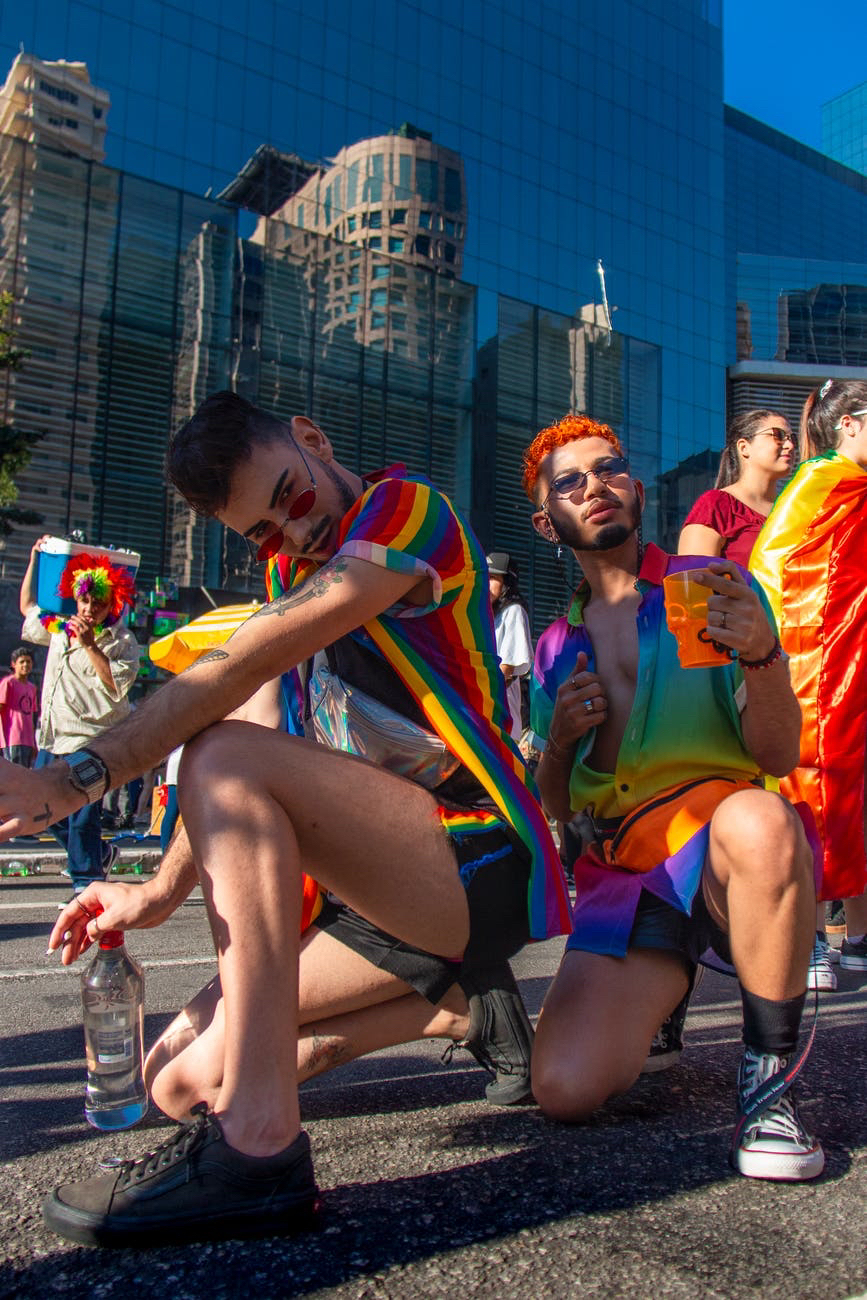
In the UK, June is Pride Month, a month dedicated to celebrating LGBTQ+ communities around the world. This year marks the 50th anniversary of the first Pride march in the UK – a day when hundreds of LGBTQ+ people and their allies arrived in London to protest a society where they were not safe to be themselves.

Organisation’s need to work with the LGBTQ+ community and their own LGBTQ+ employees to ensure an inclusive workplace culture. When better than pride to engage with your LGBTQ+ employees to build inclusion. That said, there is little point flying flags one month a year if you don’t celebrate your LGBTQ+ staff all year round. Take the time to engage with the LGBTQ+ workforce. So, speak to your staff, review your policies for inclusivity, find external trainers to raise awareness around pronouns and look to update your language around gender identity and gender expression to better include the full spectrum of the LGBTQ+ community.

The first UK Gay Pride Rally was held in London on 1 July 1972, a date that was chosen as it was the closest Saturday to the anniversary of the 1969 Stonewall riots in New York City, and around 2,000 people participated.

In London, these brave protesters marched to Trafalgar Square despite fearing for their own safety. But they knew it was important that their voices were heard – and their actions that day paved the way for half a century of progressive societal change for LGBTQ+ people.

The Stonewall riots were important protests that took place in 1969 in the US, that changed gay rights for a lot of people in America and around the world.

Quiz Question – Who is known as ‘The Mother of Pride’ after organising the first ever gay pride march. Answer at the bottom of this article.

In their article celebrating fifty years of gay pride, the Gay Times explains how the first Pride march came about in the UK.

“On 1 July 1972, around 2,000 people marched down Regent’s Street in London in the name of Gay Pride. Up to 40 members of the Gay Liberation Front had organised the protest, hoping it would serve as an antidote to widespread gay shame prevalent throughout the community. Same-sex sexual acts had only been decriminalised in England and Wales five years earlier, so the LGBTQ+ community was still dealing with the trauma they’ve suffered during the decades before. “They were ashamed of their sexuality and gender identity so our counter to gay shame was Gay Pride,” Peter Tatchell – one of the people who organised that 1972 Pride march – explained.”

In 2022, Pride is a celebration of people coming together in love and friendship, to show how far LGBTQ+ rights have come, and how in some places there’s still work to be done.Pride month is about acceptance, equality, celebrating the work of LGBTQ+ people, education in LGBTQ+ history and raising awareness of issues affecting the LGBTQ+ community. It also calls for people to remember how damaging homophobia was and still can be. Pride is all about being proud of who you are no matter who you love.

Since June 28, 1970, Pride events have grown bigger, bolder and well… prouder!

Did you know the answer to our quiz question? The answer is Brenda Howard, an American lady who is recognised as ‘The Mother of Pride’ after she organised the first ever gay pride march.

JD

February is LGBT+ History Month

February is LGBT History Month! This annual month-long observance of lesbian, gay, bisexual and transgender history, as well as the history of the gay rights and related civil rights movements provides role models, builds community, and represents a civil rights statement about the contributions of the LGBT community.

LGBT History Month sets out to:

·        Increase the visibility of lesbian, gay, bisexual and transgender (“LGBT+”) people, their history, lives and their experiences in the curriculum and culture of educational and other institutions, and the wider community;

·        Raise awareness and advance education on matters affecting the LGBT+ community;

·        Work to make educational and other institutions safe spaces for all LGBT+ communities; and

·        Promote the welfare of LGBT+ people, by ensuring that the education system recognises and enables LGBT+ people to achieve their full potential, so they contribute fully to society and lead fulfilled lives, thus benefiting society as a whole.

Why do we use the rainbow as a symbol of LGBT equality?

Rainbow flags tend to be used as a sign of a new era, of hope, or of social change”. Rainbow flags have been used in many places over the centuries: in the German Peasants’ War in the 16th century, as a symbol of the Cooperative movement; as a symbol of peace, especially in Italy; to represent the Tawantin Suyu, or Inca territory, mainly in Peru and Bolivia; by some Druze communities in the Middle east; by the Jewish Autonomous Oblast; to represent the International Order of Rainbow for Girls since the early 1920s; and as a symbol of gay pride and LGBT social movements since the 1970s.

Today, the flag is flown as a sign of inclusion and welcome. When flown outside businesses, or placed in shop windows, it tells LGBT people they can relax, and feel safe to do what others’ take for granted: to hold hands or kiss their partners, to rent a hotel room together, to book a table for Valentines day, to demonstrate their love without hate. As an image, it reminds us of not only the diversity of sexual orientation but also of the diversity of human characteristics as a whole.

The Colour of Characteristics

Characteristics help shape identity. The flag’s 6 colours represent different aspects of LGBT communities, but the rainbow is also a symbolic representation of the variety of human expression, in all its hues and shades. Characteristics might be thought of as primary colours of our psyche which when mixed together form the different shades of our identities. Our experiences throughout life, especially during childhood, affect the saturation and brightness of those identities.

JD


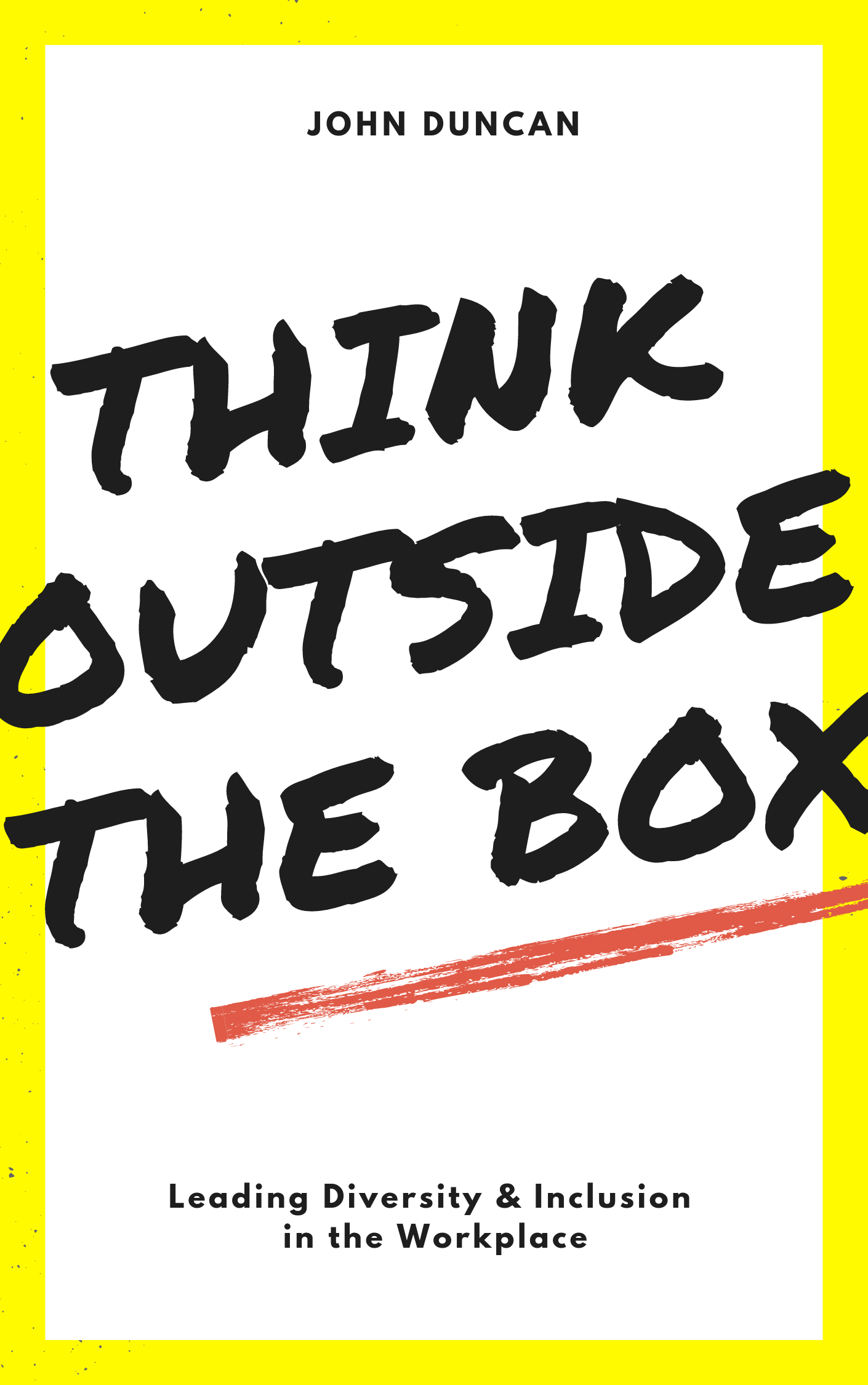
Think Outside the Box – Leading Diversity & Inclusion in the Workplace

Diversity & Inclusion Book Cover

I am delighted to announce that following on from my previous book ‘Leading Equality, Diversity & Inclusion – A Practical Guide for Managers’,  my new book ‘Think Outside The Box – Leading Diversity & Inclusion in the Workplace’ is now available as a hard copy,  paperback book on amazon.co.uk.

The origins of this book come directly from this very blog and I will be sharing aspects of the book over the coming weeks. However, in the meantime, if you are involved with workplace diversity and inclusion then please take a look at the book; it has a range of proven strategies that will help build an inclusive culture in your workplace.

The books blurb goes something like this. ‘In practise, equality, diversity and inclusion can sometimes be perceived – quite inaccurately – as political correctness or an exercise in government ‘box ticking’. Yet, in recent years, organisations have become increasingly aware of the business case for being a fully inclusive workplace, where employees feel valued, opportunities are available for all and diversity is celebrated.

In this case, diversity and inclusion initiatives become less about compliance with legislation and more about leading change, improvement initiatives, engaging, motivating and improving the potential of staff.

‘Think Outside The Box – Leading Diversity & Inclusion in the Workplace’ provides an up-to-date source of diversity and inclusion best practice for workplace leaders and gets to the heart of the diversity issues facing the UK workforce with clear strategies and practical guidance to creating a fully inclusive workplace.

Author – John Duncan – is a Diversity and Inclusion specialist leading on strategy and policy development with over 15 years substantial experience of providing advice, support and training within the public sector. ‘

JD


Employers should work harder to engage LGBT+ allies, say experts

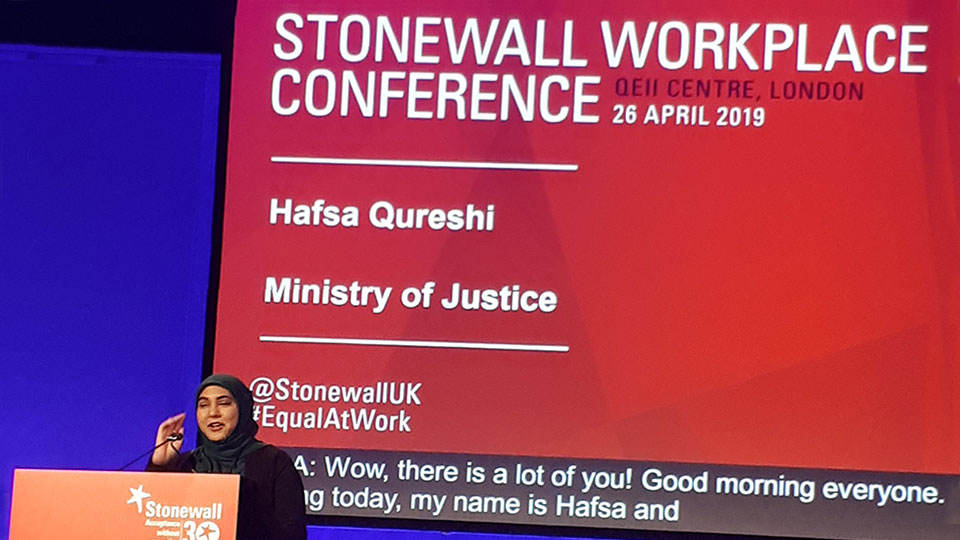
I wanted to share a recent article by Emily Burt, from People Management, who attended the Stonewall Workplace Conference, 26 April 2019, in which she discusses the need to engage LGBT+ allies in the workplace. The article is both thought-provoking and relevant during Pride Month, particularity if you work in HR or are engaged in improving workplace equality and diversity. What is made abundantly clear by the conference speakers is the need for further support to improve LGBT+ inclusion in the work place and often people are not looking in the right place.

Stonewall conference urges better communication, with 35 per cent of LGBT staff having hidden their sexuality at work

Organisations must work to encourage, support and empower their LGBT+ members of staff and recognise the business case for inclusive cultures in order to drive genuinely diverse workplaces, experts have told delegates at the 2019 Stonewall Workplace Conference.

stonewall2_tcm27-57012_w1228_n

Hafsa Qureshi (pictured), recruitment specialist at the Ministry of Justice and Stonewall’s bisexual role model of the year, said engaging people who do not identify as LGBT with the challenges faced by the community was an important part of creating inclusivity at work.

Speaking to People Management, Qureshi said: “One of the biggest hurdles is reaching people who don’t identify as LGBT to be allies. Too often, people assume that because someone is not from a visible protected characteristic, they don’t have any issues at work.”

Qureshi added that it was imperative for LGBT allies to promote inclusive cultures at every level of a business.

“Having worked with smaller and larger organisations, the ones that struggle with diversity and inclusion often do so because they fail to communicate it beyond management level,” she warned.

“The culture stops before reaching the employees who have face-to-face interactions with customers or clients.”

More than 1,000 people attended the opening session of the conference, with the theme ‘Equal At Work’, where CEO Ruth Hunt delivered her final keynote ahead of departing from her role at the charity later this year.

“We sometimes forget that it wasn’t that long ago that being LGBT meant you could be fired from work or denied service because of who you are,” she said, adding: “While it’s important to celebrate how far we’ve come, we cannot be complacent.”

A 2018 survey from the charity found almost one in five LGBT staff (18 per cent) were the target of negative comments or conduct from work colleagues because of their sexuality. More than a third (35 per cent) had hidden or disguised the fact they were LGBT at work for fear of discrimination.

The community has also faced a series of rows on an international scale over the last 12 months, including President Trump’s policy to prohibit some transgender people from serving in the US military, and schools in Birmingham dropping classes that include discussion of LGBT relationships following protests from parents.

In a speech to conference delegates, Penny Mordaunt, Minister for Women and Equalities, reaffirmed the government’s commitment to LGBT-inclusive workplaces, stating: “Organisations cannot afford to exclude talented people, or to limit their potential.”

She said the Government and Equalities office (GEO) would continue to provide targeted interventions seeking to improve the experiences of LGBT people at work and announced that the GEO would coordinate a series of events to gather employer views, and share expertise and experiences this coming autumn.

Mordaunt acknowledged the GEO was asking HR departments to commit to a number of significant initiatives – including gender pay reporting and the Race at Work charter – which were “not remotely joined up or coordinated”.

But she added: “In order to build the businesses of tomorrow, we need workforces that are able to authentically be themselves.”

Speaking to delegates, Qureshi concluded: “Sometimes, all it takes is one person to step forward in order to make a workplace culture feel more accepting.

“I encourage you all to use your voices and platforms to raise awareness for your LGBTQ community. Your voice is more important than you know – and you may say something that a person like me has waited their whole life to hear.”

JD