The Stonewall debate – trans rights versus gender-critical beliefs

In recent months, Stonewall – Europe’s leading LGBTQ Rights organsaition – have found themselves at the centre of some very public controversy regarding trans rights. It doesn’t look like it is going away anytime soon either.

In brief, Stonewall have been accused of shutting down gender-critical beliefs (and subsequent debate over trans rights) as transphobia, subsequently the Government equalities minister (Liz Truss) has urged government departments to withdraw from Stonewall’s flagship Diversity Champions programme.

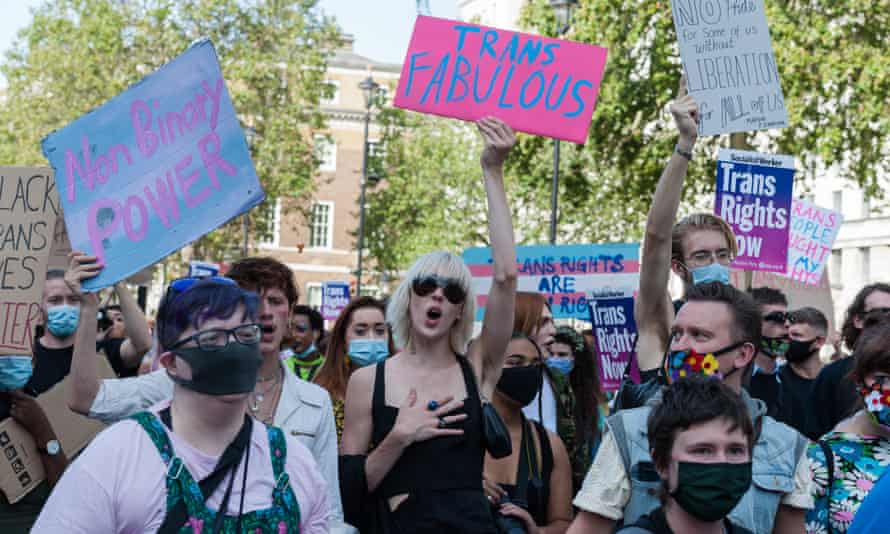
According to the Guardian the debate centres on trans rights campaigners on one side and gender-critical feminists – who disagree with the view that gender identity should be prioritised over biological sex – on the other.

The debate is a complex one but in recent months critics believe Stonewalls stance on trans rights is over-aggressive and seeks to shut down debate but which the charity and its defenders believe is putting it on the right side of history.

In law, ‘Gender identity or trans status’ are not protected, only ‘gender reassignment’ is protected under the Equality Act 2010. However, Matthew Parris, one of Stonewall’s 14 founders, wrote in the Times that the charity had been “cornered into an extremist stance” on the subject of trans rights. He argued that Stonewall should stay out of the issue, sticking to LGB rights without the T. Whilst the right to change one’s legal gender was established in the UK in the 2004 Gender Recognition Act, it was only six years ago that Stonewall announced that it would work for trans equality and apologised for its past failure to do so.

In recent months, Liz Truss, the equalities minister, urged all government departments to quit the Diversity Champions programme. This was followed by a report that accused Stonewall of giving incorrect advice on equality law. This was further complicated when the Equality and Human Rights Commission (EHRC) quit the Diversity Champions programme in May 2021.

Yet, suggestions emerged that employers were leaving the Diversity Champions programme because of disquiet over its transgender inclusion training. The Telegraph reported that six public-sector organisations had left out of about 850 members listed on Stonewall’s website, although those exits were since 2019 and none had publicly cited the issue of trans rights as motivation for leaving.

Stonewall accused the Equality and Human Rights Commission (EHRC) of defending gender-critical beliefs and suggesting that they are “protected beliefs” under the Equality Act, a position the signatories said was a “kick in the teeth to trans people”.

Prof Kathleen Stock, a professor of philosophy at the University of Sussex who has written a book criticising theories of gender identity, said Stonewall had encouraged a definition of transphobia that was far too wide. “Through its Diversity Champions scheme it’s disseminated this very widespread idea that an attack on the theory – or an attack on the particular interpretation – of identity is an attack on trans people. And that has really made the whole discourse incredibly toxic, given its enormous reach within national institutions,” she said.

In a recent interview with the BBC, Nancy Kelley, head of Stonewall, attracted more criticism by comparing gender-critical beliefs to antisemitism. She said, “With all beliefs, including controversial beliefs, there is a right to express those beliefs publicly and where they’re harmful or damaging – whether it’s antisemitic beliefs, gender-critical beliefs, beliefs about disability – we have legal systems that are put in place for people who are harmed by that.”

Kelley, who said Stonewall believed in freedom of speech but “not without limit”, said the comparison was apt as people were protected on the basis of their gender identity in the same way as people are on the basis of their race.

On the antisemitism comparison made by Kelley, veteran gay rights campaigner Peter Tatchell said. “Those who deny trans people’s existence, misgender them and advocate anti-trans discrimination echo the prejudice of racists and homophobes.”

The question for UK based organisations is do they continue with their association with Stonewall and the Diversity Champions Programme? If your organsaition has a strong stance on supporting trans people will staying with stonewall support that, or does the organsaition risk being dragged into a debate regarding gender-critical beliefs?

JD

International Non-Binary People’s Day Celebrates Gender Non-Conforming People

I want to share an article here by Alexander Kacala – writing for Newsweek – in which he highlights ‘International Non-Binary People’s Day’ and the challenges faced by those who identify outside the gender binary. A recent report by Stonewall, the leading LGBT+ charity, highlights how members of the LGBT+ community are more likely to suffer poor mental health and are less likely to seek help from healthcare professionals. For example, the report highlights how half of LGBT people (52 per cent) experienced depression in the last year and that one in seven LGBT people (14 per cent) avoid seeking healthcare for fear of discrimination from staff. As such, good equality practice is essential in the workplace to ensure that people can be true to themselves and bring their authentic self in to the workplace without fear of discrimination.

International Non-Binary People’s Day is observed each year on July 14. Non-binary, also known as genderqueer, is a spectrum of gender identities that are not exclusively masculine or feminine‍ —‌ identities that are outside the gender binary.

Non-binary people may identify as having two or more genders, having no gender, moving between genders or having a fluctuating gender identity, or being third gender or other-gendered, a category that includes those who do not place a name to their gender.

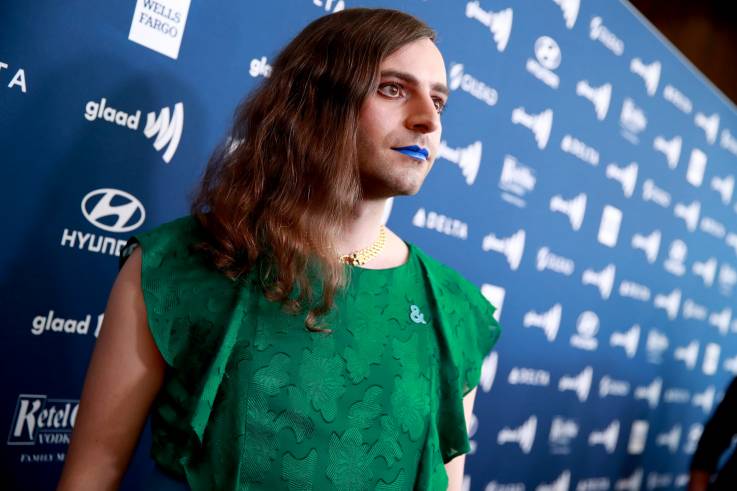
Non-binary activist Jacob Tobia spoke to the Human Rights Campaign (HRC) about the significance of non-binary visibility and pride.

non-binary-day(Photo by Rich Fury/Getty Images for GLAAD)

“I think that having days where you get to talk about your community and honor the experiences of everybody that’s part of the community is wonderful,” Tobia told HRC’s online magazine Equality.

Tobias said of their coming out: “By the time I used the term non-binary, gender non-conforming or genderqueer to describe myself, it was like an afterthought. I was expressing my gender in a way that was gender non-conforming, I was learning about my gender and started wearing lipstick and putting on makeup… then figuring out what the label meant for it way after that.”

Last year, a study showed that more teenagers are identifying themselves with non-traditional gender labels such as transgender or gender-fluid.

Published in the journal Pediatrics, the research found that almost 3 percent of teens surveyed did not identify with traditional gender labels such as “boy” or “girl.” That number is higher than the researchers expected. A UCLA study from 2017 estimated that 0.7 percent of teens identified as transgender.

Lead researcher Nic Rider of the University of Minnesota said the main purpose of the study was to examine health differences between gender-nonconforming teens and teens who are cisgender, a person whose gender identity aligns with the sex assigned to them at birth.

The study supports prior research suggesting “that previous estimates of the size of the transgender and gender-nonconforming (TGNC) population have been underestimated by orders of magnitude,” wrote Daniel Shumer, a specialist in trans medicine at the University of Michigan, in an accompanying article.

The study also found that TGNC youth reported “reported significantly poorer health” — including mental health — than cisgender teenagers. TGNC teens also were less likely to get preventive health checkups and more likely to visit their school nurse, the study showed.

Many people took to social media to share photos of themselves to celebrate International Non-Binary People’s Day.

JD

The Gender Pay Gap

Equality & Diversity initiatives are designed to redress the balance where decades of inequality have led to high levels of disparity in the workplace. Gender Pay Gap reporting is no different and the Equality Act 2010 makes it a statutory duty for organisations with more than 250 employees to report on their gender pay gap, which looks to redress the long standing percentage difference between average hourly earnings for men and women. Currently, the national average mean gender pay gap is 17.9%, which indicates – on average – woman in the UK earn 17.9% less than men. In fact, the Guardian (April 2019) reported that a quarter of companies and public sector bodies have a pay gap of more than 20% in favour of men. However, according to the Financial Times (23 April 2019), Government policymakers hoped the transparency would shame large employers into taking swift action to narrow the difference between what they pay men and women.

What is the Gender Pay Gap?

The gender pay gap shows the difference between the average (mean or median) earnings of men and women. This is expressed as a percentage of men’s earnings e.g. women earn 15% less than men. Used to its full potential, gender pay gap reporting is a valuable tool for assessing levels of equality in the workplace, female and male participation, and how effectively talent is being maximised.

What is the difference between the gender pay gap and equal pay?

It’s worth noting that a gender pay gap isn’t the same as unequal pay. Equal pay – where men and women doing the same job should be paid the same – has been a legal requirement for nearly fifty years. Under the Equal Pay Act 1970, and more recently, the Equality Act 2010, it is unlawful to pay people unequally because they are a man or a woman. This applies to all employers, no matter how small.  As such, a company might have a gender pay gap if a majority of men are in top jobs, despite paying male and female employees the same amount for similar roles.

The gender pay gap shows the differences in the average pay between men and women. If a workplace has a particularly high gender pay gap, this can indicate there may be a number of issues to deal with, and the individual calculations may help to identify what those issues are. In some cases, the gender pay gap may include unlawful inequality in pay but this is not necessarily the case.

What is the Median pay gap?

The median pay gap is the difference in pay between the middle-ranking woman and the middle-ranking man.

If you place all the men and women working at a company into two lines in order of salary, the median pay gap will be the difference in salary between the woman in the middle of her line and the man in the middle of his.

What is the Mean pay gap?

The mean pay gap is the difference between a company’s total wage spend-per-woman and its total spend-per-man.

The number is calculated by taking the total wage bill for each and dividing it by the number of men and women employed by the organisation.

Why is there a Gender Pay Gap?

According to the BBC, there’s no one reason behind the gender pay gap – it’s a complex issue.

The Fawcett Society, a group which campaigns for equality, says caring responsibilities can play a big part. Women often care for young children or elderly relatives. This means women are more likely to work in part-time roles, which are often lower paid or have fewer opportunities for progression.  Another important factor is a divided labour market. Women are still more likely to work in lower-paid and lower-skilled jobs. Women currently make up 62% of those earning less than the living wage, according to the Living Wage Foundation. Discrimination is another cause of the gender pay gap. The Equality and Human Rights Commission (ECHR) has previously found that one in nine new mothers were either dismissed, made redundant or treated so poorly they felt they had to leave their job. This can create a gap in experience, leading to lower wages when women return to work.

Men also tend to take up the majority of the most senior roles at a company, which are the highest paid.

Who has to publish Gender Pay Gap data?

As stated earlier, it is a legal requirement for all employers (with 250 or more employees) to publish their gender pay report within one year of the ‘snapshot’ date: this year’s date being 31st March 2019.  However, whilst all employers must comply with the reporting regulations – for employers whose headcount varies they must comply with the reporting regulations for any year where they had a headcount of 250 or more employees on the ‘snapshot’ date.

What information needs to be published?

The following information must be reported by organisations:

  • Their mean gender pay gap
  • Their median gender pay gap
  • Their mean bonus gender pay gap
  • Their median bonus gender pay gap
  • Their proportion of males receiving a bonus payment
  • Their proportion of females receiving a bonus payment
  • Their proportion of males and females in each quartile pay band
  • A written statement, authorised by an appropriate senior person, which confirms the accuracy of their calculations. However, this requirement only applies to employers subject to the Equality Act 2010 (Gender Pay Gap Information) Regulations 2017.

Can companies be punished for a wide gender pay gap?

According to Lorna Jones, Business Reporter, BBC News, companies can’t be punished for a wide gender pay gap. But they might be punished for failing to publish their data, or for publishing inaccurate or misleading figures.

The Equality and Human Rights Commission (EHRC) is responsible for ensuring employers publish their pay gap figures. The EHRC set out plans for its enforcement policy in December. The EHRC says it will approach employers informally at first, but businesses could ultimately face “unlimited fines and convictions”.

As the EHRC is still consulting on these plans, it remains to be seen whether they can or will punish companies in this way. At the moment, there is no enforcement mechanism in the regulations on publishing pay gap data. The UK government says it will also publish sector-specific league tables, highlighting companies failing to address pay differences between men and women.

What can organisations do to reduce the Gender Pay Gap?

According to Dharishini David, Economics Correspondent with the BBC, gender pay gap reporting may not be enough: the government may need to get tougher. Ask gender pay specialists how to solve the problem and they’ll tell you there are many initiatives that companies can take – tackling unconscious bias, offering more flexible working and encouraging shared parental leave.

However, the issue doesn’t end at the office door. The experts say society needs to change.

For example, schools could encourage girls to take more STEM subjects: science, technology, engineering and maths. There should be more flexible, affordable childcare options. And men could take on more of the household chores.

However, societal change takes time, sometimes a generation, and currently we can report on the organisations gender pay gaps and look for short term internal solutions but overall society needs to change its attitude to gender, specifically in relation to employment, if we are to have pay equality across gender.

JD


Discrimination in the Workplace

Discrimination is where an individual or group of individuals are treated differently due to their perceived membership of a certain group or social category. For example, an individual or group of individuals may suffer discrimination because they are from the Travelling Community. Under the Equality Act 2010, is it unlawful to discriminate against any individual (or group) based upon any of the protected characteristics.  In the workplace, this can take many forms including, for example,  black workers not being offered the same opportunity as white workers, women being paid less than men for doing the same job but can include age, colour, convictions, height, disability, ethnicity, family status, gender identity, genetic characteristics, marital status, nationality, race, religion, sex or sexual orientation.

Direct Discrimination

Direct discrimination is where an individual is treated differently or worse than others for certain reasons, it is often easy to spot such as being refused entry to a hotel because you are gay. The Citizens Advice Bureau describes direct discrimination through the following example: ‘You’re a saleswoman and you inform your employer that you want to spend the rest of your life living as a man. As a result of this, you’re moved to a role without client contact against your wishes. This is less favourable treatment because of gender reassignment. It would still be less favourable treatment even if your employer were to increase your salary to make up for the loss of job status.’

Indirect Discrimination

However, there are other times when you appear to be treated equally and in the same way as others but it actually has a worse impact on you because of who you are. This is known as indirect discrimination where a workplace practice, policy or rule applies to all but it has a worse effect on some than others. The Citizens Advice Bureau describes indirect discrimination through the following example: ‘A health club only accepts customers who are on the electoral register. This applies to all customers in the same way. But Gypsies and Travellers are less likely to be on the electoral register and therefore they’ll find it more difficult to join. This could be indirect discrimination against Gypsies and Travellers because of the protected characteristic of race. The rule seems fair, but it has a worse effect on this particular group of people.’

Justifying Discrimination

Not all discrimination is unlawful, if an employer treats you unfairly because of who you are they might have a good enough reason but may have to justify their discrimination. The Citizens Advice Bureau describes justifying discrimination through the following example: ‘A hospital advertises a surgeon’s job for which it requires at least ten years’ experience. You can’t meet this requirement because you’ve taken time off work to care for your children. As you’re a woman, this looks like indirect discrimination because of sex. But the hospital may be able to justify this, if it can show that the job can’t be done properly without that amount of experience. This is likely to be a legitimate aim.’

JD

Political Correctness? A Tick-Box Exercise? What is Equality and Diversity?

When leading Equality, Diversity and Inclusion (EDI) in an organisation it is not unusual to face challenges and barriers to achieving your targets from a common misconception as to what equality and diversity is all about. First and foremost, equality, diversity and inclusion is about people and not a ‘tick box’ exercise to satisfy government/employer statistics or legislation.

Perhaps the most common misconception reported by equality and diversity trainers is that EDI is often said – behind closed doors of course – to be ‘just political correctness’ or sometimes ‘political correctness gone mad’. Political correctness can be defined as ‘the avoidance of forms of expression or action that are perceived to exclude, marginalize, or insult groups of people who are socially disadvantaged or discriminated against’. It is often the term ‘forms of expression’ from definitions such as this which some interpret to mean jokes or work place banter. However, where someone is offended by your words it is not open to your interpretation it is open to theirs, as such if your opinion, jokes or workplace banter offends people then it is time keep such options, jokes or work place banter out of the workplace. To those who question whether equality and diversity is merely ‘political correctness gone mad’ I would ask the question whether it is acceptable for woman to be paid less than men for the same job, for part time staff or shift workers to have less opportunities in training, for the LGBTQ+ community to face harassment at work or for those from a minority to be excluded from jobs because of a different place of birth?  Sometimes, EDI needs to focus the minds of those not affected to understand how a lack of EDI impacts those who are affected and demonstrate how they can help bring fairness to their workplace.

However, even when supported, EDI can still be viewed by some in the workplace as ‘box to tick’ exercise or just another thing on a long list of other things that they are required to do by government. This fundamental lack of understanding as to the need for EDI practices often leads to a misunderstanding of intended actions and their outcomes which in its self often leads to a compartmentalised, tick-box approach. Nevertheless, what we are talking about here is implementing good EDI practice across an organisation rather enforcing a legal obligation on the workforce. It is this perception of enforced legislation that increases the risk of compartmentalisation and a tick-box approach. As such, it is this false perception of equality, diversity and inclusion that needs removing and this is where effective communication, workforce training and raising the profile of EDI can have a positive impact on its acceptance.

Hence, improving the understanding of EDI becomes about the message and vision set out by senior leaders. Essentially, EDI is about people and it focuses on treating all people fairly and ensuring there is equality of opportunity across the workforce. Naturally, isn’t this something we should all get on-board with? Unquestionably, fairness and equality of opportunity should be a priority for every organisation. As a result, the message needs to be very clear that EDI impacts on us all whether we be employees, employers, customers or other stakeholders including the communities we serve. For these reasons, we can see why good EDI practices must be embedded in all that we do.

JD

Implementing Equality, Diversity and Inclusion Good Practice

We need to empower our workforce to be able to effectively challenge equality, diversity and inclusion issues and drive transformative change in their own organisation. As such, Rohini Sharma Joshi, Trust Housing Association’s EDI manager, asks that organisations consider the following four principals:

  1. EDI is about people

We need to think about equality in a different way. [Your workforce] is fundamentally a people business and EDI is all about people – about treating them fairly and ensuring equality of opportunity, so these should be priorities for every organisation. We need to deliver a clear message that EDI affects us all as employees, employers, our customers and the communities we serve. That is why it must be embedded in all that we do.

  1. Cultural change needs strong leadership

Embedding EDI in any organisation requires cultural change. It requires strong leadership and buy-in from the head of the organisation and senior management to take a meaningful step forward. There are several ways to amplify this message and to develop greater understanding of EDI issues including [organisational wide EDI strategic objectives, EDI charter or an initiative similar to] the Charted Institute of Housing’s ’10 by 20’ challenge to meet 10 EDI objectives by 2020.

  1. Engage with other organisations to share best practice

There are often valuable opportunities to learn from a variety of organisations within [any] sector, who also share a passion and commitment to achieving leadership excellence in EDI.  At Trust Housing Association, we share our experience as part of our role as founding members of the National Centre for Diversity’s new ‘national patrons’ network.

Trust was the first housing association in Scotland to achieve ‘investors in diversity’ status and, more recently, ‘leaders in diversity’ accreditation. This has enabled us to participate in a wider dialogue around issues that all kinds of organisations face in creating a diverse and inclusive working environment.

There are practical things the housing sector can do to address these issues. We have developed a training programme and we regularly discuss EDI issues in team meetings and with tenants, making it clear that discriminatory behaviour is not acceptable. We also publish case studies in our newsletters that underline the message that everyone is welcome and entitled to a safe and happy life.

  1. Make an action plan – not a wish list

A systematic approach to EDI does not show instant results but instead lays the foundations for change and develops well-informed and motivated staff who help build an inclusive organisation. If there is one thing [organisational] leaders must do to tackle EDI issues in [the next decade], it is to make sure that they are incorporated into a strategic action plan – not left languishing on a wish list.

JD

Workplace Inequality – Why Good EDI leadership is in Demand

Recent improvements to workplace equality and diversity practice have helped make UK employers more inclusive but we are still some way off seeing good practice embedded in all sectors. That said, nationally, we are certainly moving in the right direction and with continued support of organisations like the National Centre for Diversity, Stonewall, Diversity UK and Employers Network for Equality and Inclusion, there is no reason why this can’t continue.

In recent years, new job roles such as Equality, Diversity and Inclusion (EDI) Coordinator, EDI Lead or Head of EDI started to appear at the larger employers as they addressed the need for an equality and diversity specialist in their organisation. Clearly, these employers are starting to see the value in having strong equality and diversity leadership in their organisations, especially in light of the poor press high profile failures in EDI receive throughout news and social media reporting.

The need for organisational leaders to take ownership of EDI is still very much in demand because inequality and unfairness in the workplace has not disappeared and as the examples below demonstrate, provided by the Trade Union Congress (TUC), we still have some way to go for true workplace equality.

  • Black workers have fewer training opportunities than white workers and black women get an even worse deal.
  • Older Workers may have been in the job for longer but this may only mean that the longer you are in a job the less training you will receive.
  • Manual workers and/or workers with few qualifications are mainly overlooked for training as those who have a lot of education and training tend to benefit from any training on offer.
  • Part-time workers and temporary workers are often left behind when training is on offer as employers place a greater value on permanent or full-time workers at the cost of temporary or part-time workers. Women make up the majority of part-time workers.
  • Workers for whom English is a second language may find that the only jobs open to them are manual / low skilled jobs. Whilst some will have qualifications, these may have been achieved in another country and employers will often overlook them. A lack of spoken English is often a barrier to moving on.
  • Shift workers are least likely to participate in learning in colleges because of working patterns, or to be offered training by their employer.  They may need to be encouraged when learning is promoted and shift times taken into account when onsite learning takes place.
  • Discrimination often plays a role when access to job and training opportunities are based on negative stereotypes and perceptions of what people can and can’t do.

JD

Call for action on UK’s screenwriter gender inequality

The Writers’ Guild of Great Britain recently commissioned a report which suggests the number of female writers working for film and television in the UK has not improved in the last 10 years.

highlights the shocking statistic that only one in 10 feature films is written chiefly by a woman, the figure dropping even lower for those with a budget greater than £10m – to just one in 14.

The Guild is calling for change in the industry and having worked in post 16 education I can see the problems start when students are young. Better information and guidance as well as aspiring female role models are needed in the classroom in order to inspire the next generation of female writers. However, attitudes in film and television studios need to change, diversity needs to be respected and sort out whilst opportunities must be for all, regardless of gender or any other barrier to success.

Hollywood has been under fire for a number of years regarding its gender equality and hit the headlines recently when Patty Jenkins, director of feature film ‘Wonder Woman’, called out the industry on its record of female directors.  In the UK, Fleabag, Happy Valley and Ordeal By Innocence are among the few TV shows to be written by women.

Writer and presenter Sandi Toksvig is also among those to give her support to the campaign, saying: “There is no shortage of talented women writers in the UK, and therefore no excuse that so few of them are getting commissions in film and TV.”

Screenwriter Kay Mellor said: “It’s criminal that I can count on one hand how many women signature writers there are on TV right now. Sometimes it takes a collective to say – ‘this is not fair’ and it’s not. It’s time things changed.”

http://www.bbc.co.uk/news/entertainment-arts-44209815

JD

The arts have the opportunity to lead the way in adopting more innovative measures of gender balance

Take a moment to read Cath Sleeman’s blog post here where she discusses why so many women still feel invisible in the arts – underpaid and under-represented. So how much has really changed? To properly answer this question, she explains, we need to adopt more innovative ways of tracking gender balance.

As an educational manager in the arts with responsibility for equality, diversity and inclusion its concerning to see an industry still dominated by outdated and old fashioned attitudes. However, whilst things are moving forward progress appears to be slow but innovation in how assess data may be more fruitful.

https://www.nesta.org.uk/blog/pressforprogress-evidencing-gender-inequality-arts

JD

Why do schools have a massive pay gap?

Interesting article here by

As someone who worked in secondary school management for almost a decade I find it astonishing that a gender pay gap still exists. After all, pay scales are well published for teachers, managers and leaders across the education sector. However, in all reality, negotiation of your own personal pay scale is a private conversation between employer and employee. If you are headhunted then a better offer is likely to be on the table than if you fill out an application form. I agree that if two people start the same role, with equal skills and experience then they should be paid the same but what if one candidate has more experience? Should that count towards pay? Of course it should and unfortunately the reality is that staff, both male and female, need to be confident that that they are in demand and in that way some negotiation over pay can happen.

That said employers must become more transparent in how they pay their staff and better able to justify those differences in scales to ensure equality and fairness across the sector.

http://www.bbc.co.uk/news/uk-politics-43484831

JD