Managing neurodiversity in the workplace

According to Harvard HealthNeurodiversity refers to diversity in the human brain and cognition, for instance in sociability, learning, attention, mood, and other mental functions. It provides an inclusive view of cognitive diversity, highlighting the differences at a neuro-biological level while considering the socio-cultural contexts of a human’s lived experience.  

Employers need to be mindful as to how the business set up helps support those with different neurological conditions to create a diverse workforce. This includes:

  • · Understanding the importance of managing neurodiversity at work.
  • · Understanding how to manage neurodiversity at work, and 
  • · Being better able to support those with different neurological conditions. 

In 2021, a Harvard Health report described the idea that people experience and interact with the world around them in many different ways; there is no one “right” way of thinking, learning, and behaving, and differences are not viewed as deficits

The report explains how neurodiversity advocates encourage inclusive, non-judgmental language. While many disability advocacy organizations prefer person-first language (“a person with autism,” “a person with Down syndrome”), some research has found that the majority of the autistic community prefers identity-first language (“an autistic person”).  

Therefore, rather than making assumptions, it is best to ask directly about a person’s preferred language, and how they want to be addressed. Knowledge about neurodiversity and respectful language is also important for clinicians, so they can address the mental and physical health of people with neurodevelopmental differences. 

According to Professor Amanda Kirby, CEO of Do-it Solutions Limited and Campaigner for Neurodiversity, Neurodiversity is the way we think, move, act, communicate and process information. 

She explains, “we are all different. Some people have challenges and strengths associated with conditions such as Attention Deficit Hyperactivity Disorder (ADHD), Dyslexia, Autism, Dyscalculia, Developmental Coordination Disorder/Dyspraxia, Developmental Language Disorder. 

There is not one person or one condition that defines our differences ( or our similarities). We are too often defined by what we can’t do and not by what we can. 

The reality is that some people will gain a diagnosis of Dyslexia, for example, and others diagnosed as having Autism or ADHD. However, who gains a diagnosis often can be a bit of a lottery. It can depend on whether difficulties are identified as a child by a teacher who spots some signs of Dyslexia or Dyspraxia (also known as Developmental Coordination Disorder) or by a parent who knows something about one of these conditions.

It often requires tenacity on the part of the parent or individual and also depends on local waiting lists and service availability. For many people it can be a lengthy and at times costly process in terms of stress. Some people are paying for assessments as an alternative at a high cost. 

For most people the starting position is to understand their challenges and gain some practical strategies to help as soon as possible. By understanding their unique spiky profile, you have a starting point to help to support them to be their best. 

A person-centred approach means that strategies are tailored to EACH PERSON. It also importantly means harnessing strengths, to build confidence, self-esteem and become resilient.” 

Professor Kirby’s research produced an effective guide for employers to making different adjustments for neurodivergent people, where three elements can be easily changed. Take a look at the graphic below and consider what your organisation can do to better understand how to manage neurodiversity at work, and how to support those with different neurological conditions.

I’d love to hear where you are on your journey to becoming an neurodiverse workplace. Let me know in the comments…

Co-production, Collaboration and Staff Engagement with the Equality Agenda

I lead Equality, Diversity and Inclusion in my organisation and I often talk about the importance of co-production and engaging staff when setting organisational strategic objectives.  If you want sustainability and buy in from stakeholders to change then it is vital that you involve those stakeholder who it directly affects, no matter how challenging.

There in lies the first barrier often encountered, that it is challenging to get staff to attend and show engagement in strategic planning and the strategic direction of the organisation. This is an issue of trust between employee and organisation and requires some ground work to build up that trust – however it is staff engagement activities like this that can help build that trust, albeit over time. In reality, what you do with the information gathered at these events is vital as it is this that builds trust, a demonstration of how you have used the information, ideas and suggestions from staff previously to make a positive impact on the organisation, staff and or customer.

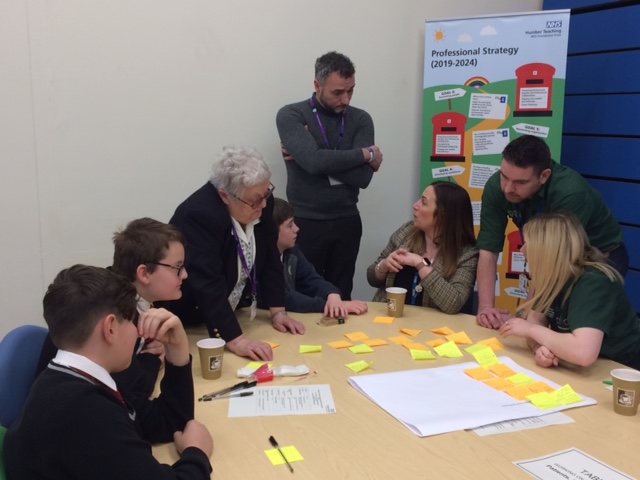
Recently, I did just that and co-facilitated a morning workshop with over ninety NHS patients, service users, carers and staff with the purpose of setting the organisations equality, diversity and inclusion priorities for the next 12 months.

EDI Priorities workshop image 1

We invited a wide range of stakeholders from across the area including; patients, carers, service users, staff and partner organisations so that we could have conversations about what our equality, diversity and inclusion priorities should look like for the next year.

The event was an enormous success where patients, service users, carers and staff held topical and emotive discussions around the subject of equality, diversity and inclusion.

EDI Priorities workshop image 6

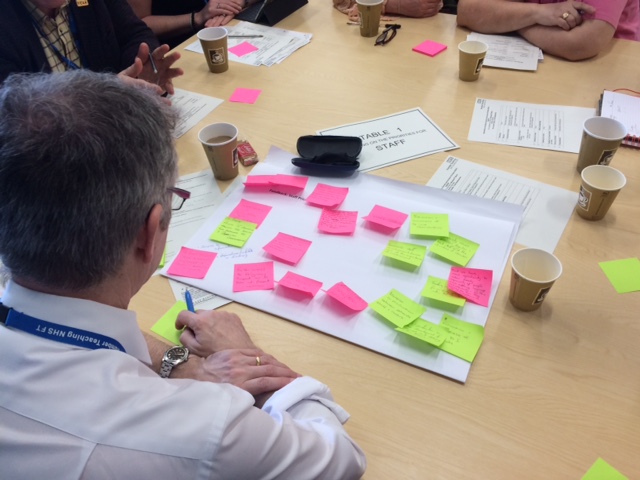
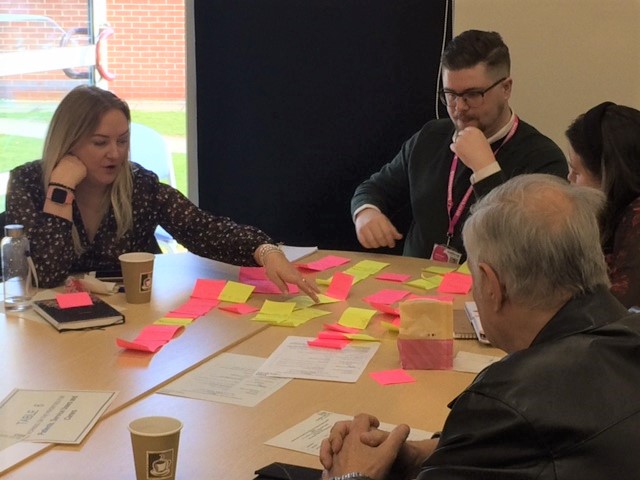
The room was divided into eight tables, four for staff and four for patients, service users and carers. Each and every idea was committed to post it notes before tables discussed in more depth the themes emerging from their conversations before narrowing down their ideas into three key themes, which they then fedback to the whole room.

EDI Priorities workshop image 2

This produced a wealth of information from our patients, service users, carers and staff which was collected and from it the organisation can produce a range of equality, diversity and inclusion priorities confident in the knowledge that these have not been produced in isolation. In doing so, we can ensure that our equality agenda is truly co-produced in collaboration with our primary stakeholders and that our key drivers for improvement are the experiences of our valued patients, service users, carers and staff.

EDI Priorities workshop image 5a

Senior buy in is important for these events because it demonstrates their own commitment to equality, diversity and inclusion to stakeholders.  The event was well supported by our board with the event opened by the Chair of the Board and closing remarks provided by our Chief Executive.

Our next step will be to analyse the key priorities identified and put together a coherent and robust strategy to deliver on these priorities over the coming 12 months as well as ensuring we communicate our progress over the year.

So, when considering setting equality actions for the year ahead, ensure you involve the primary stakeholders who will be impacted the most by your actions – they are the best guides as to whether what you are doing will have any positive and lasting impact.

JD

Building  Inclusive Workplaces

The Chartered Institute of Personnel and Development (CIPD) explain that true inclusion is created by embedding inclusive practices and values into the organisation’s way of doing things. Whilst inclusion can’t be the sole responsibility of the people profession, people professionals nonetheless have a key role to play. They can support employees, line managers and senior leaders to build inclusive behaviours and values, ensure policies and practices are inclusive, and challenge organisational values and behaviours that don’t actively promote inclusion. Importantly, any action should be guided by organisational data and carefully evaluated – further research needs to test the most effective ways to build inclusion.

Explore the areas where you can take action to build inclusion.

  1. Involve all employees in inclusion

All employees need to understand their role in building inclusive workplaces. This involves employers setting clear standards of behaviour for inclusion, treating all colleagues with dignity and respect, and empowering employees to challenge exclusionary behaviour.

What you can do:

  • Make inclusion relevant to people at all levels of the business; what does inclusion mean in their job role and what they can do to be more inclusive?
  • Work with employee resource groups to highlight employees’ roles in inclusion, promoting alliance.
  1. Develop line manager capability

Managers are key in inclusion. The relationship they have with employees, and how they carry out people management practices and policies, will impact employees’ opportunities and experiences of work.

Treating all employees with respect, supporting their development and ensuring they’ve a say in the workplace is core for any manager. Managers need to ensure there’s a level playing field for their team, and support employee’s individual needs. However, bias can play a role in the opportunities that individuals are given at work – given our preferences for people ‘like us’.

What you can do:

  • Examine progression and hiring data to ensure that there’s a level playing field and address any bias.
  • Embed inclusion in line manager training and development – for example, raise awareness of issues relating to inclusion and empower managers to carry out people management practices effectively.
  1. Build senior commitment to inclusion

Many senior leaders are line managers themselves; they set the tone for the behaviour that’s expected in the business. And, with a drive towards increasing diversity on boards, attention must also be paid to how inclusive the boardroom is. People professionals should work with senior leaders to embed inclusion into the organisation’s way of doing things, highlighting the importance of their advocacy and buy in.

Senior leaders need to:

  • actively champion and sponsor inclusion activities
  • develop self-awareness and understand their own biases
  • role-model inclusive behaviour in their own people management, and in their own leadership team.
  1. Evaluate policies and practices

A two-step approach is needed to put in place people management practices and policies to support inclusion:

Consider the formal and informal mechanisms that can be improved to enhance inclusion for all employees. For example, ensure that there are clear mechanisms for feedback that allow employees to feel like they have a ‘say’ in the organisation.

Create specific policies and practices that support particular groups or individual needs. For example, make sure there are clear policies in place to support individual needs; these need to be implemented by managers and backed up by a supportive workplace environment.

Consider how you can:

  • embed inclusion into wider people management practices
  • communicate the policies in place that support inclusion
  • use organisational data to review policies and practices.
  1. Examine organisational culture, climate and values

Creating an inclusive climate and culture requires fair policies and practices, recognising and valuing difference, and including all employees in decision-making processes. Senior commitment in the form of real advocacy and buy-in is important in creating a truly inclusive organisation. In some cases, organisations might need to evaluate their own norms and values.

What you can do:

  • Work with employees throughout the business to understand current norms and values; is ‘difference’ seen as positive or negative, and do employees understand their role in inclusion?
  • Evaluate people practices through an inclusion ‘lens’ – do practices and policies align with inclusion?
  • Ensure that senior leaders support inclusion, and, importantly, role-model inclusive behaviour and value difference, rather than distrust it.

For further guidance on building inclusive workplaces check out this CIPD report on Building  Inclusive Workplaces (Sept 2019)

JD

Think Outside the Box – Leading Diversity & Inclusion in the Workplace

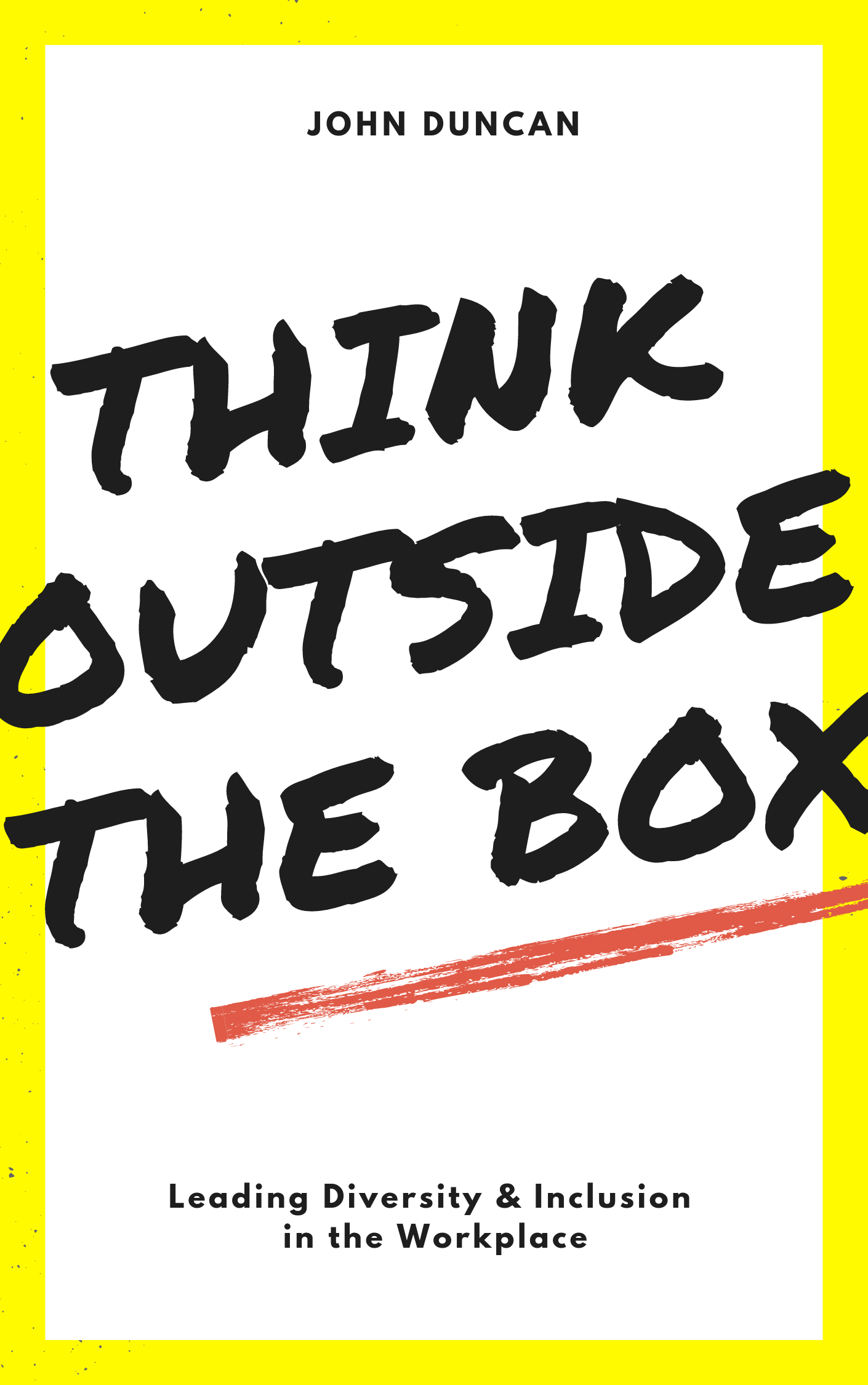
Diversity & Inclusion Book Cover

I am delighted to announce that following on from my previous book ‘Leading Equality, Diversity & Inclusion – A Practical Guide for Managers’,  my new book ‘Think Outside The Box – Leading Diversity & Inclusion in the Workplace’ is now available as a hard copy,  paperback book on amazon.co.uk.

The origins of this book come directly from this very blog and I will be sharing aspects of the book over the coming weeks. However, in the meantime, if you are involved with workplace diversity and inclusion then please take a look at the book; it has a range of proven strategies that will help build an inclusive culture in your workplace.

The books blurb goes something like this. ‘In practise, equality, diversity and inclusion can sometimes be perceived – quite inaccurately – as political correctness or an exercise in government ‘box ticking’. Yet, in recent years, organisations have become increasingly aware of the business case for being a fully inclusive workplace, where employees feel valued, opportunities are available for all and diversity is celebrated.

In this case, diversity and inclusion initiatives become less about compliance with legislation and more about leading change, improvement initiatives, engaging, motivating and improving the potential of staff.

‘Think Outside The Box – Leading Diversity & Inclusion in the Workplace’ provides an up-to-date source of diversity and inclusion best practice for workplace leaders and gets to the heart of the diversity issues facing the UK workforce with clear strategies and practical guidance to creating a fully inclusive workplace.

Author – John Duncan – is a Diversity and Inclusion specialist leading on strategy and policy development with over 15 years substantial experience of providing advice, support and training within the public sector. ‘

JD


Equality Impact Assessment

It is vitally important that all workplace policies and procedures that impact upon staff have been through a robust Equality Impact Assessment or EIA. Such an assessment is an internal audit process which is specifically designed to measure whether a policy, project or scheme is at risk of discriminating against any disadvantaged or vulnerable people.

Under the Equality Act 2010 it is illegal to discriminate against an employee because of age, disability, gender reassignment, marriage and civil partnership, pregnancy and maternity, race, religion or belief, sex or sexual orientation. As such, without effective review, a new policy or procedure may unintentionally discriminate against a group of employees because they share a protected characteristic.

For example, a new policy may be published which states that hats or head gear cannot be worn at work under any circumstances. However, such a policy would discriminate against Sikh men, for whom the wearing of the turban is mandatory.

In this situation, a robust Equality Impact Assessment would have been able to identify that such a policy would discriminate against staff from certain religions. This type of discrimination is referred to as indirect discrimination and, generally speaking, occurs when an organisational policy or procedure is put in place which applies to everyone and is not discriminatory in itself but it may put those with a certain protected characteristic at a disadvantage.

The purpose of the EIA process is to prevent discrimination and where the assessment identifies a risk of discrimination action can be taken to make the necessary changes to ensure discrimination does not happen. In this way, the EIA is a useful tool to help improve or promote equality in an organisation to help remove barriers and improve participation for underrepresented groups.

In most situations, organisations don’t set out to purposefully discriminate against any of their stakeholders but sometimes a lack of awareness, especially where a policy, process or scheme may disadvantage one group over another, the EIA can help to identify and make changes to ensure everyone is included and not disadvantaged.

Here is an example from ACAS, the Advisory, Conciliation and Arbitration Service, where they highlight how equality impact assessment can make a positive impact to the workforce. ‘One local authority found a recipe for success over its meals on wheels service. The authority was concerned that the food it was serving up wasn’t to everybody’s taste. So it used an equality impact assessment to find out why. The authority discovered that in certain ethnic communities, only a few people were tucking in. So the authority decided to change the menu to ensure that these diners had a range of different types of meals more likely to appeal to choose from. Soon there were many more ‘happy eaters’ among these communities, while ‘white British’ users were also delighted at the improved choice and quality of the food. In this way the authority not only improved its service but saved money as well.’

If a regular audit of an organisations policies, processes and practices is not undertaken then an unintended act of discrimination may remain undetected for some time, that is until someone makes a complaint or is let down by the service they receive. This is exactly how indirect discrimination happens in the workplace and an EIA can be used to identify this early so changes can be made in the best interests of all.

Generally speaking, for an EIA to be effective it must ask four key questions of what it is assessing. For example, if using an EIA to assess the impact of a new policy then we must ask: 1.) What is the intention of the policy? 2.) How is it seeking to achieve this? 3.) Who benefits (and does not benefit) from the policy and how? 4.) What are any ‘associated aims’ (or other policies) attached to the policy and how do they impact? By doing this we can assess the intention of the policy, what method it uses to enforce the policy, who actually benefits from the policy and what other influences are there that impact on this policy, which should help us to identify risks.

JD

Culture First, Diversity and Inclusion Second

Diversity and Inclusion is not just about compliance with legislation, it’s about leading change, implementing improvement initiatives and engaging, motivating and improving the potential of staff.

Sundar Pichai, chief executive officer of Google LLC, said of inclusion “A diverse mix of voices leads to better discussions, decisions, and outcomes for everyone.”

This is equally true of the boardroom as it is the operational side of an organisation and the distinction that equality is not just about compliance with legislation must be supported at board and executive level within an organisation in order for diversity and inclusion initiatives to have any real impact.

As such, the first job to improve diversity and inclusion in an organisation is to get board and executive backing. Furthermore, unless the culture of the organisation is right then no diversity programme will help. Consequently, before any diversity and inclusion initiatives are rolled out it is essential that the culture of the organisation is one which is receptive to change, to new ideas and inclusion.

Where an organisations culture does not yet lend itself to inclusive practices then wholesale organisational development is essential and any diversity initiatives will fail until that culture is fixed.  Organisational design and re-structuring is the subject of a number of books for human resources leaders and beyond the scope of this post.

But, where you have a workplace culture which supports change and new ways of practising as well as the public support of the board or executive leadership then you can examine the current picture of diversity and inclusion in the organisation with a view to implementing an improvement strategy.

Good diversity and inclusion practice recognises that historically certain groups of people with protected characteristics such as race, disability, sex and sexual orientation have experienced discrimination. To that end, an organisations equality strategy must be about ensuring that every individual has an equal opportunity to make the most of their lives and talents.

Furthermore, really, a good equality, diversity and inclusion programme or strategy attempts to ensure that no one should have poorer life chances because of their gender, their race, the way they were born, where they come from, what they believe, who they love, or whether they have a disability.

As a final point, in order to improve diversity and inclusion in the workplace, it is absolutely vital that we don’t just think about the data; we need to collaborate with people because the organisations people – whether that be staff, customers or service users – are at the heart of all successful diversity and inclusion improvements. Only through working with their people can an organisation reduce bias in hiring, foster inclusivity and create feelings of belonging for employees of all backgrounds.

JD

Staff Equality Networks

Staff networks can be a powerful tool for empowering minority groups to have an effective voice in an organisation. In the context of diversity and inclusion, a minority group is a group of individuals who are known to have been discriminated against on the basis of a shared characteristic. It is worth noting that these groups may not be a minority in terms of numbers as in the case of women, who are a minority group, despite comprising over half of the UK population.

According to Advance H.E. (formally the Equality Challenge Unit), staff networks may not work in every workplace and/or for all minority groups, and their viability and success will depend on the culture and demand within individual organisations.
Networks need to be led by the staff groups that they represent.

However, there is a role for institutions to facilitate and support the development of networks:

  • Involve staff and discuss the need for staff networks. This could be linked to specific times of year to maximise impact, for example discussing the possibility of a women’s network on international women’s day. A specific event gives the opportunity to discuss whether it is viable and to look for volunteers to take the network forward.
  • Provide a budget. From refreshment for meetings, to organising specific events or training and development, a budget of any size helps to ensure the network is sustainable and effective.
  • Ensure senior management are open to dialogue. Networks can provide a useful perspective on institutional practice. Consultation should be genuine and views of the network taken seriously.
  • Publicise networks to all staff. A dedicated area on your website/intranet means that all staff are aware of support and opportunities. Promote the networks during staff inductions to maximise membership and ensure all staff are able to benefit.
  • Create a culture of acceptance for participation. It can be intimidating to join a network and there can be a perception that members of networks are ‘troublemakers’.
  • Ensure line managers encourage staff to attend meetings in work hours. Senior management engagement can help to legitimise the group, and positive endorsement can underline that taking part is worthwhile.

Aims and Objectives

1. Sharing experiences and providing advice and support in a confidential safe space

Often a staff network is the opportunity staff members have to discuss the challenges they have faced at work. To meet this aim, it is likely that membership will be limited to people with the particular shared characteristic. Organisations need to carefully consider how, when and where the group will meet, and how to get a balance between giving an opportunity to share personal experiences while retaining momentum and developing positive solutions.

2. Working collectively towards improving institutional policies and practices and implementing change

Networks with this aim can be useful for their members and their institution. They can raise concerns from members, act as a consultation group for policies and practice and help to generate ideas and solutions. However, to be successful and to maintain momentum, the organisation has to listen to the network and genuinely involve them in decision making and policy review.

Terms of Reference

Networks can have a variety of terms of reference, depending on their aims and context. These may also develop over time as the group evolves. The language used in describing and naming networks can also be crucial in their success and who joins.

However you approach staff networks in your organisation it is important to remember that an effective staff network is one that is run by staff for the benefit of staff.

JD

Employers should work harder to engage LGBT+ allies, say experts

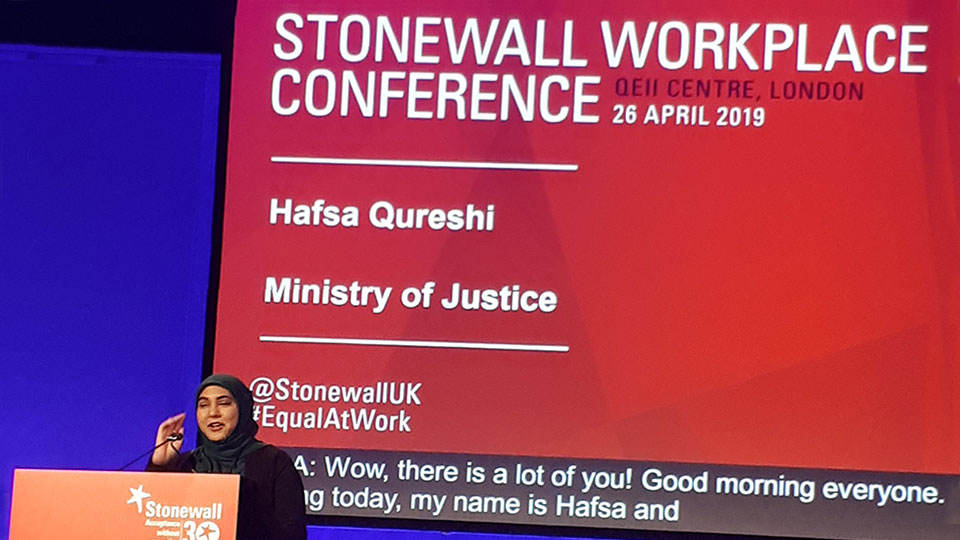
I wanted to share a recent article by Emily Burt, from People Management, who attended the Stonewall Workplace Conference, 26 April 2019, in which she discusses the need to engage LGBT+ allies in the workplace. The article is both thought-provoking and relevant during Pride Month, particularity if you work in HR or are engaged in improving workplace equality and diversity. What is made abundantly clear by the conference speakers is the need for further support to improve LGBT+ inclusion in the work place and often people are not looking in the right place.

Stonewall conference urges better communication, with 35 per cent of LGBT staff having hidden their sexuality at work

Organisations must work to encourage, support and empower their LGBT+ members of staff and recognise the business case for inclusive cultures in order to drive genuinely diverse workplaces, experts have told delegates at the 2019 Stonewall Workplace Conference.

stonewall2_tcm27-57012_w1228_n

Hafsa Qureshi (pictured), recruitment specialist at the Ministry of Justice and Stonewall’s bisexual role model of the year, said engaging people who do not identify as LGBT with the challenges faced by the community was an important part of creating inclusivity at work.

Speaking to People Management, Qureshi said: “One of the biggest hurdles is reaching people who don’t identify as LGBT to be allies. Too often, people assume that because someone is not from a visible protected characteristic, they don’t have any issues at work.”

Qureshi added that it was imperative for LGBT allies to promote inclusive cultures at every level of a business.

“Having worked with smaller and larger organisations, the ones that struggle with diversity and inclusion often do so because they fail to communicate it beyond management level,” she warned.

“The culture stops before reaching the employees who have face-to-face interactions with customers or clients.”

More than 1,000 people attended the opening session of the conference, with the theme ‘Equal At Work’, where CEO Ruth Hunt delivered her final keynote ahead of departing from her role at the charity later this year.

“We sometimes forget that it wasn’t that long ago that being LGBT meant you could be fired from work or denied service because of who you are,” she said, adding: “While it’s important to celebrate how far we’ve come, we cannot be complacent.”

A 2018 survey from the charity found almost one in five LGBT staff (18 per cent) were the target of negative comments or conduct from work colleagues because of their sexuality. More than a third (35 per cent) had hidden or disguised the fact they were LGBT at work for fear of discrimination.

The community has also faced a series of rows on an international scale over the last 12 months, including President Trump’s policy to prohibit some transgender people from serving in the US military, and schools in Birmingham dropping classes that include discussion of LGBT relationships following protests from parents.

In a speech to conference delegates, Penny Mordaunt, Minister for Women and Equalities, reaffirmed the government’s commitment to LGBT-inclusive workplaces, stating: “Organisations cannot afford to exclude talented people, or to limit their potential.”

She said the Government and Equalities office (GEO) would continue to provide targeted interventions seeking to improve the experiences of LGBT people at work and announced that the GEO would coordinate a series of events to gather employer views, and share expertise and experiences this coming autumn.

Mordaunt acknowledged the GEO was asking HR departments to commit to a number of significant initiatives – including gender pay reporting and the Race at Work charter – which were “not remotely joined up or coordinated”.

But she added: “In order to build the businesses of tomorrow, we need workforces that are able to authentically be themselves.”

Speaking to delegates, Qureshi concluded: “Sometimes, all it takes is one person to step forward in order to make a workplace culture feel more accepting.

“I encourage you all to use your voices and platforms to raise awareness for your LGBTQ community. Your voice is more important than you know – and you may say something that a person like me has waited their whole life to hear.”

JD

The Gender Pay Gap

Equality & Diversity initiatives are designed to redress the balance where decades of inequality have led to high levels of disparity in the workplace. Gender Pay Gap reporting is no different and the Equality Act 2010 makes it a statutory duty for organisations with more than 250 employees to report on their gender pay gap, which looks to redress the long standing percentage difference between average hourly earnings for men and women. Currently, the national average mean gender pay gap is 17.9%, which indicates – on average – woman in the UK earn 17.9% less than men. In fact, the Guardian (April 2019) reported that a quarter of companies and public sector bodies have a pay gap of more than 20% in favour of men. However, according to the Financial Times (23 April 2019), Government policymakers hoped the transparency would shame large employers into taking swift action to narrow the difference between what they pay men and women.

What is the Gender Pay Gap?

The gender pay gap shows the difference between the average (mean or median) earnings of men and women. This is expressed as a percentage of men’s earnings e.g. women earn 15% less than men. Used to its full potential, gender pay gap reporting is a valuable tool for assessing levels of equality in the workplace, female and male participation, and how effectively talent is being maximised.

What is the difference between the gender pay gap and equal pay?

It’s worth noting that a gender pay gap isn’t the same as unequal pay. Equal pay – where men and women doing the same job should be paid the same – has been a legal requirement for nearly fifty years. Under the Equal Pay Act 1970, and more recently, the Equality Act 2010, it is unlawful to pay people unequally because they are a man or a woman. This applies to all employers, no matter how small.  As such, a company might have a gender pay gap if a majority of men are in top jobs, despite paying male and female employees the same amount for similar roles.

The gender pay gap shows the differences in the average pay between men and women. If a workplace has a particularly high gender pay gap, this can indicate there may be a number of issues to deal with, and the individual calculations may help to identify what those issues are. In some cases, the gender pay gap may include unlawful inequality in pay but this is not necessarily the case.

What is the Median pay gap?

The median pay gap is the difference in pay between the middle-ranking woman and the middle-ranking man.

If you place all the men and women working at a company into two lines in order of salary, the median pay gap will be the difference in salary between the woman in the middle of her line and the man in the middle of his.

What is the Mean pay gap?

The mean pay gap is the difference between a company’s total wage spend-per-woman and its total spend-per-man.

The number is calculated by taking the total wage bill for each and dividing it by the number of men and women employed by the organisation.

Why is there a Gender Pay Gap?

According to the BBC, there’s no one reason behind the gender pay gap – it’s a complex issue.

The Fawcett Society, a group which campaigns for equality, says caring responsibilities can play a big part. Women often care for young children or elderly relatives. This means women are more likely to work in part-time roles, which are often lower paid or have fewer opportunities for progression.  Another important factor is a divided labour market. Women are still more likely to work in lower-paid and lower-skilled jobs. Women currently make up 62% of those earning less than the living wage, according to the Living Wage Foundation. Discrimination is another cause of the gender pay gap. The Equality and Human Rights Commission (ECHR) has previously found that one in nine new mothers were either dismissed, made redundant or treated so poorly they felt they had to leave their job. This can create a gap in experience, leading to lower wages when women return to work.

Men also tend to take up the majority of the most senior roles at a company, which are the highest paid.

Who has to publish Gender Pay Gap data?

As stated earlier, it is a legal requirement for all employers (with 250 or more employees) to publish their gender pay report within one year of the ‘snapshot’ date: this year’s date being 31st March 2019.  However, whilst all employers must comply with the reporting regulations – for employers whose headcount varies they must comply with the reporting regulations for any year where they had a headcount of 250 or more employees on the ‘snapshot’ date.

What information needs to be published?

The following information must be reported by organisations:

  • Their mean gender pay gap
  • Their median gender pay gap
  • Their mean bonus gender pay gap
  • Their median bonus gender pay gap
  • Their proportion of males receiving a bonus payment
  • Their proportion of females receiving a bonus payment
  • Their proportion of males and females in each quartile pay band
  • A written statement, authorised by an appropriate senior person, which confirms the accuracy of their calculations. However, this requirement only applies to employers subject to the Equality Act 2010 (Gender Pay Gap Information) Regulations 2017.

Can companies be punished for a wide gender pay gap?

According to Lorna Jones, Business Reporter, BBC News, companies can’t be punished for a wide gender pay gap. But they might be punished for failing to publish their data, or for publishing inaccurate or misleading figures.

The Equality and Human Rights Commission (EHRC) is responsible for ensuring employers publish their pay gap figures. The EHRC set out plans for its enforcement policy in December. The EHRC says it will approach employers informally at first, but businesses could ultimately face “unlimited fines and convictions”.

As the EHRC is still consulting on these plans, it remains to be seen whether they can or will punish companies in this way. At the moment, there is no enforcement mechanism in the regulations on publishing pay gap data. The UK government says it will also publish sector-specific league tables, highlighting companies failing to address pay differences between men and women.

What can organisations do to reduce the Gender Pay Gap?

According to Dharishini David, Economics Correspondent with the BBC, gender pay gap reporting may not be enough: the government may need to get tougher. Ask gender pay specialists how to solve the problem and they’ll tell you there are many initiatives that companies can take – tackling unconscious bias, offering more flexible working and encouraging shared parental leave.

However, the issue doesn’t end at the office door. The experts say society needs to change.

For example, schools could encourage girls to take more STEM subjects: science, technology, engineering and maths. There should be more flexible, affordable childcare options. And men could take on more of the household chores.

However, societal change takes time, sometimes a generation, and currently we can report on the organisations gender pay gaps and look for short term internal solutions but overall society needs to change its attitude to gender, specifically in relation to employment, if we are to have pay equality across gender.

JD

 

Flexible Working for New Dads

The role of the working mum is well-established; however in recent years we have seen the rise of the working dad. Increasingly, dads are making more requests for flexible working arrangements than ever before. In fact, a recent study by daddilife.com, produced in association with Deloitte, found that nearly two thirds (63%) of dads have requested a change in working pattern since becoming a father.

According to the study, modern day fathers are more involved in parenting than ever before. In fact, the study claims 87% of the dads surveyed are either mostly or fully involved in day to day parenting duties.  So much so that dads are increasingly putting fatherhood ahead of their careers, or at least accepting the need for a better balance between work and home life after the birth of a child.

Requests for flexible working patterns might include asking to spend a day or two working from home every week. Perhaps so they’re present for the nursery run, or for half an hour of play and interaction at lunchtime. Likewise, the need for flexible working could be for compressed or reduced hours, so new dads can spend more time with their children during those crucial early years. Whatever it is, new dads are asking for more flexible working in record numbers. This is because, more than ever, they value time spent with their young families.

Millennial-Dad-at-Work-SOCIALS13-1

The study suggests that millennial dads are prepared to take drastic action to make sure they achieve a lifestyle that is good for work and good for their families. The research found that a third of dads had already changed jobs since becoming a father. In addition to that a further third were actively looking to change jobs. That’s an interesting finding as far as employers are concerned. It shows that offering flexible working for parents (both mums and dads) is likely to help them retain their top talent.

The study also suggests that, at the moment, too many organisations are letting good workers drift into the arms of other organisations. Specifically, the ones who are more sympathetic to the need for better flexibility at work.

Millennial-Dad-at-Work-BANNERS8-1

The worry is that not all employers are getting the message. For instance, the Deloitte research reveals that, while 14% of dads have requested to work from home on one or two days a week, less than one in five (19%) have had the request granted. Similarly, 40% of the dads interviewed have requested a change in working hours but nearly half of them (44%) have been turned down.

Millennial-Dad-at-Work-SOCIALS4

Dads are increasingly reporting  that the greatest life satisfaction comes from being an involved and present parent. Too often though, they bump up against a workplace environment that is sadly out of touch with that sentiment.

Millennial-Dad-at-Work-BANNERS3

Nearly half (45%) of working fathers regularly experience tension from their employer when trying to balance work and family life, while 37% regularly experience tension from colleagues, and 45% with their partners.

Millennial-Dad-at-Work-BANNERS6-1

Society may be gradually more accepting of the fundamental role that fathers play in creating happy, well-adjusted children, but many workplaces are lagging behind.  As a result, dads are suffering because of that, and organisations are too. Unhappy workers are never at their most productive. As we’ve seen, businesses who fail to offer better work/life balance for parents risk losing top talent to more enlightened competitors.

Thanks to Hugh Wilson at daddilife.com for his excellent insight and commentary on the Millennial Dad at Work Report, which I have summarised here, to check out Hugh’s full article, click here. Hopefully reports such as this will lead to greater understanding and increased flexibility for working dads.

Logotype@2x

You can also check out the full published report by daddilife.com, in association with Deloitte, by clicking here.

JD