Why do schools have a massive pay gap?

Interesting article here by

As someone who worked in secondary school management for almost a decade I find it astonishing that a gender pay gap still exists. After all, pay scales are well published for teachers, managers and leaders across the education sector. However, in all reality, negotiation of your own personal pay scale is a private conversation between employer and employee. If you are headhunted then a better offer is likely to be on the table than if you fill out an application form. I agree that if two people start the same role, with equal skills and experience then they should be paid the same but what if one candidate has more experience? Should that count towards pay? Of course it should and unfortunately the reality is that staff, both male and female, need to be confident that that they are in demand and in that way some negotiation over pay can happen.

That said employers must become more transparent in how they pay their staff and better able to justify those differences in scales to ensure equality and fairness across the sector.

http://www.bbc.co.uk/news/uk-politics-43484831

JD

Universities and independent schools to run poorly performing state schools? The Conservatives have got it wrong on education again.

What on earth do universities and independent schools know about running state funded education?

One of the Conservatives key manifesto polices on education is to “ask universities and independent schools to help run state schools”. As a former state school teacher myself, and as someone who currently works in the further and higher education sector, I have to ask one question… what on earth do universities and independent schools know about running state funded education?

For a start, I can tell you they have never experienced an inspection regime like Ofsted and this will not change with university or independent school leadership, this is how state funded schools are judged. It’s a cut throat business, school and academy Principals come and go based upon the Ofsted rating they get their school, sometimes they don’t get very much time to prove themselves. Then there is the suggestion that Universities can help, however they are inspected by the Quality Assurance Agency for Higher Education (QAA) which is a desk based inspection where they look at policies and paperwork. Independent schools are inspected by the Independent Schools Inspectorate (ISI) which is again a soft touch process when compared to the rigger of Ofsted. Neither QAA nor ISI reflect the hard process that is a full Ofsted inspection that can make or break a senior management team. Remember, leaders lose their jobs over poor Ofsted outcomes.

The differences in these inspection methodologies can be explained in the following analogy. Ofsted would physically check to see if a fire door works, to check if your learners are safe in the event of a fire, if that door does not open (it happens!) then the school would get an inadequate grade for safeguarding and fail the inspection. Whereas the QAA or ISI would simply ask, from an office, if you had a policy on fire door usage but not actually test the fire door itself.

Furthermore, independent schools, by their very nature, have students who come from supportive homes, if someone pays £8000 a year for schooling then they care about what it’s being spent on. In fact, in order to pay £8000 per year tuition fees parents need to have a good job for such a high disposable income. However, contrast that with a state funded school in a deprived postcode where parents don’t work, parent’s evenings have a turnout of 35% or less. Where children turn up having not had breakfast, every day. Where children look after brothers and sisters because parents are incapable through drink and drugs. Where children are victims and at risk, every day. Where they come to school just for the free hot meal as they don’t get one at home. This is modern Britain and this happens in deprived postcodes across the country, don’t kid yourself that it doesn’t.

So my question to the government is… how many independent schools (and universities) do they think have ever faced children with these challenges? Private schools throw money at problems and this Conservative government have reduced school budgets relentlessly, so where will the money come from. Independent schools make a profit, state funded schools do not. Yet, the government are asking for their help in running states funded schools… good luck. How can a private school in an affluent part of the country run a school in a deprived part of the inner city where gang culture rules, or deprivation is so high families have not worked in generations? What do they bring to the party?

The vast majority of this current Conservative government are amongst the 7% of the country who attended private school. As such, what do they know about the problems facing schools in deprived areas?  The people making policy have never experienced poverty, never lived in a deprived area and have never seen the challenges faced by some of our poorest children. In fact, most of the Conservative government come from privilege and that’s who they want to trust our schools to. People who don’t understand the challenges faced by the very learners they will be working for.

On a final point, in my experience as an educator, when I have spoken to independent school teachers and leaders I don’t  think they would survive in the cut throat business of state funded schooling and its inspection regime. I am not suggesting that they are not very capable educators and professionals but independent school heads last for years, decades in many cases, whereas in state schools they are like football managers and don’t last more than a few years before moving on, or being moved on.

University and independent schooling clearly has its place but what they know about the challenges faced by some of the poorest children in this country could be written on the pack of a postage stamp and I say that with every respect. The children they will have to work with do not attend university and do not attend independent schools because of massive economic or social inequalities. It’s is the polar opposite of what universities and independent schools are used to.

It’s about time the government listened to the teaching profession rather than their friends in high places.

JD

Conservative government will stop free hot lunches for all infant pupils causing further inequality

For the Conservative government to make a manifesto promise to rescind the policy where by all infants get free hot lunches is contributing to further inequality.

For some school children in this country the free hot meal they get at school is the only hot meal they get that day. Far too many children in this country dread the summer holidays because a hot meal is, at best, sporadic and in some cases none existent. That is the inequality in our country, that not all children get a hot meal each and every day. So for the Conservative government to make a manifesto promise to rescind the policy where by all infants get free hot lunches is contributing to further inequality. Yet again, the hardest hit will again be the poorest and most vulnerable in our society.

In his analysis of today’s Conservative manifesto release, Sean Coughlan, Education Correspondent for BBC News, highlights “Head teachers across England have been making increasingly strident protests about schools running out of cash.” But, to stave of this criticism the Conservatives have responded by reshuffling about £1bn a year extra into the day-to-day running budgets of schools. However, it would appear that “most of this would come from stopping free hot lunches for all infant pupils – a policy only launched a few years ago.”

In reality, will schools use this money to continue to offer free hot lunches for all infants?In that case there is no benefit for school whatsoever, so no investment and they will continue to struggle. On the other hand if they use it for other purposes then the children loose out. I don’t imagine head teachers will see this as an acceptable alternative to real, hard investment.

JD

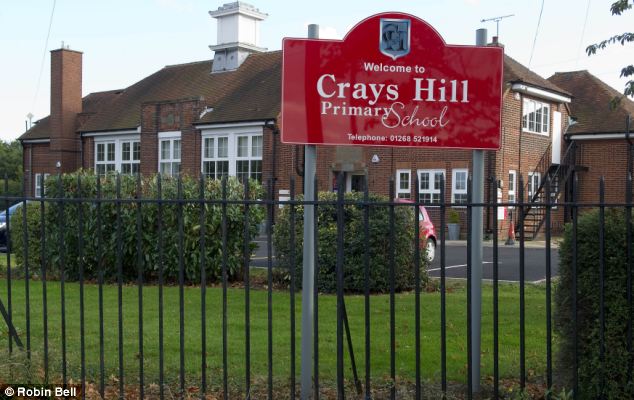
Inside the school where 98% of the pupils are travellers.

At the edge of an Essex village sits a primary school unlike any other in the UK. Only a handful of its children will ever go on to secondary school and some of the pupils will disappear for weeks or months at a time. Yet hardly anybody wants to talk about it. Why?

Inside the school where 98% of the pupils are travellers.

Take a look at this interesting article by Laurence Cawley for the BBC. I won’t elaborate on the article to much but instead encourage you to take a look yourself. The children of Travellers are not always educated to what other communities might consider the usual level but this article paints a fascinating picture of the challenges faced by teachers, schools and communities to put the best interests of the children first. However, the local community will not discuss the school in any way which asks further questions about equality in modern Britain.

The article describes a unique primary school on the edge of an Essex village, in fact it is the only example in the country. Cawley explains “only a handful of its children will ever go on to secondary school and some of the pupils will disappear for weeks or months at a time. Yet hardly anybody wants to talk about it. Why?”

But, as Cawley elaborates, “then came Dale Farm, which grew to become Europe’s largest traveller site. Increasing numbers of children from the site – some of it legally developed, some of it illegally – joined the school. The shifting pupil mix came to a head in 2004, when the then head teacher and 10 members of the governing body quit amid concerns at falling pupil numbers and how the school would fare in the future.”

Interestingly, the local community’s reaction to this influx of Traveller children was, at best, controversial, as the author describes “it was also the year children from settled families evaporated. Completely.”

Have a read, interesting stuff.

JD

Do faith schools harm integration?

Writer and broadcaster Afua Hirsch argues faith schools lead to segregation.

Writer and broadcaster Afua Hirsch argues faith schools lead to segregation. Her compelling, if potentially polarizing, video can be viewed here.  Her commentary on the subject is below but I am interested in what readers think about this. Certainly, on face value it feels like state sponsored segregation which leads to further to inequality in our communities. 

“Britain has a problem with integration, all political parties agree. But, instead of serious long term policies the response has been confined to contrived and often patronising measures.  Ethnic minority and immigrant communities are lectured about British values and we might all have to start swearing an oath of allegiance.

The glaring hypocrisy of our integration agenda is that our most important public institutions actively encourage segregation.  Faith schools make up one third of all schools in Britain. Our government is proposing that they have even more power to discriminate by selecting more of their places based on religious belief.  Public funds are being used to separate children by faith.

What could be more damaging to integration?

Faith schools are also segregating children by class. A quarter of faith primary schools have fewer disadvantaged students than those of no faith. Faith schools are the antithesis of a secular society but have never been so popular. Some parents are strategically using religious identities as a proxy for ethnicity, deliberately educating their children with others from a similar background. But the main reason for the popularity of faith schools is that many outperform other state schools in academic results.

We would never accept this kind of segregation in any other public service. Why is it acceptable in schools? We need to be honest about the role of faith and education in an integrated society and keep the two separate.” 

Afua Hirsh

Young black men don’t grow up thinking they’ll make it {at Cambridge}. They should.

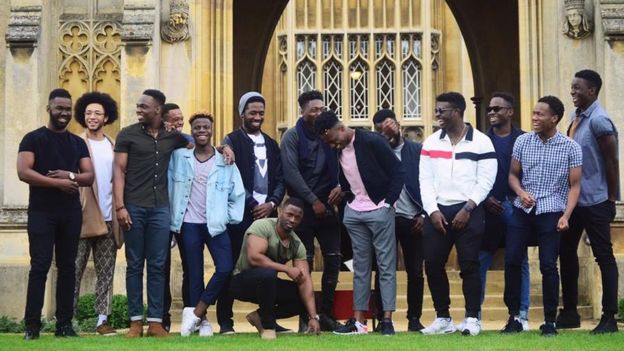
Interesting article from BBC highlighting the work of the Cambridge University African-Caribbean Society who are trying to change how Cambridge is perceived by young black men.

According to Cambridge’s own statistics, of 3,449 students accepted into Cambridge during the 2015/2016 academic year, 38 defined themselves as black, fractionally over 1%. For a highly traditional, elitist institution such as Cambridge this is a real shift in the right direction, certainly there is still much work to be done as 1% is hardly representative of the wider community. That said, many of our most famous academic institutions have always been dogged by questions of inclusion, diversity and ultimately inequality.

Here, the Cambridge University African-Caribbean are trying to change that.  A recent article, bhis was the intended message behind a photo of 14 black male students from the University that has been liked more than 2,000 times on Facebook. The group posed for several images that were shared in a bid to encourage more black students to apply to the university.

Accusations of inequality have dogged Cambridge University for many years, as they have Russell Group Universities. The high standard for entry to such prestigious institutions practically bars entry to those who’s formative years were economically or socially deprived. Statistically, those from economically or socially deprived areas are less like to do well at school and subsequently less likely to meet the high standards of a University like Cambridge. So, when such institutions brag about scholarships and bursaries for the under privileged the recipients still need to meet the university’s high entrance criteria. As such, these underprivileged students still need the support at home in order to attain the grades needed to enter Cambridge. It is statistically supported, though controversial, for me to say learners who have a stable and supportive home life achieve better than their disadvantaged peers. So, the really underprivileged learners who have challenging economic or social difficulties have, statistically, very little chance of meeting the entrance criteria for our elite institutions, let alone play polo or compete in dressage. What then are the Russell group and Oxbridge doing about this? How can they better support learners from really disadvantaged backgrounds over come that disadvantage and get in to Cambridge on talent alone, not grades and not on extra curricula pursuits.

However, there is some light at the end of the tunnel when groups such as the Cambridge University African-Caribbean can show case the positive steps taken. On the other hand, our prestigious institutions need to demonstrate that inequality is important to them by working with education providers in economically deprived parts of the country.

JD

How much you achieve in life should not be determined by how much your parents earn – Teach First.

When battling inequality in the classroom any offer of support is greatly received. However, as an experienced secondary teacher I must take umbrage with Teach First. Whilst the concept is a great idea, it is basically flawed because of ambition.

Teach First claim ‘Each year, a new group of participants joins us and our university partners for six weeks of intensive training before teaching in one of our partner schools for at least two years while completing our Leadership Development Programme. Their training and their passion for educational equality means that they are dedicated to raising the aspirations of the young people in their classrooms.’

That is a great sentiment… really it is and I say it with out a hint of sarcasm. However, when Teach First trainees are delivered to a school with a first class degree and six week training under their belt they are full of enthusiaum. Yet, the real problem lies in that ‘Leadership Development Programme’ where Teach First trainees are told how they are going to revolutionise the teaching profession, they will be the future leaders of the profession. Subsequently, there lay the fundamental problem – leadership deveopment.

From my own experience, Teach First trainees arrive in a school, normally in a deprived part of the country, and have, again in my experience, been a mix of excellent teachers with a great future and those who are not so sure the profession is for them. However, the staff who are very capable teachers are encouraged, as part of the ‘Leadership Development Programme’, to be heads of department, then on to senior leadership as soon as possible.

So, ultimately, what happens, again in my experience, is that if you are lucky you get a great teacher for a year or two at best, beyond that they have moved on to be a head of department at different school with a 50% teaching timetable. Beyond that they señor leadership roles have less and less teaching commitment these days so a great teacher is no longer teaching. Then we are back to needing teaching staff again…

Some may say, if they are good enough… However, it takes away from the fact that Teach First claim to be offering excellent classroom teachers and what they really offer is ambitious teachers who want to move up the ladder as quickly as possible.  Really, they offer the heads of the future, in fact, Teach First seem rather proud of their record of developing those in senior leadership. But, what about the learner… I thought it was about them and equality.

Really, what is Teach First’s true purpose? Is it to provide classroom practitioners or future leaders? I only ask as the laster already has its own process known as Future Leaders.

However, despite me complaining about the longevity of Teach First candidates their enthusiasm and commitment to equality is always welcome.

JD

Children do better at school in more equal societies.

Below is an interesting article from the The Equality Trust which argues that ‘People with more education earn more, pay more taxes, are more productive, and happier.’ However, I would argue that to gain a good education you need a social support system that both encourages education and supports the time it takes, if you take into account college and university.

Children do better at school in more equal societies.

Controversially, the article goes on to suggest that ‘Well educated people contribute more to society; they’re also more likely to volunteer and to vote.’ Again, we can challenge this by asking how do they define a contribute to society? If they mean a financial contribution then perhaps they are correct but what about other forms of contribution?

Finally, the article highlights that ‘Although good school systems make a difference, the biggest influence on educational attainment is family background’.  Unfortunately, this leads to the conclusion that ‘…disadvantaged children do less well at school and miss out on the benefits of education.’

This is where equality, or the lack of it, is easily highlighted. For disadvantaged children do less well at school is a national discrace and there are many articles that highlight this but less that actually offer solid solutions.

I understand that the government need to make electoral promises about improving educational opportunities for the disadvantaged but we have had very little impact from successive governments to make any real difference.

JD

Teacher recruitment a ‘significant challenge’, say MPs

According to MP’s ‘Encouraging teachers in England to stay in the profession will “remain a significant challenge” for the coming years, a committee of MPs stresses.’

Wow, does it really take. a select committee to highlight that issue? The article goes on to highlight that ‘The Education Select Committee says the next government will have to ensure recruitment targets are improved.’ Really!? To anyone who has worked in the primary or secondary sector in recent years then this is not really news, the crisis in teacher recruitment has been an issue for a considerable period of time. The previous government failed to improve teacher numbers and still a large number of those who join leave the professsion due to work load.

The article goes on to state ‘The government says it is committed to addressing the challenges schools face.’ Again, really!? We have had successive Conservative governments and they have utterly failed to address this problem.

In reality, this is an example of government stating the obvious and having no history of addressing this problem. In education, we would have an action plan to address the problem and then highlight its impact in 2 weeks, 4 weeks, 6 weeks… etc. Yet, the government just get to reinvent themselves with every election, despite failure to evidence what impact they have made.

The article can be found here – Teacher recruitment a ‘significant challenge’, say MPs

JD


School comparisons are unjust and based on inequality

Often a good education depends upon where you live.

Inequality in education is not just about the opportunities afforded to learners but starts before they have even started school . How a school  is measured by the government is equality important as we need fair comparisons. Interestingly, the new Teaching Excellence Framework (TEF) which is being introduced for higher education does compare like for like institutions, as such further education colleges that offer some higher education provision are measured against others and will not be compared with traditional red brick universities such as those in the Russell group, which would be grossly unfair.

When you talk about inequality in education you can’t help but discuss the postcode lottery that is the modern comprehensive education system. Often a good education depends upon where you live and this leads to unfair comparisons.

I often hear people say how a private education is better than a comprehensive education, which as a teacher frustrates me greatly. Should a good education come from income? Of course a good education can not be guaranteed but if you live a certain part of a town or city then your children may be restricted to poorer performing schools.

If you examine local demographics then most successful primary and secondary schools tend to be where parents live who own their own homes and are subsequently employed, not always – I don’t want to generalise – but statistically it is more often than not, particularly in the North of England. Frustratingly, you start to see that a good education does in fact come in areas of less deprivation and subsequently a poor education comes in areas of greater deprivation.

If you take North East Lincolnshire, for example, and in particular the town of Grimsby, where I am from and have taught for many years, you have a typical east coast town where the major industry, in this case fishing,  was eroded beyond recognition during the nineteen nineties so called Cod Wars and the town is now an area of economic deprivation, as is much of the east coast.

The successful secondary schools in the town, based on Ofsted inspection reports, are those on the periphery of the town, in this case Waltham Toll Bar, Healing and Humberstone – all academies. In fact, you are hard pressed to find a council run school in North East Lincolnshire as all have converted to become an academy. That said, the success of the academies programme is still open to much debate and the jury is definitely out as to whether they are a success or not (currently, as many are failing as are successful). However, in Grimsby, these three secondary schools, whose catchment areas are all villages on the outskirts of the main town, are the more successful with league table achievement in 5 GCSE’s including English and Maths, and now the new Progress 8 measure (basically, progress in a learners best 8 subjects rather that final outcomes). These academies are in areas that are the most affluent in the town and it does beg the question whether a good education is really down to pupils attending a school in an affluent area? The remaining secondary schools in Grimsby, again all academies, are, in the main, in the requires improvement category of Ofsted reporting. As such, if you live in central Grimsby you are more likely, statistically, to get a worse education.

That said, what do we mean by a worse education? In reality, we are talking only  about achievement of GCSE qualifications in year 11, not any holistic education  pupils might get over their time at the school. As such, in Grimsby, according to Ofsted reporting, you will only get a good or better education if you attend a school in a more affluent part of the town.

But, surely, if schools in more affluent areas achieve better results, and you will find this across the country, then why are schools from less affluent areas compared in league tables to schools from more affluent areas?  Why is a school in a deprived city centre part of Grimsby, or Bradford, or Barnsley compared to a school in the Tower Hamlets, for example.  Of course the learner demographics will be wildly different. Subsequently, staff in schools from deprived areas are being asked to work harder, in more challenging circumstances, than colleagues in the schools in more affluent areas. The problem is compounded by the difficulties in recruiting teachers – why would a teacher want to work in the more challenging school (especially if they had the choice)? Why would a head put their reputation on the line in a more challenging school?  Lets be honest, school leaders are getting less and less time to make an impact, one poor Ofsted report and they are on the scrap heap.

JD