Include ‘ethical veganism’ in diversity policies, experts warn

Below is a recent article by Maggie Baska for People Management regarding a high profile case where experts are subsequently advising  organisations to include ‘ethical veganism’ in diversity policies. I am interested in what policy writers think about this?

‘Lawyers advise businesses to give the lifestyle choice the same protection as other beliefs after tribunal rules it falls under discrimination laws. Employers should look to review their diversity policies to include ‘ethical veganism’, employment laywers have said, after an employment tribunal (ET) ruled it is a philosophical belief that is protected by discrimination law.

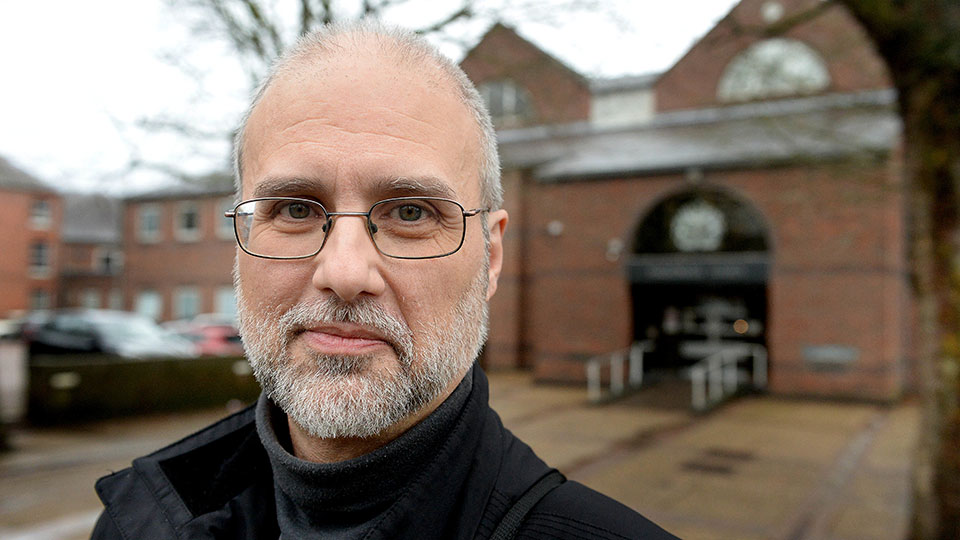
The ruling came from the Norwich ET as part of a wider unfair dismissal case brought by Jordi Casamitjana (pictured), a former employee of animal rights charity the League Against Cruel Sports (LACS), who claimed he was unfairly sacked after he raised concerns that its pension fund was invested in companies involved in animal testing.

Casamitjana argued that his ethical veganism – which covers his broader lifestyle rather than just diet – was an integral part of his life, and this therefore made his dismissal discriminatory.

The judgment does not settle Casamitjana’s unfair dismissal claim, but it does lay the ground for a substantive hearing into his case.

Experts said the ruling widened the scope of the Equality Act, and employers needed to take a close look at their existing policies to ensure ethical vegans were afforded the same protections as employees with other religious or philosophical beliefs.
While both dietary and ethical vegans eat a plant-based diet, excluding all animal-based foods or byproducts, ethical vegans exclude all forms of animal exploitation including avoiding clothing made from wool or leather, or toiletries from companies involved in animal testing.

Victoria Albon, associate at Dentons, said it was not surprising the tribunal found ethical veganism was protected, and said the definition of a philosophical belief was “open to a fairly wide interpretation”, highlighting a tribunal ruling in 2009 that found belief in man-made climate change should be classed as a belief and protected under the Equality Act.

The Act says a philosophical belief must be genuinely held – not just an opinion or viewpoint. It must also be cogent, serious and apply to an important aspect of human life or behaviour. This belief must be worthy of respect in a democratic society and not affect other people’s fundamental rights.

Although it could still be appealed, the ruling provides useful commentary on the level of legal protection that ethical vegans should receive in the workplace. But Carl Atkinson, partner at law firm Gunnercooke, told People Management tribunal judges in similar cases have been careful to state in their judgment that a case will be fact specific to the individual involved.

“It has become apparent that the way tribunals will judge if the belief system of a particular claimant is covered by equality law will depend on the specifics of that case, meaning one vegan could have a set of views that fall within the definition a philosophical belief while another did not,” Atkinson explained.

He said, in the present case, Casamitjana’s lawyers had published his witness statement online so it was apparent his veganism had become determinative of the way he lived his life.

While all vegans might not be protected by the recent ruling, Kate Palmer, associate director of advisory at Peninsula, advised businesses to review how they supported ethical vegans in their company and if any changes were required.

“It should be remembered that no employee should feel mistreated at work,” Palmer said. “Aside from the potential legal implications as seen here, catering for a diverse workforce can be critical in both attracting and retaining key talent.”

Casamitjana’s unfair dismissal case is still being heard by the tribunal. Slater and Gordon, the law firm representing Casamitjana, said further hearings into the case are planned for February.

Rhys Wyborn, employment partner at Shakespeare Martineau and who acted for the LACS, said the company did not contest the issue of whether ethical veganism itself should be a protected belief, but said it was “irrelevant” to the core reason behind Casamitjana’s dismissal.

“The league is now looking ahead to the substantive hearing in this case and to addressing the reason for Casamitjana’s dismissal, which it maintains was down to his misconduct and not the belief he holds,” Wyborn said.

Casamitjana said he was “extremely happy” with the current ruling and added that he hoped fellow vegans “would benefit” from the tribunal’s decision.’

The full article from People Management can be found here.

JD
Being Conscious About Our Unconscious Biases

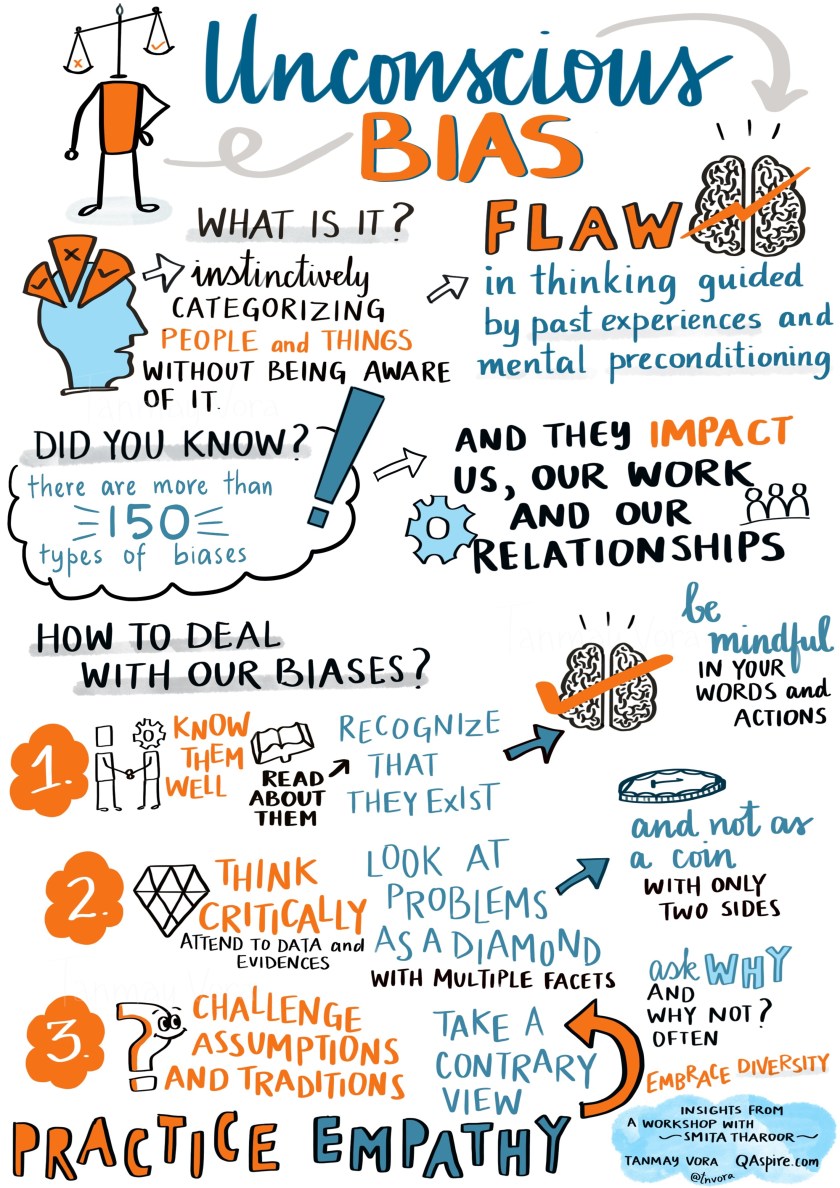
What is Unconscious Bias

The term ‘cognitive bias’ was coined by Amos Tversky and Daniel Kahneman in 1972 which quite simply means “our tendency to filter information, process facts and arrive at judgements based on our past experiences, likes/dislikes and automatic influences.”

How do these biases show up in Leadership?

A lot of leadership is about taking decisions involving group of people. Instinctive leaders often tend to decide quickly based on limited information or experience they have at hand. The result is that they end up taking wrong decisions (which may have worked for them in past but may not work in a different context), or discriminating with people of a certain colour, race, sex or nationality based on their past experiences with similar people. At work, biases (or the perception of bias) is the biggest contributor to people disengagement and cost of disengagement is huge. Lack of critical thinking also leads to short-termism where decisions are taken for immediate gains and solutions of today become thorny problems of tomorrow.

Some Ways to Deal with Unconscious Bias

Get Conscious. Be more aware about unconscious cognitive biases. Knowing that they exist is the first important step to tackling them. And they exist in plenty. Here is a list of all unconscious biases and what they really mean.
Ask questions, often. When considering a decision, ask questions that elicit understanding and clarify details. When you ask questions, you extend an opportunity to others to really express them. You are extending an opportunity to yourself to understand their thinking more closely. Encourage a culture where asking questions is valued.

Look for Patterns. Data over a period of time reveals patterns. Looking for patterns from the results of past decision can lead to important insights and learning. Sometimes data can blind us unless we learn to look at the pattern and story behind the data.

Look for the contrary. It helps playing a devil’s advocate and taking a contrarian view of things. It not only challenges others to think harder but also helps you in really understanding if they are just defending their own biases.

Embrace Diversity. This starts with hiring decisions. Don’t hire people whose beliefs are compliant with yours. You will tap into diverse ideas and viewpoints only when you have people with diverse thinking patterns on your team.

Attend to data and evidences. When you ask your people to bring data, evidences and trends, it does not mean lack of trust. It only means that you are intentional about serving them better by taking the right decisions.

Communicate clearly. Clear and accurate communication is a leader’s tool #1. Avoid using generic terms to describe people, situations and things. Biases are most commonly visible in how a leader communicates. Being mindful about our words is critical to thinking and communicating objectively.

Unconcious Bias Poster 1

Thanks go to Tanmay Vora for this excellent and concise explanation of what ‘unconscious bias’ is and how we can combat it in the workplace.

JD

The Public Sector Equality Duty

Equality, Diversity and Inclusion is not just about compliance with legislation, it’s about leading change, improvement initiatives, engaging, motivating and improving the potential of staff. The Public Sector Equality Duty (PSED) brings this into law for all public bodies in the United Kingdom.

According to ACAS (the Advisory, Conciliation and Arbitration Service) the Public Sector Equality Duty requires public bodies and others carrying out public functions to have due regard to the need to eliminate discrimination, to advance equality of opportunities and foster good relations. The duty applies to all nine areas of discrimination listed in the Equality Act 2010.

As such, it’s about ensuring all stakeholders are at the centre of the services offered to the public and positively impacting upon the context and culture of the organisation whilst supporting public sector staff to design and deliver great service.

The role of the Public Sector Equality Duty is to eliminate unlawful discrimination, harassment, victimisation and any other conduct prohibited by the Equality Act 2010. To advance equality of opportunity between people who share a protected characteristic and people who do not share it foster good relations between people who share a protected characteristic and those who do not.

It is a requirement in law that public bodies such as the NHS, local government, police, fire brigades, schools, colleges, universities and others carrying out public functions follow the Public Sector Equality Duty. The full list of employers required to follow the PSED can be found in Schedule 19 of the Equality Act 2010.

The duty applies to individual employees, workers, contractors and customer and all nine areas of discrimination listed in the Equality Act 2010 – referred to as protected characteristics – meaning that employers need to consider:

  • age
  • disability
  • gender reassignment
  • pregnancy and maternity
  • race
  • religion or belief
  • sex
  • sexual orientation
  • marriage and civil partnership

Note: For marriage and civil partnership, the Public Sector Equality Duty only requires employers to have due regard to the need to eliminate unlawful discrimination.

This ensures that public bodies consider the needs of all individuals in their day to day work – in shaping policy, in delivering services, and in relation to their own employees.
JD

Discrimination casts a shadow over football

The English Football League kicked of last week but the opening weekend was marred with a number of incidents of racist abuse. Like any other employer in the UK, a professional football club has a duty under the Equality Act 2010 to protect its staff from racial abuse. The Equality Act makes no distinction as to the type of workplace, a football player is a member of staff and the football pitch is a workplace.

On Saturday 3rd August, Southend United’s Jamaican striker Theo Robinson claims he was abused “in front of family, friends and their kids” at St Andrew’s, the first match Coventry have played in their ground-sharing arrangement with Birmingham City.  Similarly, Stoke City’s James McClean, Barnsley’s Bambo Diaby and the sister of Fulham’s Cyrus Christie were also victims of what’s been described as “unacceptable discriminatory abuse”.

Anti-racism charity Kick It Out said “On the first weekend of the season, these incidents should be a reminder for everyone in football that racism and discrimination cannot be ignored. Clubs and the football authorities must be relentless in calling out this disgraceful behaviour, and be prepared to issue strong sanctions and education sessions to any supporter involved. Discrimination casts a shadow over football in this country, and we will not stop highlighting the problem while it remains rife in the game.”

Whilst in this case the racial abuse is coming from a minority of fans in reality a football fan is a customer of the club and a consumer of the clubs product or service. As such, this is no different from hospital staff receiving racial abuse from a patient or service user. In such cases, NHS Trusts work to support staff and reduce racial abuse happening and football clubs must do the same. However, we hear much more outrage from the public and political leaders when NHS staff are racially abused. Why then are footballers, as well as other sports men and woman, seen as fair game to abuse at work?

Certainly, the money involved in football infuriates many fans, especially when they are being charged £40 a ticket and another £50 for a replica club shirt. They see the elite football players earning the big bucks and see themselves as effectively their employers. Oddly, if they were the employers then by law they should treat their staff better. That said, we know that when a football team is doing well the fans sign their praises from the stands but when things are not going well a minority of fans abuse the players, regardless of ethnic origin. This abuse from the stands has almost become a ‘norm’ but race is a protected characteristic under the Equality Act and harassment on the basis of it is illegal, just as would the abuse of a disabled member of staff, or an LGBT+ member of staff. In fact, I am sure the ongoing situation with racial abuse of players is contributing to the lack of any visible LGBT+ professional football players. Unfortunately, LGBT+ players are not confident enough in being accepted by all fans that they have to hide that aspect of their lives away and as such lead an unauthentic version of themselves, in itself this can lead to anxiety, depression and other mental health issues.

So what are clubs to do? In reality, expulsion from the ground and permanent exclusion from all football grounds is a strong deterrent. Clubs must demonstrate their commitment to stamping out racial abuse but those fans that do not racially abuse players must also be given the confidence to challenge the abusers and show them that this behaviour is not okay.

Either way, the Equality Act 2010 protects all staff from abuse in the workplace and unless clubs do more to protect their players from racial abuse they could be in breach of the Equality Act and subject to legal action.

JD

Discrimination in the Workplace

Discrimination is where an individual or group of individuals are treated differently due to their perceived membership of a certain group or social category. For example, an individual or group of individuals may suffer discrimination because they are from the Travelling Community. Under the Equality Act 2010, is it unlawful to discriminate against any individual (or group) based upon any of the protected characteristics.  In the workplace, this can take many forms including, for example,  black workers not being offered the same opportunity as white workers, women being paid less than men for doing the same job but can include age, colour, convictions, height, disability, ethnicity, family status, gender identity, genetic characteristics, marital status, nationality, race, religion, sex or sexual orientation.

Direct Discrimination

Direct discrimination is where an individual is treated differently or worse than others for certain reasons, it is often easy to spot such as being refused entry to a hotel because you are gay. The Citizens Advice Bureau describes direct discrimination through the following example: ‘You’re a saleswoman and you inform your employer that you want to spend the rest of your life living as a man. As a result of this, you’re moved to a role without client contact against your wishes. This is less favourable treatment because of gender reassignment. It would still be less favourable treatment even if your employer were to increase your salary to make up for the loss of job status.’

Indirect Discrimination

However, there are other times when you appear to be treated equally and in the same way as others but it actually has a worse impact on you because of who you are. This is known as indirect discrimination where a workplace practice, policy or rule applies to all but it has a worse effect on some than others. The Citizens Advice Bureau describes indirect discrimination through the following example: ‘A health club only accepts customers who are on the electoral register. This applies to all customers in the same way. But Gypsies and Travellers are less likely to be on the electoral register and therefore they’ll find it more difficult to join. This could be indirect discrimination against Gypsies and Travellers because of the protected characteristic of race. The rule seems fair, but it has a worse effect on this particular group of people.’

Justifying Discrimination

Not all discrimination is unlawful, if an employer treats you unfairly because of who you are they might have a good enough reason but may have to justify their discrimination. The Citizens Advice Bureau describes justifying discrimination through the following example: ‘A hospital advertises a surgeon’s job for which it requires at least ten years’ experience. You can’t meet this requirement because you’ve taken time off work to care for your children. As you’re a woman, this looks like indirect discrimination because of sex. But the hospital may be able to justify this, if it can show that the job can’t be done properly without that amount of experience. This is likely to be a legitimate aim.’

JD