University racism ‘complacency’ warning

Interesting article here from the BBC regarding the startling lack of diversity in senior leadership across our Universities. Remarkably, only 3.2% of academic managers, directors and senior officials are from ethnic minorities and there is an average 16% pay gap between UK-domiciled white and ethnic minority academic managers, directors and senior officials. That makes for interesting reading in its own right, however, what further compounds the issue is the higher dropout rates for black undergraduates. The newly formed Office for Students has its work cut out ensuring equality, diversity and inclusion is high on the agenda for all Universities and higher education providers. From a student perspective, the Teaching Excellence Frame work (TEF) will certainly help contribute to improvements in EDIMS (Equality and Diversity Impact Measures) data through measurement of outcomes. However wider issues surrounding social mobility, the slow pace of change and on-going ‘rhetoric’ or ‘lip service’ by Universities need to be addressed by Government.

That said, they very same conclusions could be drawn from ‘widening participation’ and the achievement of students from poor backgrounds. In that situation, often, (which is supported by national statistics) students form poorer backgrounds who undertake higher a education programme at further education colleges rather than a University appear to achieve better overall.

http://www.bbc.co.uk/news/education-44125777

JD

Why is Hinds suddenly letting teachers ‘get on with the job’?

Interesting article here from tes.com. Whilst the academisation of our school system was heralded as giving heads more autonomy over how their school were run it has ended up with greater centralised control, especially when you introduce multi-academy trusts. As such, the education secretary’s recent announcement of the dramatic changes to school accountability is made all the more interesting… are Whitehall admitting defeat, such is the complete change in direction of recent policy.  What do we think of Damian Hinds proposals?

https://www.tes.com/news/long-read-why-hinds-suddenly-letting-teachers-get-job

The arts have the opportunity to lead the way in adopting more innovative measures of gender balance

Take a moment to read Cath Sleeman’s blog post here where she discusses why so many women still feel invisible in the arts – underpaid and under-represented. So how much has really changed? To properly answer this question, she explains, we need to adopt more innovative ways of tracking gender balance.

As an educational manager in the arts with responsibility for equality, diversity and inclusion its concerning to see an industry still dominated by outdated and old fashioned attitudes. However, whilst things are moving forward progress appears to be slow but innovation in how assess data may be more fruitful.

https://www.nesta.org.uk/blog/pressforprogress-evidencing-gender-inequality-arts

JD

Arts education is a postcode lottery. Britain must invest for post-Brexit theatre.

Great commentary here from Nicholas Hytner, Arts correspondent for the Guardian.

Arts education is disappearing from our state funded schools in favour of STEM subjects. Admittedly, STEM subjects are vital for jobs and will further support the British manufacturing industries which in turn will contribute to the Governments strategy to improve Britain’s Industrial capabilities. However, by leaving arts education almost exclusively to private schools we run the risk of the arts becoming an elitist activity. Already, we see almost all of our Oscar nominated actors having come from a privileged, privately educated background. If art is to thrive in this country then it must not just come from a place of privilege otherwise it will not become a representative form and will lose touch with the very people it is designed to connect with.

The arts in Britain should be cherished, they are highly regarded across the world and its a large export industry… certainly they are worth investing in. After all, for the most part our free time is spent consuming the products of a wide range of artists, whether that be music, film, television, theatre, dance, gaming, reading or contributing to its creation… we all use the arts in one way or another.

https://www.theguardian.com/commentisfree/2017/jun/05/post-brexit-britain-need-theatre-public-investment-creative-economy

JD


Why do schools have a massive pay gap?

Interesting article here by

As someone who worked in secondary school management for almost a decade I find it astonishing that a gender pay gap still exists. After all, pay scales are well published for teachers, managers and leaders across the education sector. However, in all reality, negotiation of your own personal pay scale is a private conversation between employer and employee. If you are headhunted then a better offer is likely to be on the table than if you fill out an application form. I agree that if two people start the same role, with equal skills and experience then they should be paid the same but what if one candidate has more experience? Should that count towards pay? Of course it should and unfortunately the reality is that staff, both male and female, need to be confident that that they are in demand and in that way some negotiation over pay can happen.

That said employers must become more transparent in how they pay their staff and better able to justify those differences in scales to ensure equality and fairness across the sector.

http://www.bbc.co.uk/news/uk-politics-43484831

JD

Universities and independent schools to run poorly performing state schools? The Conservatives have got it wrong on education again.

What on earth do universities and independent schools know about running state funded education?

One of the Conservatives key manifesto polices on education is to “ask universities and independent schools to help run state schools”. As a former state school teacher myself, and as someone who currently works in the further and higher education sector, I have to ask one question… what on earth do universities and independent schools know about running state funded education?

For a start, I can tell you they have never experienced an inspection regime like Ofsted and this will not change with university or independent school leadership, this is how state funded schools are judged. It’s a cut throat business, school and academy Principals come and go based upon the Ofsted rating they get their school, sometimes they don’t get very much time to prove themselves. Then there is the suggestion that Universities can help, however they are inspected by the Quality Assurance Agency for Higher Education (QAA) which is a desk based inspection where they look at policies and paperwork. Independent schools are inspected by the Independent Schools Inspectorate (ISI) which is again a soft touch process when compared to the rigger of Ofsted. Neither QAA nor ISI reflect the hard process that is a full Ofsted inspection that can make or break a senior management team. Remember, leaders lose their jobs over poor Ofsted outcomes.

The differences in these inspection methodologies can be explained in the following analogy. Ofsted would physically check to see if a fire door works, to check if your learners are safe in the event of a fire, if that door does not open (it happens!) then the school would get an inadequate grade for safeguarding and fail the inspection. Whereas the QAA or ISI would simply ask, from an office, if you had a policy on fire door usage but not actually test the fire door itself.

Furthermore, independent schools, by their very nature, have students who come from supportive homes, if someone pays £8000 a year for schooling then they care about what it’s being spent on. In fact, in order to pay £8000 per year tuition fees parents need to have a good job for such a high disposable income. However, contrast that with a state funded school in a deprived postcode where parents don’t work, parent’s evenings have a turnout of 35% or less. Where children turn up having not had breakfast, every day. Where children look after brothers and sisters because parents are incapable through drink and drugs. Where children are victims and at risk, every day. Where they come to school just for the free hot meal as they don’t get one at home. This is modern Britain and this happens in deprived postcodes across the country, don’t kid yourself that it doesn’t.

So my question to the government is… how many independent schools (and universities) do they think have ever faced children with these challenges? Private schools throw money at problems and this Conservative government have reduced school budgets relentlessly, so where will the money come from. Independent schools make a profit, state funded schools do not. Yet, the government are asking for their help in running states funded schools… good luck. How can a private school in an affluent part of the country run a school in a deprived part of the inner city where gang culture rules, or deprivation is so high families have not worked in generations? What do they bring to the party?

The vast majority of this current Conservative government are amongst the 7% of the country who attended private school. As such, what do they know about the problems facing schools in deprived areas?  The people making policy have never experienced poverty, never lived in a deprived area and have never seen the challenges faced by some of our poorest children. In fact, most of the Conservative government come from privilege and that’s who they want to trust our schools to. People who don’t understand the challenges faced by the very learners they will be working for.

On a final point, in my experience as an educator, when I have spoken to independent school teachers and leaders I don’t  think they would survive in the cut throat business of state funded schooling and its inspection regime. I am not suggesting that they are not very capable educators and professionals but independent school heads last for years, decades in many cases, whereas in state schools they are like football managers and don’t last more than a few years before moving on, or being moved on.

University and independent schooling clearly has its place but what they know about the challenges faced by some of the poorest children in this country could be written on the pack of a postage stamp and I say that with every respect. The children they will have to work with do not attend university and do not attend independent schools because of massive economic or social inequalities. It’s is the polar opposite of what universities and independent schools are used to.

It’s about time the government listened to the teaching profession rather than their friends in high places.

JD

Conservative government will stop free hot lunches for all infant pupils causing further inequality

For the Conservative government to make a manifesto promise to rescind the policy where by all infants get free hot lunches is contributing to further inequality.

For some school children in this country the free hot meal they get at school is the only hot meal they get that day. Far too many children in this country dread the summer holidays because a hot meal is, at best, sporadic and in some cases none existent. That is the inequality in our country, that not all children get a hot meal each and every day. So for the Conservative government to make a manifesto promise to rescind the policy where by all infants get free hot lunches is contributing to further inequality. Yet again, the hardest hit will again be the poorest and most vulnerable in our society.

In his analysis of today’s Conservative manifesto release, Sean Coughlan, Education Correspondent for BBC News, highlights “Head teachers across England have been making increasingly strident protests about schools running out of cash.” But, to stave of this criticism the Conservatives have responded by reshuffling about £1bn a year extra into the day-to-day running budgets of schools. However, it would appear that “most of this would come from stopping free hot lunches for all infant pupils – a policy only launched a few years ago.”

In reality, will schools use this money to continue to offer free hot lunches for all infants?In that case there is no benefit for school whatsoever, so no investment and they will continue to struggle. On the other hand if they use it for other purposes then the children loose out. I don’t imagine head teachers will see this as an acceptable alternative to real, hard investment.

JD

Inside the school where 98% of the pupils are travellers.

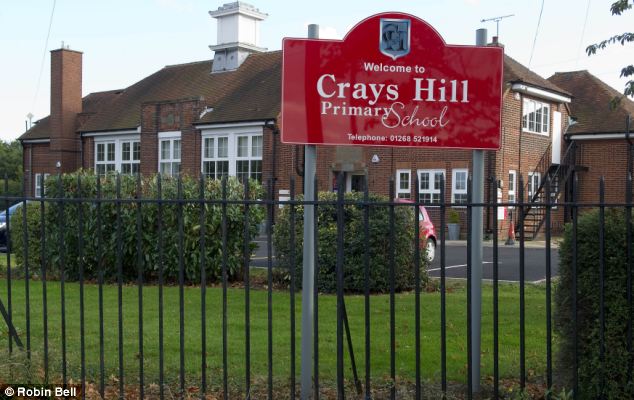
At the edge of an Essex village sits a primary school unlike any other in the UK. Only a handful of its children will ever go on to secondary school and some of the pupils will disappear for weeks or months at a time. Yet hardly anybody wants to talk about it. Why?

Inside the school where 98% of the pupils are travellers.

Take a look at this interesting article by Laurence Cawley for the BBC. I won’t elaborate on the article to much but instead encourage you to take a look yourself. The children of Travellers are not always educated to what other communities might consider the usual level but this article paints a fascinating picture of the challenges faced by teachers, schools and communities to put the best interests of the children first. However, the local community will not discuss the school in any way which asks further questions about equality in modern Britain.

The article describes a unique primary school on the edge of an Essex village, in fact it is the only example in the country. Cawley explains “only a handful of its children will ever go on to secondary school and some of the pupils will disappear for weeks or months at a time. Yet hardly anybody wants to talk about it. Why?”

But, as Cawley elaborates, “then came Dale Farm, which grew to become Europe’s largest traveller site. Increasing numbers of children from the site – some of it legally developed, some of it illegally – joined the school. The shifting pupil mix came to a head in 2004, when the then head teacher and 10 members of the governing body quit amid concerns at falling pupil numbers and how the school would fare in the future.”

Interestingly, the local community’s reaction to this influx of Traveller children was, at best, controversial, as the author describes “it was also the year children from settled families evaporated. Completely.”

Have a read, interesting stuff.

JD

Unfortunately, show business and inequality seem to go hand in hand these days.

Currently, US television is blessed with a crop of fine British actors, a large number of whom went to public school. But why the disproportionate number of successful actors coming from the privately educated sector?

Currently, US television is blessed with a crop of fine British actors, a large number of whom went to public school. But it’s not just American television that loves a British actor, our own programming is awash with public school graduates. They include Eton alumni Tom Hiddleston (The Night Manager, Thor & Wallander) Dominic West (Appropriate Adult, The Wire & 300), Damian Lewis (Homeland, Billions & Wolf Hall) and Eddie Redmayne (The Dainish Girl, Theory of Everything & Fantastic Beasts), and Benedict Cumberbatch (Sherlock, The Imitation Game & The Hobbit), who won an art scholarship to Harrow.

These actors have certainly flown the flag for British performing arts. Dominic West won a BAFTA for his portrayal of the serial killer Fred West in Appropriate Adult (2011), while Damion Lewis has won a Golden Globe and an Emmy Award for Homeland (2011). Then it was the turn of Benedict Cumberbatch to win a Prime Time Emmy Award for Outstanding Lead Actor for Sherlock (2010). Eddie Redmayne went on to win the Oscar for Best Performance by an Actor for The Theory of Everything (2014). Finally, Tom Hiddleston rounded off the Etonian connection when he won a Golden Globe for Best Performance by an Actor for The Night Manager (2016).

However, as Dame Helen Mirren DBE remarked “What has happened to our great working class actors?”

Some point to the state education system in the UK, which it is claimed are not producing the level of acting skill required for a world wide stage. However, I would argue that all of the actors listed above were able to access well regarded fee paying stage and drama schools, such as The Royal Academy of Dramatic Arts (RADA), due to privilege. Clearly, if they went to Eton then their parents could afford to pay for the very best drama schools. In fact, as well as Eton, these actors all went to elite universities, such as Cambridge, and then studied acting as a postgraduate course. Postgraduate education is hardly a pursuit of the economically challenged.

Let’s put it this way, acting is a profession that is well known for the audition process and how frustrating this can be. The profession is littered with sorties of famous actors who were penniless and on the last audition before they got that big role. Well, clearly the days of the penniless actor are long behind us. How many people from a working class background can afford to live in London whilst they audition for roles? In an industry were repeated failure in auditions (in an actor’s early career) are to be expected then only those with a family income, and so privilege, will be able to survive.

Unfortunately, the likes of Michael Canie are few and far between these days. Caine left school at 15 and took a series of working class jobs before joining the army and seeing action in the Korean War. He then took on a job as an assistant stage hand in a theatre.

Unfortunately, the acting profession has becoming one for those who come from privilege, yet another elitist organisation that our children can forget about joining. Why teach drama in state schools, further education colleges (and even the lower ranked universities) if you have to go to private school or an elite university to get into RADA? London is littered with drama and performance schools that cost anywhere between £12, 000 and £24, 000 per year to attend, only those from privilege can hope to make the grade. That said, privilege does not guarantee a place in anyway, entry is strictly by audition… and the fees being paid promptly of course.

Am I over reacting? I don’t think so, these actors all come from the 7% of our population that is privately educated. What about the 93% who are state educated. There is clearly a disproportionate number of successful actors coming from the privately educated sector.

Don’t get me wrong, I am not knocking these actors for their success or that British dramatic arts are so well respected internationally. However, I am knocking a system that is based in inequality. How many state educated students can realistically have dreams of acting if the shop is closed to those who do not come from privilege?

What is worse, we are not telling students who take up a school and college drama course that they are in for an unfair fight to get that acting job they dream about. Not unless extra and background work is their dream, which we know it won’t be.

Acting is about individual performance, a personal expression that should not be about being born into privilege. Unfortunately, show business and inequality seem to go hand in hand these days.

JD

Privilege and inequality – a question for my Member of Parliament

I don’t think the governments perception of under privilege is necessarily the same as that of the under privileged themselves. Certainly, the majority of our Education Secretaries over the past three decades had a private education, so in the main they came from privilege.

How many students from really challenging backgrounds get into our elite institutions? In short, not many… but that’s nothing new. However, more often than not, these institutions will highlight their scholarship and bursary schemes, designed for the under privileged, as an answer to questions of inequality.

But, what is under privileged? Who is defining what is and what is not under privileged?  I don’t think the governments perception of under privilege is necessarily the same as that of the under privileged themselves. Certainly, the majority of our Education Secretaries over the past three decades had a private education, so in the main they came from privilege.

Privilege is usually associated with extreme financial wealth and the range of opportunities exclusively available to privileged people. But privilege for some is what others would call the norm, the ‘nothing to write home about’. For some members of our community a stable upbringing, a loving and supportive family, friends, food on the table, schooling and a feeling of self-worth are privilege. Privilege is no longer just about mobile phones, money, cars, homes, holidays and clothes… it’s about opportunity or the lack of it. Too many of our children live in homes without this privilege. Some don’t call this privilege some call it basic needs, either way it impacts massively on their future opportunities.

How can a bright and capable student who comes from a background without these basic needs meet the entrance requirements for an elite institution when they are 18 years old? It’s hard enough to gain the entrance requirements for Cambridge, for example, when you come from a well-supported, loving family who are right behind you and provide you with every encouragement. What if your home life is not so ‘picture post card’ perfect? You can’t get a bursary or scholarship if you don’t get the grades. So again, the very people who truly need the support to reach the top… can’t get access to it.

To my mind, this says very clearly… if you want to get access to an elite institution in the UK then you need to come from a good home, if you don’t it’s not going to happen.

So, my question to government is, what are we doing for those young people who are bright and capable but don’t come from perfect homes? How can we help them over come being born into challenging circumstances and navigate our elitist culture?

I would urge you to contact your local MP, or as we approach a general election your prospective party candidates, and ask the question – what will you do for our young people, born into economic and social hardship, to ensure they have equal opportunity for success in a post Brexit Britain?

JD