The Stonewall debate – trans rights versus gender-critical beliefs

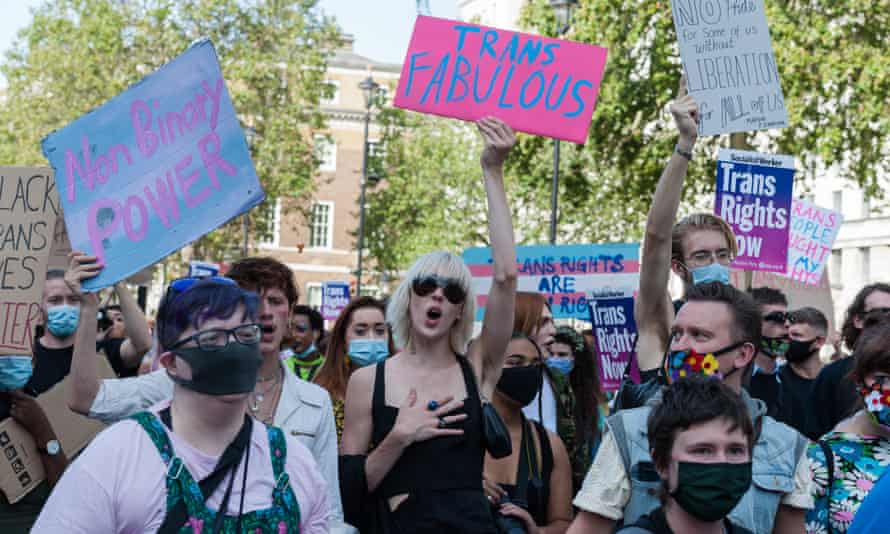
In recent months, Stonewall – Europe’s leading LGBTQ Rights organsaition – have found themselves at the centre of some very public controversy regarding trans rights. It doesn’t look like it is going away anytime soon either.

In brief, Stonewall have been accused of shutting down gender-critical beliefs (and subsequent debate over trans rights) as transphobia, subsequently the Government equalities minister (Liz Truss) has urged government departments to withdraw from Stonewall’s flagship Diversity Champions programme.

According to the Guardian the debate centres on trans rights campaigners on one side and gender-critical feminists – who disagree with the view that gender identity should be prioritised over biological sex – on the other.

The debate is a complex one but in recent months critics believe Stonewalls stance on trans rights is over-aggressive and seeks to shut down debate but which the charity and its defenders believe is putting it on the right side of history.

In law, ‘Gender identity or trans status’ are not protected, only ‘gender reassignment’ is protected under the Equality Act 2010. However, Matthew Parris, one of Stonewall’s 14 founders, wrote in the Times that the charity had been “cornered into an extremist stance” on the subject of trans rights. He argued that Stonewall should stay out of the issue, sticking to LGB rights without the T. Whilst the right to change one’s legal gender was established in the UK in the 2004 Gender Recognition Act, it was only six years ago that Stonewall announced that it would work for trans equality and apologised for its past failure to do so.

In recent months, Liz Truss, the equalities minister, urged all government departments to quit the Diversity Champions programme. This was followed by a report that accused Stonewall of giving incorrect advice on equality law. This was further complicated when the Equality and Human Rights Commission (EHRC) quit the Diversity Champions programme in May 2021.

Yet, suggestions emerged that employers were leaving the Diversity Champions programme because of disquiet over its transgender inclusion training. The Telegraph reported that six public-sector organisations had left out of about 850 members listed on Stonewall’s website, although those exits were since 2019 and none had publicly cited the issue of trans rights as motivation for leaving.

Stonewall accused the Equality and Human Rights Commission (EHRC) of defending gender-critical beliefs and suggesting that they are “protected beliefs” under the Equality Act, a position the signatories said was a “kick in the teeth to trans people”.

Prof Kathleen Stock, a professor of philosophy at the University of Sussex who has written a book criticising theories of gender identity, said Stonewall had encouraged a definition of transphobia that was far too wide. “Through its Diversity Champions scheme it’s disseminated this very widespread idea that an attack on the theory – or an attack on the particular interpretation – of identity is an attack on trans people. And that has really made the whole discourse incredibly toxic, given its enormous reach within national institutions,” she said.

In a recent interview with the BBC, Nancy Kelley, head of Stonewall, attracted more criticism by comparing gender-critical beliefs to antisemitism. She said, “With all beliefs, including controversial beliefs, there is a right to express those beliefs publicly and where they’re harmful or damaging – whether it’s antisemitic beliefs, gender-critical beliefs, beliefs about disability – we have legal systems that are put in place for people who are harmed by that.”

Kelley, who said Stonewall believed in freedom of speech but “not without limit”, said the comparison was apt as people were protected on the basis of their gender identity in the same way as people are on the basis of their race.

On the antisemitism comparison made by Kelley, veteran gay rights campaigner Peter Tatchell said. “Those who deny trans people’s existence, misgender them and advocate anti-trans discrimination echo the prejudice of racists and homophobes.”

The question for UK based organisations is do they continue with their association with Stonewall and the Diversity Champions Programme? If your organsaition has a strong stance on supporting trans people will staying with stonewall support that, or does the organsaition risk being dragged into a debate regarding gender-critical beliefs?

JD

Voice, Power, Advocacy and Change – Effective Staff Networks

Staff networks provide a safe and practical space where generating and sharing new ideas, and exchanging information can be expressed in an informal environment. They also provide peer support, networking opportunities and social activities. Their activities can help to open the door to changing the culture of an organisation.

Effective staff networks are self-governed, and their terms of reference, leadership and membership arrangements are determined by their own members. However, these networks should operate with the full support of the organsaition and a framework is recommended so there is clarity, coherence and consistency of approach in the operation of all staff network groups.

Staff networks can be a powerful tool for empowering minority groups to have an effective voice in an organisation. In the context of diversity and inclusion, a minority group is a group of individuals who are known to have been discriminated against on the basis of a shared characteristic. It is worth noting that these groups may not be a minority in terms of numbers as in the case of women, who are a minority group, despite comprising over half of the UK population.

According to Advance H.E. (formally the Equality Challenge Unit), staff networks may not work in every workplace and/or for all minority groups, and their viability and success will depend on the culture and demand within individual organisations.

Networks need to be led by the staff groups that they represent. However, there is a role for institutions to facilitate and support the development of networks:

  • Involve staff and discuss the need for staff networks. This could be linked to specific times of year to maximise impact, for example discussing the possibility of a women’s network on international women’s day. A specific event gives the opportunity to discuss whether it is viable and to look for volunteers to take the network forward.
  • Provide a budget. From refreshment for meetings, to organising specific events or training and development, a budget of any size helps to ensure the network is sustainable and effective.
  • Ensure senior management are open to dialogue. Networks can provide a useful perspective on institutional practice. Consultation should be genuine and views of the network taken seriously.
  • Publicise networks to all staff. A dedicated area on your website/intranet means that all staff are aware of support and opportunities. Promote the networks during staff inductions to maximise membership and ensure all staff are able to benefit.
  • Create a culture of acceptance for participation. It can be intimidating to join a network and there can be a perception that members of networks are ‘troublemakers’.
  • Ensure line managers encourage staff to attend meetings in work hours. Senior management engagement can help to legitimise the group, and positive endorsement can underline that taking part is worthwhile.

Aims and Objectives

1. Sharing experiences and providing advice and support in a confidential safe space

Often a staff network is the opportunity staff members have to discuss the challenges they have faced at work. To meet this aim, it is likely that membership will be limited to people with the particular shared characteristic. Organisations need to carefully consider how, when and where the group will meet, and how to get a balance between giving an opportunity to share personal experiences while retaining momentum and developing positive solutions.

2. Working collectively towards improving institutional policies and practices and implementing change

Networks with this aim can be useful for their members and their institution. They can raise concerns from members, act as a consultation group for policies and practice and help to generate ideas and solutions. However, to be successful and to maintain momentum, the organisation has to listen to the network and genuinely involve them in decision making and policy review.

Terms of Reference

Networks can have a variety of terms of reference, depending on their aims and context. These may also develop over time as the group evolves. The language used in describing and naming networks can also be crucial in their success and who joins.

However you approach staff networks in your organisation it is important to remember that an effective staff network is one that is run by staff for the benefit of staff.

JD

February 2021 is LGBT+ history month

February is LGBT+ history month! It was founded by Schools Out in 2005 as a celebration of LGBT+ history and to ensure that children were receiving this education in school where so often they were not. The theme for this year is ‘Body, Mind and Spirit’.

This time of year takes us back to 1988 when Section 28 was made law, which prevented teachers talking about same sex relationships in schools, often forcing teachers and others to deny their sexuality and possibly losing their jobs. All the while the backdrop to this was the HIV/AIDS crisis, leading to futher marginalisation of this community. Section 28 was successfully repealed in 2000, however the repercusions of it still remain, with similar narratives of ‘protecting children’ being used today to deny them of a well rounded education, inclusive of LGBT+ history.

Discrimination, hate crime and abuse are still rife in the country with further mobilisation of anti LGBT+ groups and pro-conversion therapy. This demonstrates the continued need for history month to ensure the voices of the LGBT+ community are never silenced but are instead valued.

LGBT+ history month isn’t just for schools or children, there’s lots of opportunities for everyone to learn.

You can download and display in your workplace the ‘Voices and Visibility’ wall chart which is downloadable here: Wall-Chart-A0_V7.6.pdf (lgbtplushistorymonth.co.uk)

There is also further stories from the LGBT+ community available here: STO-the legacy book (stonewall.org.uk)

There are various resources available via Stonewall in their elearning section, including a workshop on delivering LGBT+ inclusive services wich is available here: STO-the legacy book (stonewall.org.uk)

With the popularity of the current Channel 4 show ‘It’s a Sin’ and it’s portrayal of the HIV crisis, Yorkshire MESMAC are running a session on the impact of HIV within the LGBT+ community across Yorkshire which you can register for here: A short history of HIV within the LGBT+ Community Tickets, Sun 28 Feb 2021 at 15:00 | Eventbrite and are also running a session on LGBT+ awareness which you can register for here: LGBT+ Awareness Tickets, Mon 15 Feb 2021 at 14:00 | Eventbrite

JD

The Importance of Diversity Training in the Workplace

Diversity training has gained a lot of attention lately, and companies are starting to realize just how important it is to have an inclusive workforce. Workplace discrimination can result in missed opportunities when people fail to recognize talent or potential because of a person’s background. It also makes people feel undervalued and can impact work performance and job satisfaction. The most serious affect discrimination can have on a company results in legal costs, settlement compensation, and a negative public image. 

Incorporating diversity training into employee management is a great way to get people to examine diversity and equality barriers within the company. 

What exactly is diversity training?

Diversity training educates employees on all the unique aspects of their coworkers from race, religion, sexual orientation, age, gender, nationality, and more. During the training, employees learn about common cultural assumptions, prejudices, and more seen in the workplace and how these biases and discriminatory mentalities impact coworkers as well as the company. By bringing awareness to diversity issues, employees are encouraged to be more inclusive and collaborate with people who have different qualities and skill sets apart from their own. 

Why is diversity training necessary?

Diversity programs should be incorporated into every company’s annual training plan. Successful diversity training has a number of benefits for an organization from increased morale and employee retention to a more inclusive and accepting workspace. It’s also been known to cut down on workplace harassment as people become more aware of how their behavior and language is offensive to others. 

When a company is clearly dedicated to diversity and equality in the workplace, it also enhances recruiting efforts. Recruiters not only have an easier time attracting top talent to the business, but they’re also more conscious about being inclusive in their recruitment efforts. 

Diversity has also been shown to financially benefit companies. According to a report by McKinsey & Company, a business is 35 percent more likely to have financial returns above their respective national industry medians if the company is racially and ethnically diverse. This is likely due to the fact that more diverse groups of people bring a broader perspective to problem solving and idea creation. 

How to incorporate diversity training

Company leaders know diversity training is important, but it can admittedly be difficult to incorporate. Training topics can be overwhelming to some employees, and if not done properly there is a risk that workers will come out of the training defensive and more divided. 

Before choosing a diversity program at random, it’s helpful to conduct a needs assessment which will help you prioritize certain topics. The needs assessment will also make it more apparent which specific issues are most pressing within your company. By focusing on a few equality and diversity issues at a time, you limit the risk of overwhelming employees and encourage understanding. 

Design a diversity training program that fits your company’s needs and makes people feel heard and included. Everyone deserves to be respected and treated fairly at work, so embrace the value that diversity and inclusivity bring to your company. Show employees their worth through training programs that not only bring awareness to employee differences but also encourage understanding and respect. 

JD

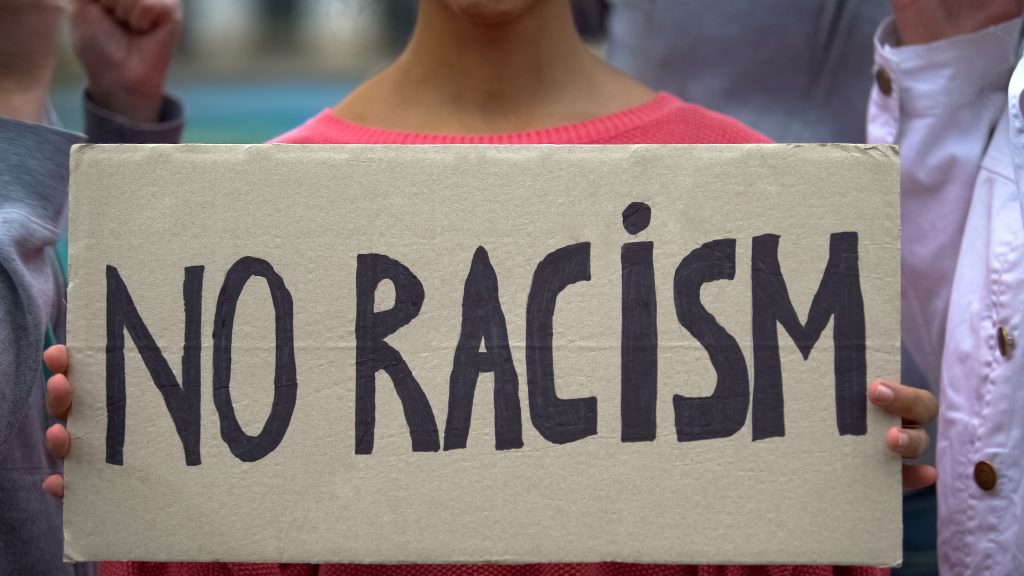
Challenging Workplace Racism

It’s sad that in 2020 racism in the workplace is still a very real thing. Whether it is appointing managers or promotion panels subconsciously overlooking black, Asian and minority ethnic (BAME) candidates, or the occurrence of overt instances of discrimination and harassment on the office/shop floor, it’s undeniable that there is still a lot of work to be done on this front.

While nearly all companies have legally binding anti-discrimination policies set up, and governments have issued directives and legislation to try and eradicate this issue, it’s still worth taking the time to highlight the cases where things have gone – or are going – terribly wrong. With that in mind, here are four signs that racism may be an issue in your workplace:

1. STEREOTYPING

Managers must look out for examples of stereotyping in the workplace, which can provide the basis for racial discrimination to occur. Often based on misconceptions and incomplete information, stereotyping is particularly harmful as it portrays false generalisations, and attributes the same characteristics to all members of a group, ignoring the receivers of racism as individuals in their own right.

Be wary of the language used, and topics discussed, by colleagues. Are terms like “they” and “us” “your lot” used often to create a divide? Also, are workers making derogatory comments about elements of a person’s culture or customs?

2. HOSTILITY

Whether it is a black woman who is informed that she is too aggressive, a Muslim man criticised for not drinking during social events or an Indian immigrant/Eastern European mocked for their accent, managers should be able to spot unfair criticism and hostility towards BAME persons.

Victims of racism in the workplace can be subject to accusations of being out-of-place, and not fitting in the office/workplace culture. Moreover, BAME people tend to find that normal differences of opinion or failing to get along with a co-worker may be treated as more serious due to the hostility held towards them in a racially charged work environment.

3. OVERCRITICAL

With the increasing pressures of the modern time-poor, stress-rich business world, criticisms of employee performance from team leaders and peers is common.

Managers must be mindful, however, of how fair the criticism is to all staff, particularly minority groups, reacting quickly to criticisms that go a step too far. Victims of racial discrimination at work have reported being vilified for doing their work.

4. CONSISTENTLY OVERLOOKED

The “glass ceiling” is a prolonged issue that ties together all the previous points, and results in many talented, ambitious and well-educated BAME men and women failing to gain jobs, promotions or salary boosts, compared to their white counterparts.

But when the opportunities do finally arise, victims of racism note that their authority is constantly challenged and undermined by those both above and below them on the career ladder.

Thanks to Equality and Diversity UK for these signs on how to identify if racism may be an issue in your workplace.

JD