Think Outside the Box – Leading Diversity & Inclusion in the Workplace

Diversity & Inclusion Book Cover

I am delighted to announce that following on from my previous book ‘Leading Equality, Diversity & Inclusion – A Practical Guide for Managers’,  my new book ‘Think Outside The Box – Leading Diversity & Inclusion in the Workplace’ is now available as a hard copy,  paperback book on amazon.co.uk.

The origins of this book come directly from this very blog and I will be sharing aspects of the book over the coming weeks. However, in the meantime, if you are involved with workplace diversity and inclusion then please take a look at the book; it has a range of proven strategies that will help build an inclusive culture in your workplace.

The books blurb goes something like this. ‘In practise, equality, diversity and inclusion can sometimes be perceived – quite inaccurately – as political correctness or an exercise in government ‘box ticking’. Yet, in recent years, organisations have become increasingly aware of the business case for being a fully inclusive workplace, where employees feel valued, opportunities are available for all and diversity is celebrated.

In this case, diversity and inclusion initiatives become less about compliance with legislation and more about leading change, improvement initiatives, engaging, motivating and improving the potential of staff.

‘Think Outside The Box – Leading Diversity & Inclusion in the Workplace’ provides an up-to-date source of diversity and inclusion best practice for workplace leaders and gets to the heart of the diversity issues facing the UK workforce with clear strategies and practical guidance to creating a fully inclusive workplace.

Author – John Duncan – is a Diversity and Inclusion specialist leading on strategy and policy development with over 15 years substantial experience of providing advice, support and training within the public sector. ‘

JD


Equality Impact Assessment

It is vitally important that all workplace policies and procedures that impact upon staff have been through a robust Equality Impact Assessment or EIA. Such an assessment is an internal audit process which is specifically designed to measure whether a policy, project or scheme is at risk of discriminating against any disadvantaged or vulnerable people.

Under the Equality Act 2010 it is illegal to discriminate against an employee because of age, disability, gender reassignment, marriage and civil partnership, pregnancy and maternity, race, religion or belief, sex or sexual orientation. As such, without effective review, a new policy or procedure may unintentionally discriminate against a group of employees because they share a protected characteristic.

For example, a new policy may be published which states that hats or head gear cannot be worn at work under any circumstances. However, such a policy would discriminate against Sikh men, for whom the wearing of the turban is mandatory.

In this situation, a robust Equality Impact Assessment would have been able to identify that such a policy would discriminate against staff from certain religions. This type of discrimination is referred to as indirect discrimination and, generally speaking, occurs when an organisational policy or procedure is put in place which applies to everyone and is not discriminatory in itself but it may put those with a certain protected characteristic at a disadvantage.

The purpose of the EIA process is to prevent discrimination and where the assessment identifies a risk of discrimination action can be taken to make the necessary changes to ensure discrimination does not happen. In this way, the EIA is a useful tool to help improve or promote equality in an organisation to help remove barriers and improve participation for underrepresented groups.

In most situations, organisations don’t set out to purposefully discriminate against any of their stakeholders but sometimes a lack of awareness, especially where a policy, process or scheme may disadvantage one group over another, the EIA can help to identify and make changes to ensure everyone is included and not disadvantaged.

Here is an example from ACAS, the Advisory, Conciliation and Arbitration Service, where they highlight how equality impact assessment can make a positive impact to the workforce. ‘One local authority found a recipe for success over its meals on wheels service. The authority was concerned that the food it was serving up wasn’t to everybody’s taste. So it used an equality impact assessment to find out why. The authority discovered that in certain ethnic communities, only a few people were tucking in. So the authority decided to change the menu to ensure that these diners had a range of different types of meals more likely to appeal to choose from. Soon there were many more ‘happy eaters’ among these communities, while ‘white British’ users were also delighted at the improved choice and quality of the food. In this way the authority not only improved its service but saved money as well.’

If a regular audit of an organisations policies, processes and practices is not undertaken then an unintended act of discrimination may remain undetected for some time, that is until someone makes a complaint or is let down by the service they receive. This is exactly how indirect discrimination happens in the workplace and an EIA can be used to identify this early so changes can be made in the best interests of all.

Generally speaking, for an EIA to be effective it must ask four key questions of what it is assessing. For example, if using an EIA to assess the impact of a new policy then we must ask: 1.) What is the intention of the policy? 2.) How is it seeking to achieve this? 3.) Who benefits (and does not benefit) from the policy and how? 4.) What are any ‘associated aims’ (or other policies) attached to the policy and how do they impact? By doing this we can assess the intention of the policy, what method it uses to enforce the policy, who actually benefits from the policy and what other influences are there that impact on this policy, which should help us to identify risks.

JD

The Business Case for Diversity

Increasingly, the term ‘Equality’ (and what used to be referred to as Equal Opportunities) is making way for discussions on ‘diversity’ as this term is much broader in its scope and gets to the heart of the integration challenges facing the UK workforce.

Over the past five decades our society has become increasingly complex and multicultural as population growth continues, subsequently becoming more diverse and with an aging population. Furthermore, changes to employment law coupled with an increase of the age at which an employee can retire and draw a pension means we now have increased competition in the workplace for fewer and fewer jobs.

As Vijay Eswaran, Executive Chairman, QI Group of Companies, explains: ‘In this era of globalization, diversity in the business environment is about more than gender, race and ethnicity. It now includes employees with diverse religious and political beliefs, education, socioeconomic backgrounds, sexual orientation, cultures and even disabilities. Companies are discovering that, by supporting and promoting a diverse and inclusive workplace, they are gaining benefits that go beyond the optics.’

In the UK, it’s common for staff, when surveyed in the workplace, to perceive diversity as being a focus on ethnicity and race whereas issues of religion, education or culture are often overlooked or misunderstood. Subsequently, diversity is actually a much broader term than a few labels and includes those other – difficult to define – human qualities that are dissimilar to our own perceptions or those of our communities but are widely prevalent in other communities. It is this fundamental difference that diversity looks to both celebrate and include alongside our own perceptions.

Vijay Eswaran argues that workplace diversity leads to greater innovation. ‘The coming together of people of different ethnicities with different experiences in cities and societies is a key driver of innovation. The food that we eat every day is a result of this blending of cultures. The most successful musical genres, such as jazz, rock’n’roll or hip-hop, are the products of cultural amalgamation.’

Whilst recent equality laws have helped to challenge discrimination and prejudice we still face equality gaps in the workplace, some larger than others. In response to the increasingly diverse needs of our communities the government have delegated a duty of responsibility – known as the Public Sector Equality Duty – on councils and their partners, including publicly funded bodes, such as the education and health care sectors, to be more accountable for ensuring everyone has an equal chance in life regardless of background or start in life.

To this end, in order to meet both government legislation as well as the diverse needs of our workforce, organisations must ensure they build an inclusive culture where diversity and equality of opportunity work hand in hand. This is referred to as the business case for diversity, an organisational wide understanding of how diversity can benefit both the business aims of the organisation and the needs of the community.

JD

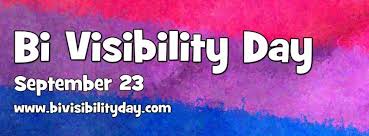
Celebrate Bi Visibility Day this 23 September

It’s almost time for Bi Visibility Day, and we hope you’ll be celebrating it with us! It’s a great opportunity to tell all your bi employees, customers and service users that they are valued and celebrated, and that your organisation won’t tolerate any forms of biphobia.

Click here to read Amy, Pierrette and Stella’s stories of being bi in the workplace. These are the stories of LGBT people from across the world of work. Some speak of the change they’ve made at their workplace, some discuss the opportunities they’ve had as visible role models, and others explore the challenges they’ve faced along the way. All share the message that bringing your whole self to work is both liberating and powerful.

Bi people are often the forgotten part of the LGBT community. Their experiences are commonly assumed to be the same as lesbian and gay experiences, and their identities are frequently made invisible or dismissed as something that doesn’t exist, by people both inside and outside of this community.

They face a number of negative stereotypes, the primary ones being that they’re greedy, manipulative, incapable of monogamy and unable to make their minds up – the last of which is the same as saying who they are isn’t real.

The assumptions about bi people are also gendered. Bi women are more likely to be viewed as ‘actually straight’, their sexual orientation merely a performance to attract straight men, whereas bi men are frequently seen as going through a ‘phase’ on the way to coming out as gay.

This is why we need Bi Visibility Day. It’s an opportunity to celebrate diverse bi identities, raise the voices of bi people, and call for positive change.

Everyone has a role to play in achieving this: we need to learn about bi experiences and the unique challenges they face; we need to call out biphobia and harmful stereotypes, if safe to do so; we need to not assume sexual orientation on the basis of someone’s current partner; and we need to increase the representation of bi people whenever we can.

But first and foremost, if you want to step up as an ally to bi people, remember they exist, remember the stereotypes and assumptions they face every day, and think of one thing you can do in your daily life to help.

Thanks to Stonewall for this information.

JD

The Public Sector Equality Duty

Equality, Diversity and Inclusion is not just about compliance with legislation, it’s about leading change, improvement initiatives, engaging, motivating and improving the potential of staff. The Public Sector Equality Duty (PSED) brings this into law for all public bodies in the United Kingdom.

According to ACAS (the Advisory, Conciliation and Arbitration Service) the Public Sector Equality Duty requires public bodies and others carrying out public functions to have due regard to the need to eliminate discrimination, to advance equality of opportunities and foster good relations. The duty applies to all nine areas of discrimination listed in the Equality Act 2010.

As such, it’s about ensuring all stakeholders are at the centre of the services offered to the public and positively impacting upon the context and culture of the organisation whilst supporting public sector staff to design and deliver great service.

The role of the Public Sector Equality Duty is to eliminate unlawful discrimination, harassment, victimisation and any other conduct prohibited by the Equality Act 2010. To advance equality of opportunity between people who share a protected characteristic and people who do not share it foster good relations between people who share a protected characteristic and those who do not.

It is a requirement in law that public bodies such as the NHS, local government, police, fire brigades, schools, colleges, universities and others carrying out public functions follow the Public Sector Equality Duty. The full list of employers required to follow the PSED can be found in Schedule 19 of the Equality Act 2010.

The duty applies to individual employees, workers, contractors and customer and all nine areas of discrimination listed in the Equality Act 2010 – referred to as protected characteristics – meaning that employers need to consider:

  • age
  • disability
  • gender reassignment
  • pregnancy and maternity
  • race
  • religion or belief
  • sex
  • sexual orientation
  • marriage and civil partnership

Note: For marriage and civil partnership, the Public Sector Equality Duty only requires employers to have due regard to the need to eliminate unlawful discrimination.

This ensures that public bodies consider the needs of all individuals in their day to day work – in shaping policy, in delivering services, and in relation to their own employees.
JD

Discrimination casts a shadow over football

The English Football League kicked of last week but the opening weekend was marred with a number of incidents of racist abuse. Like any other employer in the UK, a professional football club has a duty under the Equality Act 2010 to protect its staff from racial abuse. The Equality Act makes no distinction as to the type of workplace, a football player is a member of staff and the football pitch is a workplace.

On Saturday 3rd August, Southend United’s Jamaican striker Theo Robinson claims he was abused “in front of family, friends and their kids” at St Andrew’s, the first match Coventry have played in their ground-sharing arrangement with Birmingham City.  Similarly, Stoke City’s James McClean, Barnsley’s Bambo Diaby and the sister of Fulham’s Cyrus Christie were also victims of what’s been described as “unacceptable discriminatory abuse”.

Anti-racism charity Kick It Out said “On the first weekend of the season, these incidents should be a reminder for everyone in football that racism and discrimination cannot be ignored. Clubs and the football authorities must be relentless in calling out this disgraceful behaviour, and be prepared to issue strong sanctions and education sessions to any supporter involved. Discrimination casts a shadow over football in this country, and we will not stop highlighting the problem while it remains rife in the game.”

Whilst in this case the racial abuse is coming from a minority of fans in reality a football fan is a customer of the club and a consumer of the clubs product or service. As such, this is no different from hospital staff receiving racial abuse from a patient or service user. In such cases, NHS Trusts work to support staff and reduce racial abuse happening and football clubs must do the same. However, we hear much more outrage from the public and political leaders when NHS staff are racially abused. Why then are footballers, as well as other sports men and woman, seen as fair game to abuse at work?

Certainly, the money involved in football infuriates many fans, especially when they are being charged £40 a ticket and another £50 for a replica club shirt. They see the elite football players earning the big bucks and see themselves as effectively their employers. Oddly, if they were the employers then by law they should treat their staff better. That said, we know that when a football team is doing well the fans sign their praises from the stands but when things are not going well a minority of fans abuse the players, regardless of ethnic origin. This abuse from the stands has almost become a ‘norm’ but race is a protected characteristic under the Equality Act and harassment on the basis of it is illegal, just as would the abuse of a disabled member of staff, or an LGBT+ member of staff. In fact, I am sure the ongoing situation with racial abuse of players is contributing to the lack of any visible LGBT+ professional football players. Unfortunately, LGBT+ players are not confident enough in being accepted by all fans that they have to hide that aspect of their lives away and as such lead an unauthentic version of themselves, in itself this can lead to anxiety, depression and other mental health issues.

So what are clubs to do? In reality, expulsion from the ground and permanent exclusion from all football grounds is a strong deterrent. Clubs must demonstrate their commitment to stamping out racial abuse but those fans that do not racially abuse players must also be given the confidence to challenge the abusers and show them that this behaviour is not okay.

Either way, the Equality Act 2010 protects all staff from abuse in the workplace and unless clubs do more to protect their players from racial abuse they could be in breach of the Equality Act and subject to legal action.

JD

Positive Action for Under Representation

Positive action is very often a misunderstood or misrepresented term. Unfortunately, some still talk of it as a deliberate act by Human Resources to recruit more ethnic minority staff into an organisation.  Its misunderstandings such as this that show positive action must not be confused with positive discrimination, which is illegal.

Positive action is where you identify that your workforce is under represented in a specific area and do something about it. For example, as we have seen in recent years, many UK Company boards are under represented by women and companies have taken positive action to address this. Positive action in this case could be to promote board vacancies specifically to woman in the organisation, or to have a leadership programme for board members of the future that actively encourages participation by woman. However, you will notice that the example above does not dictate that UK Companies hire only woman and discriminate against male applicants to solve the issue – which would be illegal – it simply asks that we make the effort to involve woman, promote our board vacancies to woman and encourage them to apply. Though, it’s worth noting, despite much work to improve the representation of women on the boards of UK Company’s it has done little to increase representation of women of colour in these roles. As such, further work is still needed in this area for boards and governing bodies to be truly representative of the community we serve.

As such, positive action can be defined as the voluntary actions an employer takes to address an imbalance of opportunity or disadvantage that an individual with a protected characteristic could face in the workforce. Positive action can be used wherever your workforce is under represented or is not reflective of the community it serves including (but not limited to) age, disability, ethnic minority, LBGT+ or gender.

A good example of where positive action can look to redress an imbalance is in construction industry where there are only 3 female apprentices for every 98 male apprentices. As such, positive action here might be to better promote the construction industry to girls in schools and other educational settings, or to show progressive imagery on construction industry posters and advertisements which show woman in construction roles.

I often hear senior leaders actively supporting the business case for diversity in the workplace but I don’t always see an effective strategy of positive action to meet the business case. Diversity is the celebration of the differences between us and valuing the how those differences make our workforce stronger. Diverse experiences can lead to diverse solutions in the workplace. If you hire the same type of people all the time you will get the same outcome all of the time. As such, ensuring your business has diversity in its workforce can ensure that you have diverse solutions amongst your staff.

The first challenge then is to know where your workforce lacks diversity. The only way to do that is to examine the make-up of your own staff and ask yourself the following question: does your workforce represent the community it serves?  But this is a big picture situation. We need to examine the context of the community you serve. For example, if you generally serve a region of the UK then you need to look at the make-up of that region. If the latest Government Census indicates that the population of that region predominately – say 95% – identify as being ethnically white British then how does your workforce compare? Again, you can look at gender and establish what percentage of the community is female and what percentage are male and compare that to the make-up of your own workforce. The same applies to those members of the community who identify as disabled or LGBT+. Only when you know the make-up of the local community can you identify what aspects of diversity you actually need to improve.

Subsequently, only when armed with this knowledge can you then look to positive action to help recruitment build you a more diverse workforce.

JD

International Non-Binary People’s Day Celebrates Gender Non-Conforming People

I want to share an article here by Alexander Kacala – writing for Newsweek – in which he highlights ‘International Non-Binary People’s Day’ and the challenges faced by those who identify outside the gender binary. A recent report by Stonewall, the leading LGBT+ charity, highlights how members of the LGBT+ community are more likely to suffer poor mental health and are less likely to seek help from healthcare professionals. For example, the report highlights how half of LGBT people (52 per cent) experienced depression in the last year and that one in seven LGBT people (14 per cent) avoid seeking healthcare for fear of discrimination from staff. As such, good equality practice is essential in the workplace to ensure that people can be true to themselves and bring their authentic self in to the workplace without fear of discrimination.

International Non-Binary People’s Day is observed each year on July 14. Non-binary, also known as genderqueer, is a spectrum of gender identities that are not exclusively masculine or feminine‍ —‌ identities that are outside the gender binary.

Non-binary people may identify as having two or more genders, having no gender, moving between genders or having a fluctuating gender identity, or being third gender or other-gendered, a category that includes those who do not place a name to their gender.

Non-binary activist Jacob Tobia spoke to the Human Rights Campaign (HRC) about the significance of non-binary visibility and pride.

non-binary-day(Photo by Rich Fury/Getty Images for GLAAD)
“I think that having days where you get to talk about your community and honor the experiences of everybody that’s part of the community is wonderful,” Tobia told HRC’s online magazine Equality.

Tobias said of their coming out: “By the time I used the term non-binary, gender non-conforming or genderqueer to describe myself, it was like an afterthought. I was expressing my gender in a way that was gender non-conforming, I was learning about my gender and started wearing lipstick and putting on makeup… then figuring out what the label meant for it way after that.”

Last year, a study showed that more teenagers are identifying themselves with non-traditional gender labels such as transgender or gender-fluid.

Published in the journal Pediatrics, the research found that almost 3 percent of teens surveyed did not identify with traditional gender labels such as “boy” or “girl.” That number is higher than the researchers expected. A UCLA study from 2017 estimated that 0.7 percent of teens identified as transgender.

Lead researcher Nic Rider of the University of Minnesota said the main purpose of the study was to examine health differences between gender-nonconforming teens and teens who are cisgender, a person whose gender identity aligns with the sex assigned to them at birth.

The study supports prior research suggesting “that previous estimates of the size of the transgender and gender-nonconforming (TGNC) population have been underestimated by orders of magnitude,” wrote Daniel Shumer, a specialist in trans medicine at the University of Michigan, in an accompanying article.

The study also found that TGNC youth reported “reported significantly poorer health” — including mental health — than cisgender teenagers. TGNC teens also were less likely to get preventive health checkups and more likely to visit their school nurse, the study showed.

Many people took to social media to share photos of themselves to celebrate International Non-Binary People’s Day.

JD

Employers should work harder to engage LGBT+ allies, say experts

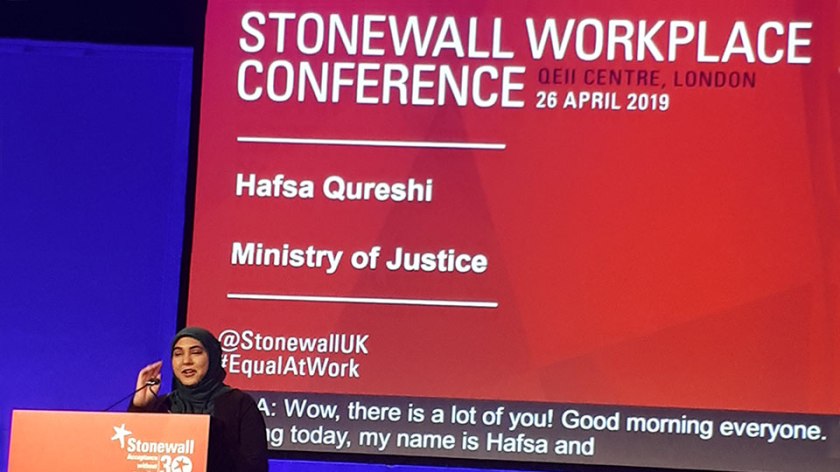
I wanted to share a recent article by Emily Burt, from People Management, who attended the Stonewall Workplace Conference, 26 April 2019, in which she discusses the need to engage LGBT+ allies in the workplace. The article is both thought-provoking and relevant during Pride Month, particularity if you work in HR or are engaged in improving workplace equality and diversity. What is made abundantly clear by the conference speakers is the need for further support to improve LGBT+ inclusion in the work place and often people are not looking in the right place.

Stonewall conference urges better communication, with 35 per cent of LGBT staff having hidden their sexuality at work

Organisations must work to encourage, support and empower their LGBT+ members of staff and recognise the business case for inclusive cultures in order to drive genuinely diverse workplaces, experts have told delegates at the 2019 Stonewall Workplace Conference.

stonewall2_tcm27-57012_w1228_n

Hafsa Qureshi (pictured), recruitment specialist at the Ministry of Justice and Stonewall’s bisexual role model of the year, said engaging people who do not identify as LGBT with the challenges faced by the community was an important part of creating inclusivity at work.

Speaking to People Management, Qureshi said: “One of the biggest hurdles is reaching people who don’t identify as LGBT to be allies. Too often, people assume that because someone is not from a visible protected characteristic, they don’t have any issues at work.”

Qureshi added that it was imperative for LGBT allies to promote inclusive cultures at every level of a business.

“Having worked with smaller and larger organisations, the ones that struggle with diversity and inclusion often do so because they fail to communicate it beyond management level,” she warned.

“The culture stops before reaching the employees who have face-to-face interactions with customers or clients.”

More than 1,000 people attended the opening session of the conference, with the theme ‘Equal At Work’, where CEO Ruth Hunt delivered her final keynote ahead of departing from her role at the charity later this year.

“We sometimes forget that it wasn’t that long ago that being LGBT meant you could be fired from work or denied service because of who you are,” she said, adding: “While it’s important to celebrate how far we’ve come, we cannot be complacent.”

A 2018 survey from the charity found almost one in five LGBT staff (18 per cent) were the target of negative comments or conduct from work colleagues because of their sexuality. More than a third (35 per cent) had hidden or disguised the fact they were LGBT at work for fear of discrimination.

The community has also faced a series of rows on an international scale over the last 12 months, including President Trump’s policy to prohibit some transgender people from serving in the US military, and schools in Birmingham dropping classes that include discussion of LGBT relationships following protests from parents.

In a speech to conference delegates, Penny Mordaunt, Minister for Women and Equalities, reaffirmed the government’s commitment to LGBT-inclusive workplaces, stating: “Organisations cannot afford to exclude talented people, or to limit their potential.”

She said the Government and Equalities office (GEO) would continue to provide targeted interventions seeking to improve the experiences of LGBT people at work and announced that the GEO would coordinate a series of events to gather employer views, and share expertise and experiences this coming autumn.

Mordaunt acknowledged the GEO was asking HR departments to commit to a number of significant initiatives – including gender pay reporting and the Race at Work charter – which were “not remotely joined up or coordinated”.

But she added: “In order to build the businesses of tomorrow, we need workforces that are able to authentically be themselves.”

Speaking to delegates, Qureshi concluded: “Sometimes, all it takes is one person to step forward in order to make a workplace culture feel more accepting.

“I encourage you all to use your voices and platforms to raise awareness for your LGBTQ community. Your voice is more important than you know – and you may say something that a person like me has waited their whole life to hear.”

JD

The Gender Pay Gap

Equality & Diversity initiatives are designed to redress the balance where decades of inequality have led to high levels of disparity in the workplace. Gender Pay Gap reporting is no different and the Equality Act 2010 makes it a statutory duty for organisations with more than 250 employees to report on their gender pay gap, which looks to redress the long standing percentage difference between average hourly earnings for men and women. Currently, the national average mean gender pay gap is 17.9%, which indicates – on average – woman in the UK earn 17.9% less than men. In fact, the Guardian (April 2019) reported that a quarter of companies and public sector bodies have a pay gap of more than 20% in favour of men. However, according to the Financial Times (23 April 2019), Government policymakers hoped the transparency would shame large employers into taking swift action to narrow the difference between what they pay men and women.

What is the Gender Pay Gap?

The gender pay gap shows the difference between the average (mean or median) earnings of men and women. This is expressed as a percentage of men’s earnings e.g. women earn 15% less than men. Used to its full potential, gender pay gap reporting is a valuable tool for assessing levels of equality in the workplace, female and male participation, and how effectively talent is being maximised.

What is the difference between the gender pay gap and equal pay?

It’s worth noting that a gender pay gap isn’t the same as unequal pay. Equal pay – where men and women doing the same job should be paid the same – has been a legal requirement for nearly fifty years. Under the Equal Pay Act 1970, and more recently, the Equality Act 2010, it is unlawful to pay people unequally because they are a man or a woman. This applies to all employers, no matter how small.  As such, a company might have a gender pay gap if a majority of men are in top jobs, despite paying male and female employees the same amount for similar roles.

The gender pay gap shows the differences in the average pay between men and women. If a workplace has a particularly high gender pay gap, this can indicate there may be a number of issues to deal with, and the individual calculations may help to identify what those issues are. In some cases, the gender pay gap may include unlawful inequality in pay but this is not necessarily the case.

What is the Median pay gap?

The median pay gap is the difference in pay between the middle-ranking woman and the middle-ranking man.

If you place all the men and women working at a company into two lines in order of salary, the median pay gap will be the difference in salary between the woman in the middle of her line and the man in the middle of his.

What is the Mean pay gap?

The mean pay gap is the difference between a company’s total wage spend-per-woman and its total spend-per-man.

The number is calculated by taking the total wage bill for each and dividing it by the number of men and women employed by the organisation.

Why is there a Gender Pay Gap?

According to the BBC, there’s no one reason behind the gender pay gap – it’s a complex issue.

The Fawcett Society, a group which campaigns for equality, says caring responsibilities can play a big part. Women often care for young children or elderly relatives. This means women are more likely to work in part-time roles, which are often lower paid or have fewer opportunities for progression.  Another important factor is a divided labour market. Women are still more likely to work in lower-paid and lower-skilled jobs. Women currently make up 62% of those earning less than the living wage, according to the Living Wage Foundation. Discrimination is another cause of the gender pay gap. The Equality and Human Rights Commission (ECHR) has previously found that one in nine new mothers were either dismissed, made redundant or treated so poorly they felt they had to leave their job. This can create a gap in experience, leading to lower wages when women return to work.

Men also tend to take up the majority of the most senior roles at a company, which are the highest paid.

Who has to publish Gender Pay Gap data?

As stated earlier, it is a legal requirement for all employers (with 250 or more employees) to publish their gender pay report within one year of the ‘snapshot’ date: this year’s date being 31st March 2019.  However, whilst all employers must comply with the reporting regulations – for employers whose headcount varies they must comply with the reporting regulations for any year where they had a headcount of 250 or more employees on the ‘snapshot’ date.

What information needs to be published?

The following information must be reported by organisations:

  • Their mean gender pay gap
  • Their median gender pay gap
  • Their mean bonus gender pay gap
  • Their median bonus gender pay gap
  • Their proportion of males receiving a bonus payment
  • Their proportion of females receiving a bonus payment
  • Their proportion of males and females in each quartile pay band
  • A written statement, authorised by an appropriate senior person, which confirms the accuracy of their calculations. However, this requirement only applies to employers subject to the Equality Act 2010 (Gender Pay Gap Information) Regulations 2017.

Can companies be punished for a wide gender pay gap?

According to Lorna Jones, Business Reporter, BBC News, companies can’t be punished for a wide gender pay gap. But they might be punished for failing to publish their data, or for publishing inaccurate or misleading figures.

The Equality and Human Rights Commission (EHRC) is responsible for ensuring employers publish their pay gap figures. The EHRC set out plans for its enforcement policy in December. The EHRC says it will approach employers informally at first, but businesses could ultimately face “unlimited fines and convictions”.

As the EHRC is still consulting on these plans, it remains to be seen whether they can or will punish companies in this way. At the moment, there is no enforcement mechanism in the regulations on publishing pay gap data. The UK government says it will also publish sector-specific league tables, highlighting companies failing to address pay differences between men and women.

What can organisations do to reduce the Gender Pay Gap?

According to Dharishini David, Economics Correspondent with the BBC, gender pay gap reporting may not be enough: the government may need to get tougher. Ask gender pay specialists how to solve the problem and they’ll tell you there are many initiatives that companies can take – tackling unconscious bias, offering more flexible working and encouraging shared parental leave.

However, the issue doesn’t end at the office door. The experts say society needs to change.

For example, schools could encourage girls to take more STEM subjects: science, technology, engineering and maths. There should be more flexible, affordable childcare options. And men could take on more of the household chores.

However, societal change takes time, sometimes a generation, and currently we can report on the organisations gender pay gaps and look for short term internal solutions but overall society needs to change its attitude to gender, specifically in relation to employment, if we are to have pay equality across gender.

JD