
Being Conscious About Our Unconscious Biases

What is Unconscious Bias

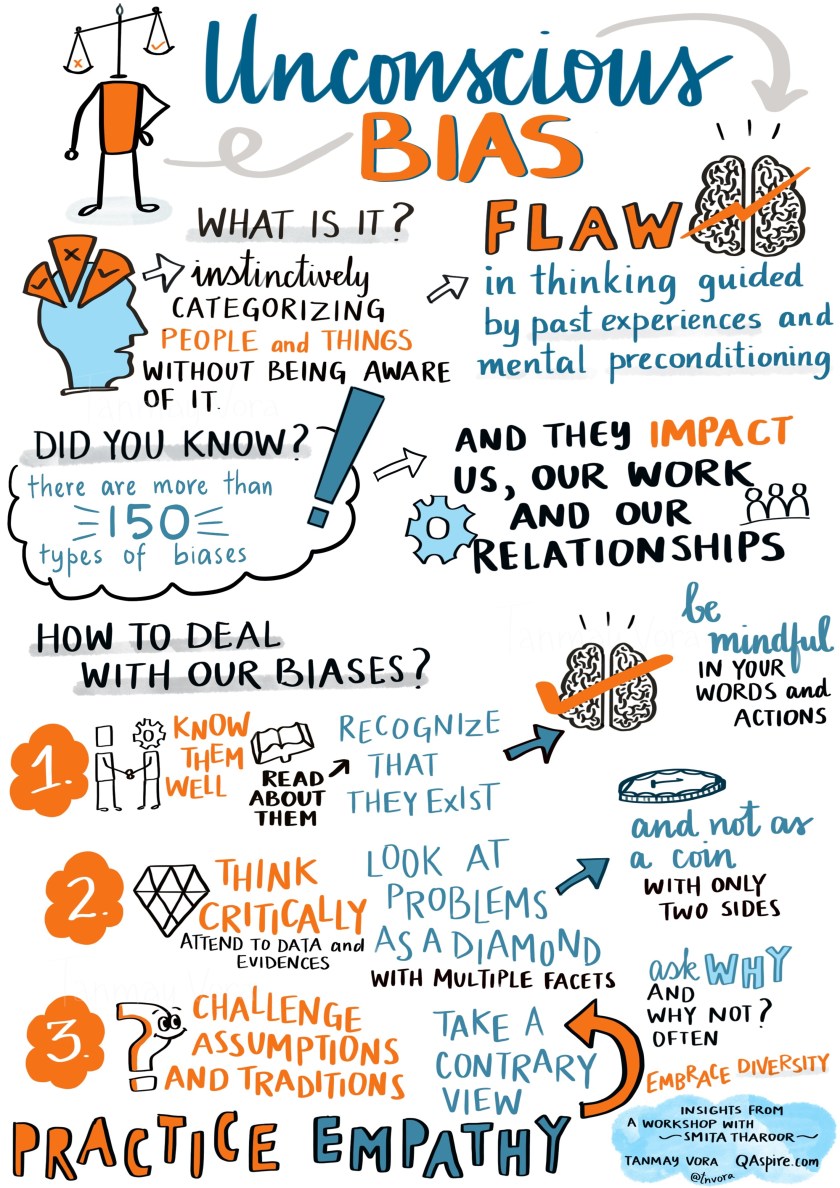
The term ‘cognitive bias’ was coined by Amos Tversky and Daniel Kahneman in 1972 which quite simply means “our tendency to filter information, process facts and arrive at judgements based on our past experiences, likes/dislikes and automatic influences.”

How do these biases show up in Leadership?

A lot of leadership is about taking decisions involving group of people. Instinctive leaders often tend to decide quickly based on limited information or experience they have at hand. The result is that they end up taking wrong decisions (which may have worked for them in past but may not work in a different context), or discriminating with people of a certain colour, race, sex or nationality based on their past experiences with similar people. At work, biases (or the perception of bias) is the biggest contributor to people disengagement and cost of disengagement is huge. Lack of critical thinking also leads to short-termism where decisions are taken for immediate gains and solutions of today become thorny problems of tomorrow.

Some Ways to Deal with Unconscious Bias

Get Conscious. Be more aware about unconscious cognitive biases. Knowing that they exist is the first important step to tackling them. And they exist in plenty. Here is a list of all unconscious biases and what they really mean.
Ask questions, often. When considering a decision, ask questions that elicit understanding and clarify details. When you ask questions, you extend an opportunity to others to really express them. You are extending an opportunity to yourself to understand their thinking more closely. Encourage a culture where asking questions is valued.

Look for Patterns. Data over a period of time reveals patterns. Looking for patterns from the results of past decision can lead to important insights and learning. Sometimes data can blind us unless we learn to look at the pattern and story behind the data.

Look for the contrary. It helps playing a devil’s advocate and taking a contrarian view of things. It not only challenges others to think harder but also helps you in really understanding if they are just defending their own biases.

Embrace Diversity. This starts with hiring decisions. Don’t hire people whose beliefs are compliant with yours. You will tap into diverse ideas and viewpoints only when you have people with diverse thinking patterns on your team.

Attend to data and evidences. When you ask your people to bring data, evidences and trends, it does not mean lack of trust. It only means that you are intentional about serving them better by taking the right decisions.

Communicate clearly. Clear and accurate communication is a leader’s tool #1. Avoid using generic terms to describe people, situations and things. Biases are most commonly visible in how a leader communicates. Being mindful about our words is critical to thinking and communicating objectively.

Unconcious Bias Poster 1

Thanks go to Tanmay Vora for this excellent and concise explanation of what ‘unconscious bias’ is and how we can combat it in the workplace.

JD

Building  Inclusive Workplaces

The Chartered Institute of Personnel and Development (CIPD) explain that true inclusion is created by embedding inclusive practices and values into the organisation’s way of doing things. Whilst inclusion can’t be the sole responsibility of the people profession, people professionals nonetheless have a key role to play. They can support employees, line managers and senior leaders to build inclusive behaviours and values, ensure policies and practices are inclusive, and challenge organisational values and behaviours that don’t actively promote inclusion. Importantly, any action should be guided by organisational data and carefully evaluated – further research needs to test the most effective ways to build inclusion.

Explore the areas where you can take action to build inclusion.

  1. Involve all employees in inclusion

All employees need to understand their role in building inclusive workplaces. This involves employers setting clear standards of behaviour for inclusion, treating all colleagues with dignity and respect, and empowering employees to challenge exclusionary behaviour.

What you can do:

  • Make inclusion relevant to people at all levels of the business; what does inclusion mean in their job role and what they can do to be more inclusive?
  • Work with employee resource groups to highlight employees’ roles in inclusion, promoting alliance.
  1. Develop line manager capability

Managers are key in inclusion. The relationship they have with employees, and how they carry out people management practices and policies, will impact employees’ opportunities and experiences of work.

Treating all employees with respect, supporting their development and ensuring they’ve a say in the workplace is core for any manager. Managers need to ensure there’s a level playing field for their team, and support employee’s individual needs. However, bias can play a role in the opportunities that individuals are given at work – given our preferences for people ‘like us’.

What you can do:

  • Examine progression and hiring data to ensure that there’s a level playing field and address any bias.
  • Embed inclusion in line manager training and development – for example, raise awareness of issues relating to inclusion and empower managers to carry out people management practices effectively.
  1. Build senior commitment to inclusion

Many senior leaders are line managers themselves; they set the tone for the behaviour that’s expected in the business. And, with a drive towards increasing diversity on boards, attention must also be paid to how inclusive the boardroom is. People professionals should work with senior leaders to embed inclusion into the organisation’s way of doing things, highlighting the importance of their advocacy and buy in.

Senior leaders need to:

  • actively champion and sponsor inclusion activities
  • develop self-awareness and understand their own biases
  • role-model inclusive behaviour in their own people management, and in their own leadership team.
  1. Evaluate policies and practices

A two-step approach is needed to put in place people management practices and policies to support inclusion:

Consider the formal and informal mechanisms that can be improved to enhance inclusion for all employees. For example, ensure that there are clear mechanisms for feedback that allow employees to feel like they have a ‘say’ in the organisation.

Create specific policies and practices that support particular groups or individual needs. For example, make sure there are clear policies in place to support individual needs; these need to be implemented by managers and backed up by a supportive workplace environment.

Consider how you can:

  • embed inclusion into wider people management practices
  • communicate the policies in place that support inclusion
  • use organisational data to review policies and practices.
  1. Examine organisational culture, climate and values

Creating an inclusive climate and culture requires fair policies and practices, recognising and valuing difference, and including all employees in decision-making processes. Senior commitment in the form of real advocacy and buy-in is important in creating a truly inclusive organisation. In some cases, organisations might need to evaluate their own norms and values.

What you can do:

  • Work with employees throughout the business to understand current norms and values; is ‘difference’ seen as positive or negative, and do employees understand their role in inclusion?
  • Evaluate people practices through an inclusion ‘lens’ – do practices and policies align with inclusion?
  • Ensure that senior leaders support inclusion, and, importantly, role-model inclusive behaviour and value difference, rather than distrust it.

For further guidance on building inclusive workplaces check out this CIPD report on Building  Inclusive Workplaces (Sept 2019)

JD

Transgender Day of Remembrance

On November 20th it was Transgender Day of Remembrance (TDOR) an annual observance that honours the memory of the transgender people whose lives were lost in acts of anti-transgender violence.

Transgender Day of Remembrance (TDOR) was started in 1999 by transgender advocate Gwendolyn Ann Smith as a vigil to honour the memory of Rita Hester, a transgender woman who was killed in 1998. The vigil commemorated all the transgender people lost to violence since Rita Hester’s death, and began an important tradition that has become the annual Transgender Day of Remembrance.

This year, there have been 331 known killings of trans people worldwide that Stonewall and other LGBTQ+ communities and organisations around the world will remember. Sadly, these numbers include the murder of Amy Griffiths, a 51 year old trans woman, in Droitwitch, Worcestershire, in January of this year
Every life taken has its own devastating circumstances but it is possible to observe that the vast majority of those killed are trans women and transfeminine people of colour. The Trans Murder Monitoring Project noted that, of those whose professions were known, 61% of murdered trans people this year worked as sex workers.

In Europe, the majority of murdered trans women were migrant trans women. Many murders of trans people occur in circumstances including poverty, racism, anti-immigrant and anti-sex worker sentiment and misogyny, which deprive some trans communities of resources and protection and make certain kinds of trans person especially vulnerable to male violence.

Sadly, some trans people – particularly women – are most at risk of fatal violence from cis male intimate partners, such as boyfriends. The stigma, family rejection, limited employment opportunities and social isolation experienced by many trans people can leave them particularly vulnerable to abuse in relationships.

In many cases, violence against trans people is also driven by toxic ideals of masculinity founded on homophobia and biphobia. On Trans Day of Remembrance, many of us, whether cis or trans, can reflect on how we can work together to end gender-based violence, harassment and discrimination in all their forms.

JD

Creating Dyslexia Friendly Workplaces

It is estimated that 15% of the population have dyslexia and/or other specific learning differences (SpLD), therefore it’s highly probable that there will be neurodiversity within any workplace. Organisations must commit to being a dyslexia-friendly organisation by supporting staff with dyslexia and/or other specific learning differences (SpLD) by applying reasonable adjustments to their workplace.

Dyslexia is a hidden disability and is therefore a protected characteristic under the Equality Act 2010 which the Trust is under the Public Sector Equality Duty to uphold. As such, where a diagnosis of dyslexia is made then the Trust must make reasonable adjustments to staffs working environment or working conditions to reduce h the impact of the SpLD. For example, if a member of staff has difficulties working with a computer for long periods then a reasonable adjustment might be to ensure that they avoid continuous all day computer work.

Being dyslexia-friendly makes good business sense and embedding this ethos within the Trust benefits everyone; it enables our staff to fulfil their potential and also supports our dyslexic service users and other stakeholders.

Dyslexia is a neurological difference and can have a significant impact during education, in the workplace and in everyday life. As each person is unique, so is everyone’s experience of dyslexia. It can range from mild to severe, and it can co-occur with other learning differences. It usually runs in families and is a life-long condition.

It is important to remember that there are positives to thinking differently. Many dyslexic people show strengths in areas such as reasoning and in visual and creative fields.

Neurodiversity can be a significant asset to an organisation, bringing a different dimension to problem-solving or creativity in the way that an organisation operates and delivers its products and/or services.

Alongside meeting legal requirements there are many benefits to raising the awareness of dyslexia in the workplace and creating a dyslexia friendly work environment. It helps to establish an inclusive culture for all employees and ensures that individuals can use their strengths, such as atypical problem-solving and creativity. It means that organisations are striving to support staff, to get the best from them and the best for the organisation.

Creating a dyslexia friendly workplace doesn’t have to involve expensive changes. It often just takes some thought, and small changes can make a dramatic difference.

Things to consider:

  • Staff awareness of dyslexia, and the challenges and strengths it presents.
  • A flexible and supportive approach.
  • Introduction of assistive technology.
  • Changing communication methods i.e. printing company-wide information on different coloured paper, or in a larger font, or making it available as an audio file.

A dyslexia friendly workplace can reduce stress, increase morale and motivation. This is turn can have an impact on reducing staff turnover and sickness leave.

How can I support my dyslexic employees?

As well as meeting your obligations under the Equality Act 2010, supporting your employees makes good business sense. Effective changes don’t have to be expensive or time-consuming, often small organisational changes can help to get the very best from your employee.

It’s worth keeping in mind that any changes you make to your way of working can benefit all employees, not just those with dyslexia, and may also benefit your dyslexic customers and clients.

Examples of Reasonable Adjustments

The British Dyslexia Association provides the following examples of reasonable adjustments for commonly reported difficulties:

Reading

  • Give verbal as well as written instructions
  • Highlight important points in documents
  • Use voicemail rather than written memos
  • Supply screen-reading software or a Reading Pen
  • Print resources on coloured paper, and change background colour of computer screens and presentations

Reading and writing

  • Allow plenty of time to read and complete a task
  • Discuss the material with the employee, giving summaries and/or key points
  • Present information in other formats e.g. audio or video, drawings, diagrams and flowcharts
  • Offer/use mind-mapping software
  • Offer/use digital recorders
  • Offer/use speech to text software
  • Ask someone else to take the Minutes of meetings

Spelling and grammar

  • Spell checker on all computers
  • Offer assistive text software on all applications, where possible

Computer work

  • Change background colour of screen to suit individual preference
  • Supply anti-glare screen filter
  • Allow frequent breaks, at least every hour
  • Alternate computer work with other tasks where possible
  • Avoid continuous all day computer work

Verbal communication

  • Give instructions one at a time, slowly and clearly without distractions
  • Write down important information or encourage the employee to take notes
  • Write a memo outlining a plan of action
  • Provide a digital recorder to record presentations/training
  • Check understanding

Concentration

  • Make sure there is a quiet space available away from distractions such as doors, busy phones, loud machinery
  • Allocate a private workspace if possible
  • Allow an employee to work from home occasionally, if possible
  • Use a “do not disturb” sign when tasks require intense concentration
  • If interrupting, allow the person to pause and write down what they are doing to refer to when resuming work

Appointments and deadlines

  • Remind the person of important deadlines and review priorities regularly
  • Encourage the employee to use the daily calendar and alarm features on his/her computer or work phone.

Tips for organisation of property

  • Ensure that work areas are organised, neat and tidy
  • Keep items where they can be clearly seen for example shelves and bulletin boards
  • Ensure the team returns important items to the same place each time
  • Colour code items, if appropriate
  • Ensure work areas are well lit

Organising workflow

  • Prioritise important tasks
  • Create a daily, dated “To Do” list
  • Use and share diaries
  • Write a layout for regular tasks with appropriate prompts for example for meetings or taking notes
  • Build planning time into each day

Supporting directional difficulties

  • Always try to use the same route
  • Show the route and visible landmarks
  • Give time to practise going from one place to another
  • Supply detailed maps
  • Supply GPS car navigation system

JD

Think Outside the Box – Leading Diversity & Inclusion in the Workplace

Diversity & Inclusion Book Cover

I am delighted to announce that following on from my previous book ‘Leading Equality, Diversity & Inclusion – A Practical Guide for Managers’,  my new book ‘Think Outside The Box – Leading Diversity & Inclusion in the Workplace’ is now available as a hard copy,  paperback book on amazon.co.uk.

The origins of this book come directly from this very blog and I will be sharing aspects of the book over the coming weeks. However, in the meantime, if you are involved with workplace diversity and inclusion then please take a look at the book; it has a range of proven strategies that will help build an inclusive culture in your workplace.

The books blurb goes something like this. ‘In practise, equality, diversity and inclusion can sometimes be perceived – quite inaccurately – as political correctness or an exercise in government ‘box ticking’. Yet, in recent years, organisations have become increasingly aware of the business case for being a fully inclusive workplace, where employees feel valued, opportunities are available for all and diversity is celebrated.

In this case, diversity and inclusion initiatives become less about compliance with legislation and more about leading change, improvement initiatives, engaging, motivating and improving the potential of staff.

‘Think Outside The Box – Leading Diversity & Inclusion in the Workplace’ provides an up-to-date source of diversity and inclusion best practice for workplace leaders and gets to the heart of the diversity issues facing the UK workforce with clear strategies and practical guidance to creating a fully inclusive workplace.

Author – John Duncan – is a Diversity and Inclusion specialist leading on strategy and policy development with over 15 years substantial experience of providing advice, support and training within the public sector. ‘

JD


D&I Training – Know Your Audience

I am not a fan of the word training, especially as a diversity and inclusion trainer. Too often, when staff hear that they need to undertake compulsory diversity and inclusion training eyes roll, shoulders shrug and attitudes drop. It’s not rocket science to know that we mustn’t regurgitate the same old, tired equality training; instead we should be training for what staff actually need. However, that’s much easier said than done; clearly organisations will need to survey staff to find out what would actually benefit them in their day to day jobs rather than impose generic training content. In larger organisations, especially the public sector, staff surveys are common practice but good practice is to ask staff to self-identify a matrix of development needs where specifics can be recognised and acted upon.

For instance, the LGBT+ community are statically more likely to suffer from mental health difficulties – and those from the Trans community even more so. As such, would front line, clinical, mental health staff in the health care sector benefit from – for example – an awareness of the use of ‘pronouns’ for the LGBT+ community or the importance of not ‘dead naming’ Trans patients. They might benefit from this training but, on the other hand, if they are already aware, they might not need this. Fundamentally then the key thing to effective equality training, where staff are receptive, even evangelical, is not to repeat content, not to provide unnecessary content but to take the time to ask staff what would actually benefit them.

As a diversity and inclusion specialist, I am more interested in what support managers and staff actually want rather than simply putting on training for the sake of it. That support I also write down and publish in this blog on the diversity and inclusion challenges faced in the UK workforce. Though, in a ‘practice what you preach’ moment, I examined which of my diversity and inclusion articles were being read (and which were not) whilst exploring what people who search for diversity and inclusion information online actually wanted.

theequalityblog.co.uk has had over 1000 referrals from Google, Bing and other search engines, with the most popular search terms being ‘equality in faith schools’ and ‘equality protected characteristics’. By itself, it gives a strong indication as to the actual concerns (and the needs) of workforce staff have regarding equality. Specifically, in this case, a need for information  on how faith schools can demonstrate equality whilst being selective in their recruitment and how the protected characteristics, as defined by the Equality Act 2010, impact on staff and what managers need to know to support staff with protected characteristics. Interestingly, the most visited article on the website is Ramadan Mubarak – How to Support Employees Observing Ramadan, which again highlights the support needs of workforce managers in supporting staff who observe Ramadan. Subsequently, in the knowledge of what my audience are actually seeking I can tailor diversity and inclusion articles accordingly. In this way the information is relevant and what people actually need to help them in their day to day operations.

JD

Equality, Diversity & Inclusion – A Glossary of Terms

Thanks to Jan Lawrence at In-Equilibrium for this concise explanation of the main terms used when discussing Equality, Diversity & Inclusion:

  • Equality – Fair treatment of individuals or groups, ensuring they are treated equally and no less favourably in areas including those of age, disability, gender, race, religion or belief, sexual orientation, gender re assignment, marriage and civil partnership, pregnancy and maternity.
  • Direct Discrimination – Treating a person less favourably than another is being treated, or would be treated, because of their protected characteristic(s). Direct discrimination also includes:
  • Associative Discrimination – when an individual is discriminated against because of their connection with someone who has a protected characteristic(s).
  • Perceptive Discrimination – being discriminated against because it is believed an individual possesses a protected characteristic(s). It applies regardless of whether the individual possesses the protected characteristic(s) or not.
  • Diversity – Acknowledging, valuing and respecting people’s psychological, physical and social differences in order that their full potential and contribution can be realised.
  • Inclusion – A sense or feeling that an individual or group are welcome, respected, supported and valued in order that their unique needs, working and learning styles are met. An inclusive environment will embrace differences and offer respect both verbally and in actions to ensure that everyone can fully participate.
  • Indirect Discrimination – Happens when an organisation’s conditions, policies or practices which, on the face of it appear neutral, have an impact that particularly disadvantages those who share a protected characteristic(s); unless whoever applied it can provide ‘objective justification.’
  • Harassment – The Equality Act 2010 defines harassment as, “unwanted conduct related to a relevant protected characteristic, which has the purpose or effect of violating an individual’s dignity or creating an intimidating, hostile, degrading, humiliating or offensive environment for that individual.” Harassment applies to all the protected characteristics except, Marriage and Civil Partnership and Pregnancy and Maternity. Employees can complain of behaviour that they find offensive even if it is not directed at them and they do not possess the relevant protected characteristic themselves.
  • Positive Action – Is distinct from unlawful positive discrimination (which involves the practice of favouring an individual who belongs to a group which suffer discrimination). Positive action is lawful when an employer takes steps to counteract the disadvantages it believes people who shared a protected characteristic face. Any decisions taken following positive action must then be made on merit (unless section 159 of the Equality Act 2010 applies).
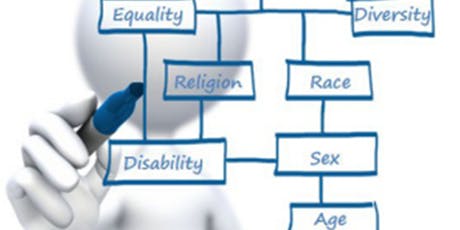
  • Protected Characteristics – The Equality Act 2010 specifies 9 features which, for the advancement of equality and opportunity, are afforded protection from discrimination, harassment, and victimisation. In alphabetical order they are:  Age, Disability, Gender, Gender Reassignment, Marriage and Civil Partnership, Pregnancy and Maternity, Race, Religion or Belief, Sexual Orientation.
  • Reasonable Adjustments – The duty to make reasonable adjustments is covered in the Equality Act 2010 to ensure positive steps are taken to remove the barriers those with disabilities face so they are not substantially disadvantaged. The 3 main areas organisations and establishments need to consider are:
    • To change provisions, criterions or practices which may provide a barrier unless it is unreasonable to do so
    • To change a physical feature of a business or premises which may make access or use difficult for those with disabilities
    • To provide auxiliary aids or services, which may include additional services, in order to help a person with a disability to either access or do something
  • Stereotype – A widely held, positive or negative, image or idea which an individual believes about the characteristics of a certain group.
  • Victimisation – Occurs when an individual is singled out for unfair treatment or discrimination as a result of making a complaint/grievance, threatening to make a complaint/grievance or supporting a complaint/grievance made by a third party.

JD

Equality Impact Assessment

It is vitally important that all workplace policies and procedures that impact upon staff have been through a robust Equality Impact Assessment or EIA. Such an assessment is an internal audit process which is specifically designed to measure whether a policy, project or scheme is at risk of discriminating against any disadvantaged or vulnerable people.

Under the Equality Act 2010 it is illegal to discriminate against an employee because of age, disability, gender reassignment, marriage and civil partnership, pregnancy and maternity, race, religion or belief, sex or sexual orientation. As such, without effective review, a new policy or procedure may unintentionally discriminate against a group of employees because they share a protected characteristic.

For example, a new policy may be published which states that hats or head gear cannot be worn at work under any circumstances. However, such a policy would discriminate against Sikh men, for whom the wearing of the turban is mandatory.

In this situation, a robust Equality Impact Assessment would have been able to identify that such a policy would discriminate against staff from certain religions. This type of discrimination is referred to as indirect discrimination and, generally speaking, occurs when an organisational policy or procedure is put in place which applies to everyone and is not discriminatory in itself but it may put those with a certain protected characteristic at a disadvantage.

The purpose of the EIA process is to prevent discrimination and where the assessment identifies a risk of discrimination action can be taken to make the necessary changes to ensure discrimination does not happen. In this way, the EIA is a useful tool to help improve or promote equality in an organisation to help remove barriers and improve participation for underrepresented groups.

In most situations, organisations don’t set out to purposefully discriminate against any of their stakeholders but sometimes a lack of awareness, especially where a policy, process or scheme may disadvantage one group over another, the EIA can help to identify and make changes to ensure everyone is included and not disadvantaged.

Here is an example from ACAS, the Advisory, Conciliation and Arbitration Service, where they highlight how equality impact assessment can make a positive impact to the workforce. ‘One local authority found a recipe for success over its meals on wheels service. The authority was concerned that the food it was serving up wasn’t to everybody’s taste. So it used an equality impact assessment to find out why. The authority discovered that in certain ethnic communities, only a few people were tucking in. So the authority decided to change the menu to ensure that these diners had a range of different types of meals more likely to appeal to choose from. Soon there were many more ‘happy eaters’ among these communities, while ‘white British’ users were also delighted at the improved choice and quality of the food. In this way the authority not only improved its service but saved money as well.’

If a regular audit of an organisations policies, processes and practices is not undertaken then an unintended act of discrimination may remain undetected for some time, that is until someone makes a complaint or is let down by the service they receive. This is exactly how indirect discrimination happens in the workplace and an EIA can be used to identify this early so changes can be made in the best interests of all.

Generally speaking, for an EIA to be effective it must ask four key questions of what it is assessing. For example, if using an EIA to assess the impact of a new policy then we must ask: 1.) What is the intention of the policy? 2.) How is it seeking to achieve this? 3.) Who benefits (and does not benefit) from the policy and how? 4.) What are any ‘associated aims’ (or other policies) attached to the policy and how do they impact? By doing this we can assess the intention of the policy, what method it uses to enforce the policy, who actually benefits from the policy and what other influences are there that impact on this policy, which should help us to identify risks.

JD

Culture First, Diversity and Inclusion Second

Diversity and Inclusion is not just about compliance with legislation, it’s about leading change, implementing improvement initiatives and engaging, motivating and improving the potential of staff.

Sundar Pichai, chief executive officer of Google LLC, said of inclusion “A diverse mix of voices leads to better discussions, decisions, and outcomes for everyone.”

This is equally true of the boardroom as it is the operational side of an organisation and the distinction that equality is not just about compliance with legislation must be supported at board and executive level within an organisation in order for diversity and inclusion initiatives to have any real impact.

As such, the first job to improve diversity and inclusion in an organisation is to get board and executive backing. Furthermore, unless the culture of the organisation is right then no diversity programme will help. Consequently, before any diversity and inclusion initiatives are rolled out it is essential that the culture of the organisation is one which is receptive to change, to new ideas and inclusion.

Where an organisations culture does not yet lend itself to inclusive practices then wholesale organisational development is essential and any diversity initiatives will fail until that culture is fixed.  Organisational design and re-structuring is the subject of a number of books for human resources leaders and beyond the scope of this post.

But, where you have a workplace culture which supports change and new ways of practising as well as the public support of the board or executive leadership then you can examine the current picture of diversity and inclusion in the organisation with a view to implementing an improvement strategy.

Good diversity and inclusion practice recognises that historically certain groups of people with protected characteristics such as race, disability, sex and sexual orientation have experienced discrimination. To that end, an organisations equality strategy must be about ensuring that every individual has an equal opportunity to make the most of their lives and talents.

Furthermore, really, a good equality, diversity and inclusion programme or strategy attempts to ensure that no one should have poorer life chances because of their gender, their race, the way they were born, where they come from, what they believe, who they love, or whether they have a disability.

As a final point, in order to improve diversity and inclusion in the workplace, it is absolutely vital that we don’t just think about the data; we need to collaborate with people because the organisations people – whether that be staff, customers or service users – are at the heart of all successful diversity and inclusion improvements. Only through working with their people can an organisation reduce bias in hiring, foster inclusivity and create feelings of belonging for employees of all backgrounds.

JD

The Business Case for Diversity

Increasingly, the term ‘Equality’ (and what used to be referred to as Equal Opportunities) is making way for discussions on ‘diversity’ as this term is much broader in its scope and gets to the heart of the integration challenges facing the UK workforce.

Over the past five decades our society has become increasingly complex and multicultural as population growth continues, subsequently becoming more diverse and with an aging population. Furthermore, changes to employment law coupled with an increase of the age at which an employee can retire and draw a pension means we now have increased competition in the workplace for fewer and fewer jobs.

As Vijay Eswaran, Executive Chairman, QI Group of Companies, explains: ‘In this era of globalization, diversity in the business environment is about more than gender, race and ethnicity. It now includes employees with diverse religious and political beliefs, education, socioeconomic backgrounds, sexual orientation, cultures and even disabilities. Companies are discovering that, by supporting and promoting a diverse and inclusive workplace, they are gaining benefits that go beyond the optics.’

In the UK, it’s common for staff, when surveyed in the workplace, to perceive diversity as being a focus on ethnicity and race whereas issues of religion, education or culture are often overlooked or misunderstood. Subsequently, diversity is actually a much broader term than a few labels and includes those other – difficult to define – human qualities that are dissimilar to our own perceptions or those of our communities but are widely prevalent in other communities. It is this fundamental difference that diversity looks to both celebrate and include alongside our own perceptions.

Vijay Eswaran argues that workplace diversity leads to greater innovation. ‘The coming together of people of different ethnicities with different experiences in cities and societies is a key driver of innovation. The food that we eat every day is a result of this blending of cultures. The most successful musical genres, such as jazz, rock’n’roll or hip-hop, are the products of cultural amalgamation.’

Whilst recent equality laws have helped to challenge discrimination and prejudice we still face equality gaps in the workplace, some larger than others. In response to the increasingly diverse needs of our communities the government have delegated a duty of responsibility – known as the Public Sector Equality Duty – on councils and their partners, including publicly funded bodes, such as the education and health care sectors, to be more accountable for ensuring everyone has an equal chance in life regardless of background or start in life.

To this end, in order to meet both government legislation as well as the diverse needs of our workforce, organisations must ensure they build an inclusive culture where diversity and equality of opportunity work hand in hand. This is referred to as the business case for diversity, an organisational wide understanding of how diversity can benefit both the business aims of the organisation and the needs of the community.

JD