
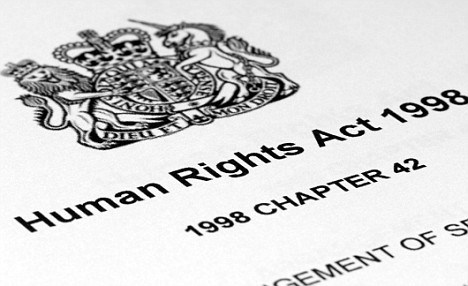
In the UK, the fundamental rights and freedoms of its population are set out in the Human Rights Act 1998 and incorporates those rights as set out in the European Convention on Human Rights (ECHR) and ensures they are covered in domestic British law.
According to the Equality and Human Rights Commission, ‘the Act sets out our human rights in a series of ‘Articles’. Each Article deals with a different right. These are all taken from the ECHR and are commonly known as ‘the Convention Rights’:
- Article 2: Right to life
- Article 3: Freedom from torture and inhuman or degrading treatment
- Article 4: Freedom from slavery and forced labour
- Article 5: Right to liberty and security
- Article 6: Right to a fair trial
- Article 7: No punishment without law
- Article 8: Respect for your private and family life, home and correspondence
- Article 9: Freedom of thought, belief and religion
- Article 10: Freedom of expression
- Article 11: Freedom of assembly and association
- Article 12: Right to marry and start a family
- Article 14: Protection from discrimination in respect of these rights and freedoms
- Protocol 1, Article 1: Right to peaceful enjoyment of your property
- Protocol 1, Article 2: Right to education
- Protocol 1, Article 3: Right to participate in free elections
- Protocol 13, Article 1: Abolition of the death penalty
The Equality and Human Rights Commission identify three main effects of the Act:
1. You can seek justice in a British court – It incorporates the rights set out in the European Convention on Human Rights (ECHR) into domestic British law. This means that if your human rights have been breached, you can take your case to a British court rather than having to seek justice from the European Court of Human Rights in Strasbourg, France.
2. Public bodies must respect your rights – It requires all public bodies (like courts, police, local authorities, hospitals and publicly funded schools) and other bodies carrying out public functions to respect and protect your human rights.
3. New laws are compatible with Convention rights – In practice it means that Parliament will nearly always make sure that new laws are compatible with the rights set out in the European Convention on Human Rights (although ultimately Parliament is sovereign and can pass laws which are incompatible). The courts will also, where possible, interpret laws in a way which is compatible with Convention rights.
JD

 The Equality Blog