
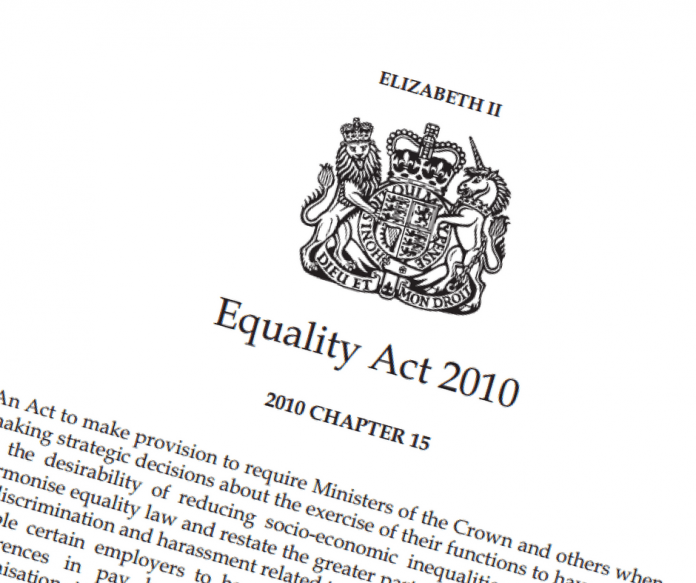
The Equality Act 2010 came into force on 1st October 2010 and was introduced to bring together a complex set of overlapping legislation into one simplified and harmonious Act. This new Act brought together previous legislation including the Equal Pay Act 1970, the Sex Discrimination Act 1975, the Race Relations Act 1976, the Disability Discrimination Act 1995 and additional delegated legislation which prevented discrimination in employment on the basis of religion, belief, sexual orientation and age.
Whilst in general the Act covers employment and strengthens laws to give greater protection to employees from discrimination it does also cover some aspects of discrimination outside of employment. Most significantly, the Equality Act 2010 sets out a requirement for employers to assure equal treatment in access to employment as well as private and public services, regardless of the individuals ‘protected characteristics’, which are listed below.
- Age
- Disability
- Gender Reassignment
- Marriage and Civil Partnership
- Pregnancy and Maternity
- Race
- Religion or Belief
- Sex
- Sexual orientation
These ‘protected characteristics’ represent a defining guide to safeguard employees from unfair treatment or discrimination but in the case of disability, employers and service providers are under a duty to make reasonable adjustments to their workplaces to overcome barriers experienced by disabled people.
Through the Equality Act 2010 employees are explicitly protected from discrimination and bias as well as bullying or harassment in the workplace. Consequently, employers must be mindful of how their procedures, policies and practices impact on their employees and where necessary review accordingly.
In order for an organisation to ensure it is meeting the requirements of the Act it is highly recommended, but not legally required, that an equality & diversity policy is in place, especially for larger organisations. In fact, for larger organisation, the publishing of an equality & diversity policy on the company website will demonstrate that the organisation is meeting its legal and moral obligations towards being a diverse employer. Furthermore, by having the policy in place and publically available it can contribute towards making its employees more comfortable and encourage everyone in the organisation to treat others equally.
JD

 The Equality Blog